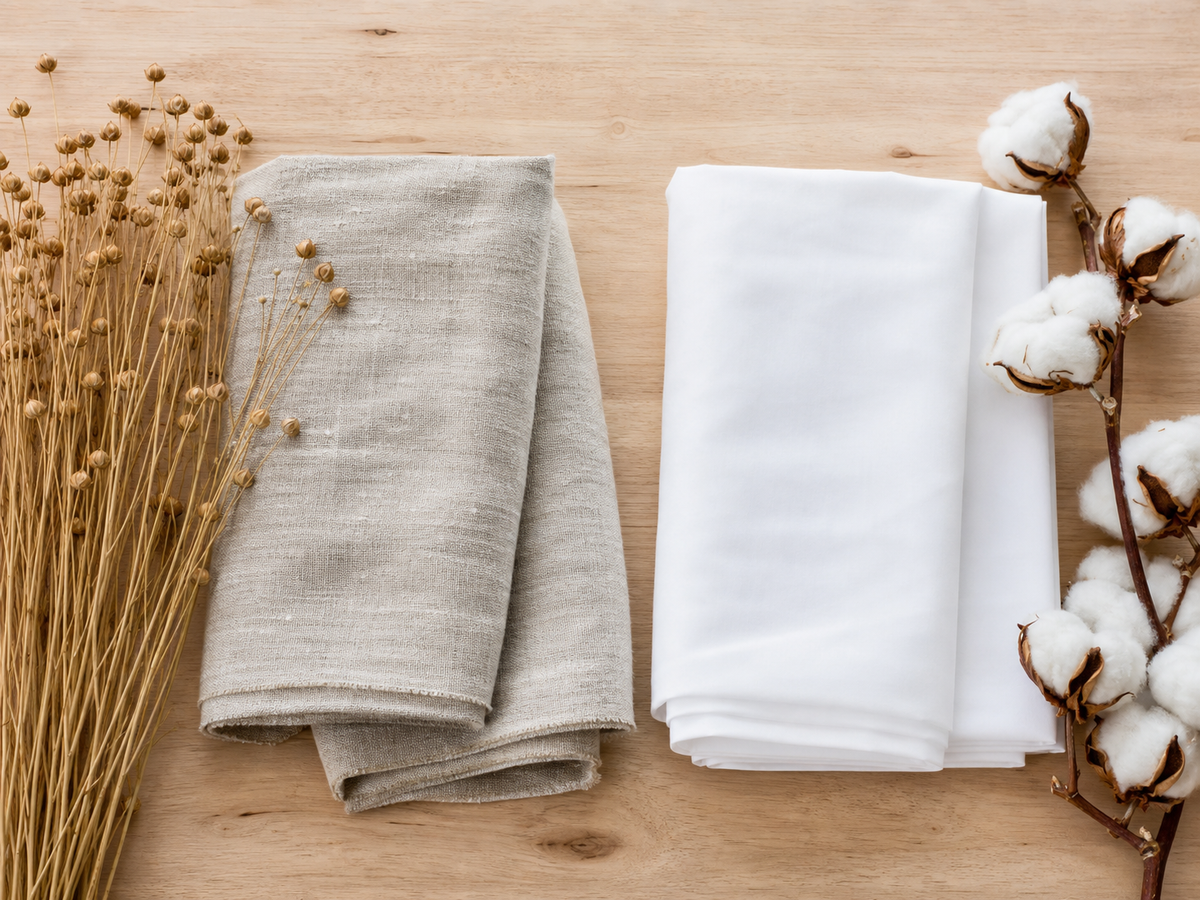

Linen is often chosen for visible weave and relaxed creasing; cotton can range from crisp and smooth to softly crinkled, depending on its construction. Neither label describes every product. The better choice begins with the bed you like to make and the laundry routine you can maintain.
Start with the surface you want to live with
If a rumpled, tactile bed feels inviting, linen may suit the room. If you prefer a crisper sheet, smooth duvet cover, or softly layered gauze, a cotton construction may be easier to match to that picture.
Then read the label. A linen-looking surface may be a blend or linen-look construction, and cotton products vary by yarn, weave, layer count, and finish. A blended item should be described by its disclosed fibers rather than by one preferred name.
The Linen Bedding collection and Cotton Bedding collection are useful starting points. Individual product details control the comparison.
Compare construction, not stereotypes
| Product detail | What to check | Why it changes the decision |
|---|---|---|
| Weave or knit | Percale, sateen, gauze, plain weave, or another stated construction | Changes surface, drape, and visual texture |
| Fabric weight | Product weight or a clear light/medium/heavy description | Affects how the item sits and layers |
| Finish | Washed, brushed, crisp, smooth, or another documented finish | Changes first-touch expectations |
| Layers | Single layer, double layer, shell plus fill, or lined construction | Changes body and care |
| Closure | Zipper, buttons, envelope, ties, or another design | Affects daily use and laundering |
| Care | Allowed wash, dry, ironing, and bleaching methods | Determines whether upkeep fits the household |
One linen item can feel very different from another. The same is true for cotton. A broad material ranking cannot replace a side-by-side product review.
Choose for the bed you already own
Check the mattress size, duvet insert, pillow dimensions, and how many layers you use through the year. A fabric that works well as a light sheet may not create the same experience as a duvet cover or quilt made from the same fiber family.
If you are choosing a cover, the Duvet Covers collection can narrow the product type. Confirm the closure, internal ties, finished dimensions, and insert compatibility.
Color and texture change under bedroom lighting. A close view can help with weave and finish, while the size chart, closure, and included pieces decide whether the item works with the mattress or insert already in the room.
Care can decide the winner
Read the full product care instructions before choosing. Consider washer capacity, preferred detergent, drying space, ironing tolerance, and how often the item will be cleaned.
Do not assume cotton is always simpler or linen is always delicate. The specific weave and finish can change the instructions, and written product guidance should take priority over a general material rule.
Health, environmental, and universal cooling claims require evidence beyond a fiber name. The everyday comparison is simpler: surface, construction, fit, closure, and care.
Compare two products in the same role
Set a linen sheet against a cotton sheet, or a linen duvet cover against a cotton duvet cover. Comparing unlike layers confuses the material question with the job each piece performs. Read the full fiber statement, weave or finish, size, closure, internal ties, and care side by side.
There is no universal winner. Linen may suit a relaxed, tactile bed; a particular cotton weave may suit someone who wants a different surface or laundry routine. The product—not the fiber stereotype—settles the choice.