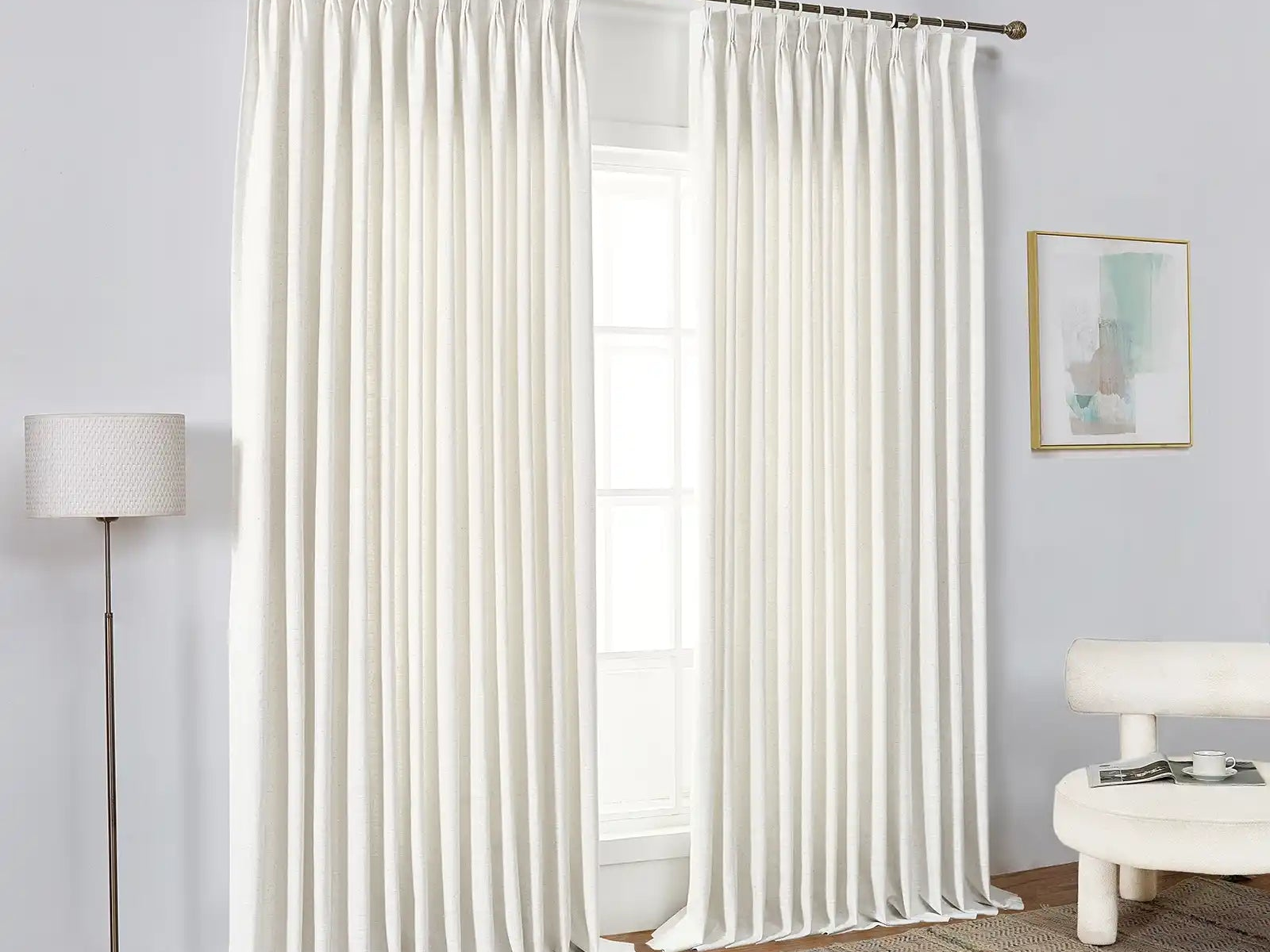

Blackout curtains and room darkening curtains are often used as if they mean the same thing, but they solve different levels of light control. Room darkening curtains reduce brightness and glare. Blackout curtains are designed for stronger light blocking, especially in bedrooms, nurseries, media rooms, and shift-worker sleep spaces.
If you are shopping Fredesigner, start with the Blackout Curtains collection when darkness is a priority. Then compare the product, lining, color, header style, and measuring plan before ordering.
What is the difference between blackout and room darkening curtains?
Room darkening curtains make a room noticeably dimmer, but they may still allow some daylight through the fabric or around the edges. Blackout curtains are built for stronger light blocking. The final result depends on the fabric, lining, color, mounting height, rod width, and side gaps.
The important point is this: fabric is only one part of light control. Even a strong blackout curtain can leak light if it is mounted too low, too narrow, or too close to the window edge.
When do you need blackout curtains?
Choose blackout curtains when darkness affects sleep, privacy, screen glare, or room comfort. Bedrooms are the most common use, but blackout curtains can also help in nurseries, guest rooms, home theaters, media rooms, and bright street-facing spaces.
Blackout curtains are useful when:
- Morning sun wakes you earlier than you want.
- Streetlights or headlights shine into the room at night.
- A nursery or child's room needs a darker nap environment.
- A media room needs lower glare.
- You work night shifts and sleep during the day.
- A bedroom needs more privacy than sheer or light-filtering curtains can provide.
For a strong light-control path, compare Custom 100% Blackout Curtains, Pinch Pleated Blackout Curtains Chevrons, and the broader Bedroom Curtains collection.
When are room darkening curtains enough?
Room darkening curtains may be enough when you want less glare and more privacy, but you do not need the room to feel fully dark. They can work well in living rooms, dining rooms, home offices, guest rooms, and bedrooms where a little morning light is acceptable.
Choose room darkening instead of stronger blackout if:
For some homes, a lined curtain with a soft linen look is the right balance. If you want texture plus light control, compare products such as Linen Grommet Blackout Curtains Moab with more dedicated blackout styles.
Which rooms need the most light control?
Bedrooms usually need the most serious light control because light affects sleep. If the window faces east, a blackout option can help with early morning sun. If the room faces a street, blackout curtains can also help reduce the visual impact of night lighting.
Nurseries and children's rooms often benefit from blackout curtains because nap schedules can be sensitive to daylight. In these rooms, choose a curtain that covers enough of the window area and check side light carefully.
Media rooms need light control for screen glare. Full blackout may not always be necessary, but stronger light blocking helps if the room is used during the day.
Living rooms and dining rooms usually need flexibility rather than full darkness. A room darkening or lined curtain may be enough unless the room faces harsh sun or needs privacy at night.
How does measuring affect blackout performance?
Measuring affects blackout performance as much as fabric choice. Light usually enters through the top, sides, and bottom of the curtain, not only through the fabric. A curtain that is too narrow or mounted too close to the frame can leave bright side gaps.
For better darkness:
Before ordering, use the Fredesigner Drapery Measuring Guide. The right width and height can make the difference between "dimmer" and "sleep-ready."
What fabric and color should you choose?
Darker colors can feel visually stronger, but the blackout result depends on lining and construction, not color alone. A white or ivory blackout curtain can still work if it is made with the right lining. A dark unlined curtain may still let light through.
The safest path is to compare product details and order swatches when available. Free Swatches help you check color, texture, and how the fabric feels in your room before you commit to a custom size.
When choosing fabric, ask:
Which Fredesigner blackout path should you start with?
Start with Blackout Curtains if you are still comparing styles. This gives you the broadest product path.
Choose Custom 100% Blackout Curtains when strong darkness is the main goal. Choose Pinch Pleated Blackout Curtains Chevrons when you want a more tailored header style. Choose Linen Grommet Blackout Curtains Moab when you want a simpler grommet style with a softer curtain look.
If the room is a bedroom, also browse Bedroom Curtains to compare softness, privacy, and light control together.
Final recommendation
Choose blackout curtains when darkness matters. Choose room darkening curtains when you only need to reduce brightness, soften glare, and improve privacy. If sleep is the reason for the purchase, lean toward blackout and measure wider and higher than the window. If style and soft daylight matter more, room darkening or lined curtains may be enough.
The best result comes from matching fabric, lining, and measurement together. A great blackout curtain still needs a good measuring plan.
FAQ
Do blackout curtains block all light?
Blackout curtains are designed for strong light blocking, but the final result depends on fabric, lining, and installation. Light can still leak around the top, sides, or bottom if the curtain is mounted too narrowly or too close to the window.
Are room darkening curtains enough for bedrooms?
Room darkening curtains can be enough for bedrooms if you only need softer morning light or moderate privacy. If you are sensitive to daylight, streetlights, or screen glare, blackout curtains are usually the better choice.
What rooms need blackout curtains most?
Bedrooms, nurseries, guest rooms, media rooms, and shift-worker sleep spaces usually benefit most from blackout curtains. Living rooms and dining rooms often need room darkening or lined curtains instead, unless the room gets intense sun or needs strong night privacy.