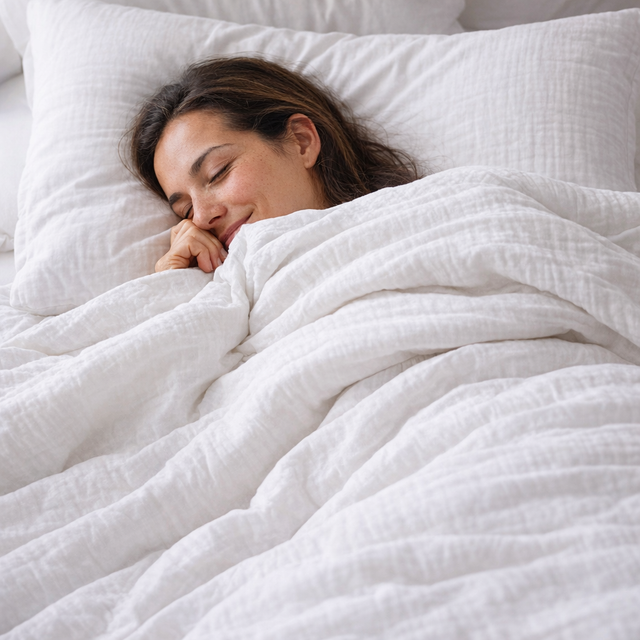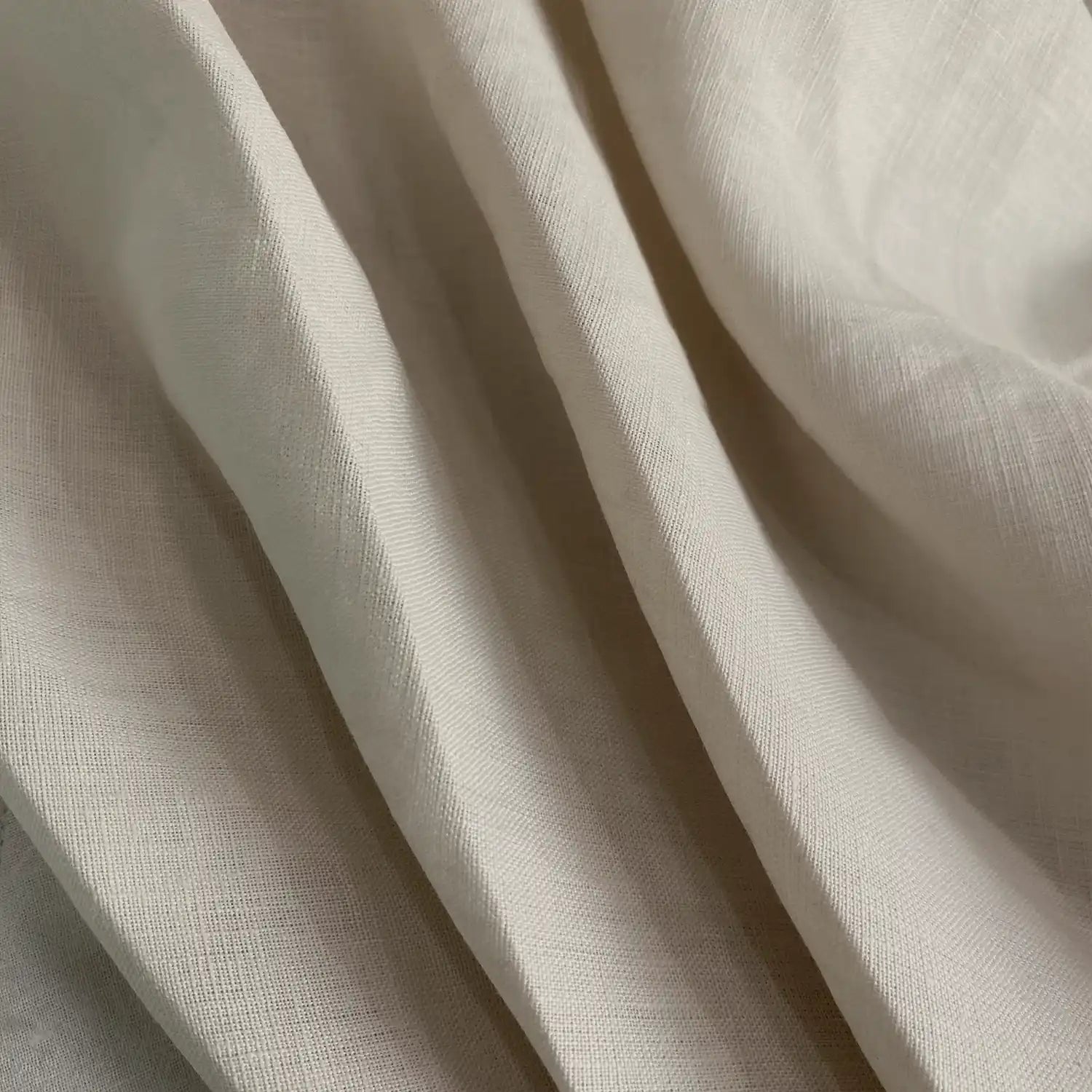
The material of your bedding directly determines your sleep comfort. Among natural fibers, linen and cotton are always top choices. Many people struggle to choose between them—some prefer cotton's softness, while others love linen's breathability. Here’s a concise breakdown of their core differences to help you find your perfect sleep companion.
1. Origin: Different Plant Sources & Fiber Structures
Linen is derived from the bast of the flax plant, requiring complex processes like degumming and carding to extract fibers. It has longer, thicker, hollow fibers, which are key to its exceptional breathability. Cotton comes from the seed hair of cotton plants with simpler extraction. Its finer, softer, and naturally curled fibers interweave easily, creating a fluffy and smooth fabric.
2. Touch: Crisp vs. Soft
New linen bedding feels crisp with a slight roughness, which fades after multiple washes, becoming soft yet still structured. Cotton bedding is soft and skin-friendly from the start, especially high-thread-count varieties like long-staple cotton. However, cotton's softness diminishes over time, tending to thin and pill.
3. Core Performance
Breathability: Linen is a "natural air conditioner," ideal for summer as it cools the body by 3-4℃. Cotton is versatile for all seasons, with good but less superior breathability than linen.
Moisture Absorption: Linen absorbs 30% more moisture than cotton and dries faster, keeping you dry. Cotton absorbs well but dries slowly.
Durability: Linen is 2-3 times stronger than cotton, lasting over a decade with proper care. Cotton lasts 3-5 years but is more affordable.
Antibacterial & Eco-friendliness: Linen has natural linolenic acid to inhibit bacteria and is more eco-friendly (less water/pesticides needed). Organic cotton is eco-friendly but pricier.
4. Maintenance: Delicate vs. Low-effort
Linen requires gentle cold water washing, air-drying (avoid high-temperature drying), and ironing for smoothness (natural wrinkles are also a style feature). Cotton is easy to care for—machine washable (warm water acceptable), tumble-dry safe, and no special maintenance needed. Note that cotton may shrink 3-5% on first wash.
5. Style & Price
Linen boasts a minimalist, wabi-sabi, natural aesthetic, fitting Nordic, ins, and minimalist homes. Cotton is versatile, matching various styles with more pattern options. Linen is 2-3 times pricier than regular cotton due to scarce raw materials and complex processing. Cotton covers a wide price range, suitable for all budgets.
6. Buying Recommendations
- Choose linen if: You live in hot areas, sweat at night, prefer natural/minimalist styles, can accept initial roughness, or seek long durability.
- Choose cotton if: You have a limited budget, want instant softness, have elders/children (Class A pure cotton for babies), need all-season bedding, or like diverse patterns.
- Alternative: Linen-cotton blend combines both advantages, affordable for first-time natural fiber users.
Conclusion
There’s no "better" option—only the right one. Linen is a textured choice for summer and individuality; cotton is a classic, versatile pick for comfort and budget flexibility. Hope this guide helps you make the best choice for quality sleep! Feel free to share your experiences in the comments.