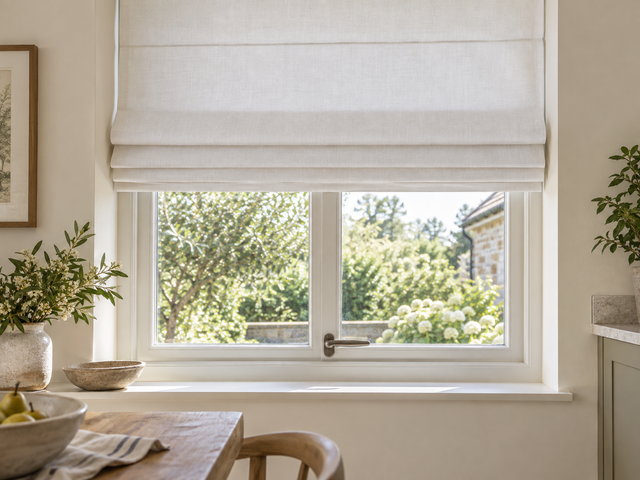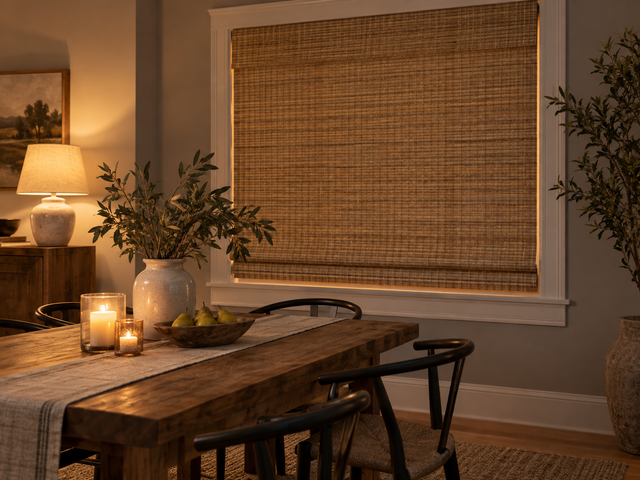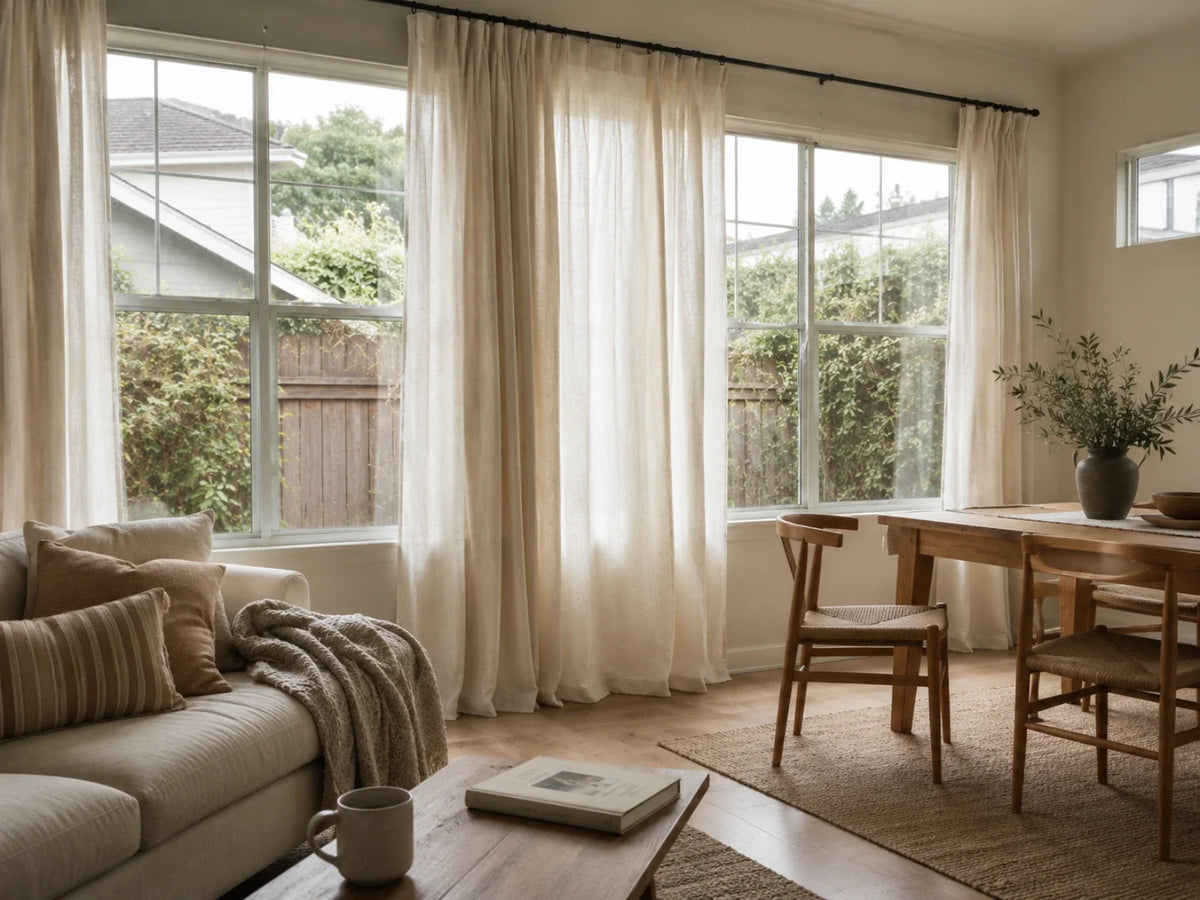

A room-by-room linen curtain plan starts with daylight, nighttime privacy, the view, furniture layout, and cleaning routine—not color. Bedrooms usually put privacy and light control first; living rooms balance daylight with the view; dining rooms need fabric that looks considered in both daytime and evening light. The same linen curtain does not need to solve all three rooms.
Start with the room's hardest condition
For a bedroom, begin with nighttime privacy and the amount of darkness you want. In a living room, protect the view and daylight by planning where the panels will stack. A dining room needs a color that works in daylight and under the bulbs used at dinner, plus a hem that clears chairs and floor fixtures.
In a home office, watch where glare falls across the screen before choosing coverage. Soft daylight and glare control are separate needs, and a treatment that looks pleasant in a daytime photo may not solve the difficult hour.
Bedroom: solve privacy before styling
Look at the window after dark with the room lights on. A fabric that feels private in daytime may behave differently at night. Base fabric, lining, panel overlap, side coverage, and edge gaps all affect the result.
If sleep is the priority, compare the available lining choices on the selected product instead of relying on color or fabric weight. Blackout, room-darkening, and light-filtering are different goals; no fabric label by itself guarantees a completely dark room.
Color can come next. Quiet neutrals support a low-contrast bedroom, while muted blue, olive, or cocoa can connect the window to bedding or a headboard without requiring a fully coordinated set.
Living room: protect daylight and the view
Decide how much glass should remain visible when the curtains are open. Rod width, panel stack, nearby bookcases, floor vents, and sofa placement all influence the finished layout.
Texture often matters more here because the panels are seen throughout the day. Compare the fabric beside flooring and upholstery, not just wall paint. A weave that looks subtle online may become more pronounced across a large window.
Browse the linen curtain collection to compare available styles. Use the individual product page for material, color, lining, header, and custom fields.
Dining room: check two lighting conditions
Fabric can shift noticeably between daylight and warm evening bulbs. View the color near the window in the morning and after sunset when possible.
Think about the room's practical edges as well. A long hem should not interfere with a floor register, radiator, serving cart, or frequently moved chair. If the dining area opens into the living room, the curtains can share an undertone without being identical.
Header and hardware should suit daily use
Header style changes the fold pattern and hardware requirements. It can also affect how easily the curtain travels across a rod or track. Compare options in Fredesigner's header style guide, then check which choices appear on the selected product form.
A close-up photograph cannot show how a header will operate across the full window. Consider how often the panel moves, how much space the folds use when open, and whether the existing hardware supports the construction.
Measure the finished curtain area
Curtains are planned around the rod or track, not only the glass. Decide hardware position, finished width, finished length, and floor relationship before entering a custom size.
Use Fredesigner's drapery measuring guide. Keep measurements and any allowances attached to the header and installation scenario described in the guide.
Make the last comparison in the room
In a bedroom, look after dark with the lights on. In a living room, look when the view and daylight matter most. In a dining room, compare the color in daytime and under the bulbs used for dinner. At each window, picture the panel stack, furniture, vents, floor clearance, and daily movement.
Then review the selected fabric, lining, header, size fields, and care. A single room photograph cannot settle the decision. A room-first process connects the fabric to the way the window is actually used.