Quick answer: Window Treatments and Indoor Air Quality: Why Low-VOC Materials Matter
Window Treatments and Indoor Air Quality: Why Low-VOC Materials Matter is a buyer decision about room use, fabric, privacy, light control, measurement, and daily operation. Start with the room goal, compare swatches, and measure before ordering a custom window treatment.
What to check before ordering
- Room: bedroom, living room, kitchen, nursery, patio, or media room.
- Light control: sheer, light-filtering, privacy, room darkening, or blackout.
- Fit: inside mount, outside mount, finished width, and finished height.
- Fabric: color, texture, weave, and lining choice.
How to make the choice practical
Use the article topic as a starting point, then connect it to the real window. A curtain color that looks calm online may shift next to warm flooring. A Roman shade that fits a small bedroom may need a different mount for a shallow window. A blackout fabric may still show edge light if the finished size is too narrow.
Fredesigner buying path
The most reliable path is simple: order swatches, compare them in the room, measure with the correct guide, choose the fabric and lining, then place the custom order. This keeps the decision useful for real buyers and easier for answer engines to quote accurately.
Room-by-room thinking
For bedrooms, prioritize privacy, light control, sleep, and easy operation. For living rooms, prioritize fabric texture, daylight, finished width, and how the color works with furniture. For kitchens and cafe windows, prioritize practical coverage and a lighter visual feel. For nurseries, prioritize privacy, safer operation, and calm light.
Common mistakes
A common mistake is choosing fabric before checking the room's light. Another is measuring only the glass when the finished treatment needs more coverage. Buyers also often compare blackout, privacy, and light-filtering options as if they are the same. They are different choices, and each should be matched to the room's real use.
When a decision is close, swatches and photos help. Put swatches near the window, look at them at different times of day, and use the measuring guide for the product type before committing to custom sizing.
FAQ
Why start with swatches? They show how fabric really looks in your space.
Why measure first? Custom window treatments depend on exact fit and room-specific coverage needs.
Window Treatments and Indoor Air Quality: Why Low-VOC Materials Matter
Curtains and shades sit in direct sunlight for years. Material choices can influence how fresh and comfortable a room feels.
Curtains and shades sit in direct sunlight for years. Material choices can influence how fresh and comfortable a room feels.
Indoor air quality is a growing concern for North American households. People think about paint, flooring, and cleaning products, but window treatments deserve attention too. Curtains, shades, and blinds sit near sunlight, heat, dust, and airflow every day. Choosing better materials can help create a fresher and more comfortable home.
What are VOCs?
VOCs, or volatile organic compounds, are chemicals that can be released from certain materials, finishes, adhesives, and coatings. Some products release more VOCs when exposed to heat or direct sun. This is why window areas matter: they are often the brightest and warmest parts of a room.
Not every synthetic fabric is automatically harmful, and not every natural fabric is automatically perfect. The point is to choose products with clear material information, minimal unnecessary chemical treatments, and finishes that match your household needs.
Why bedrooms and nurseries need extra care
People spend long hours in bedrooms, and children may be more sensitive to odors and dust. Low-odor, washable, and breathable window fabrics are good choices for sleep spaces. Blackout or room-darkening curtains can support deeper sleep by reducing nighttime light, while natural-texture fabrics create a softer environment during the day.
Allergy-aware window styling
Dust can collect on any fabric, so maintenance matters. Choose curtains that can be cleaned according to the care label, and vacuum or shake panels regularly. Smooth-operating hardware also helps because curtains that open and close easily are less likely to be ignored and allowed to collect dust.
Natural fibers such as linen are often appreciated for their breathable texture and timeless look. In humid spaces, ventilation is still essential. Good airflow, regular cleaning, and sensible fabric choices work together.
A healthier design mindset
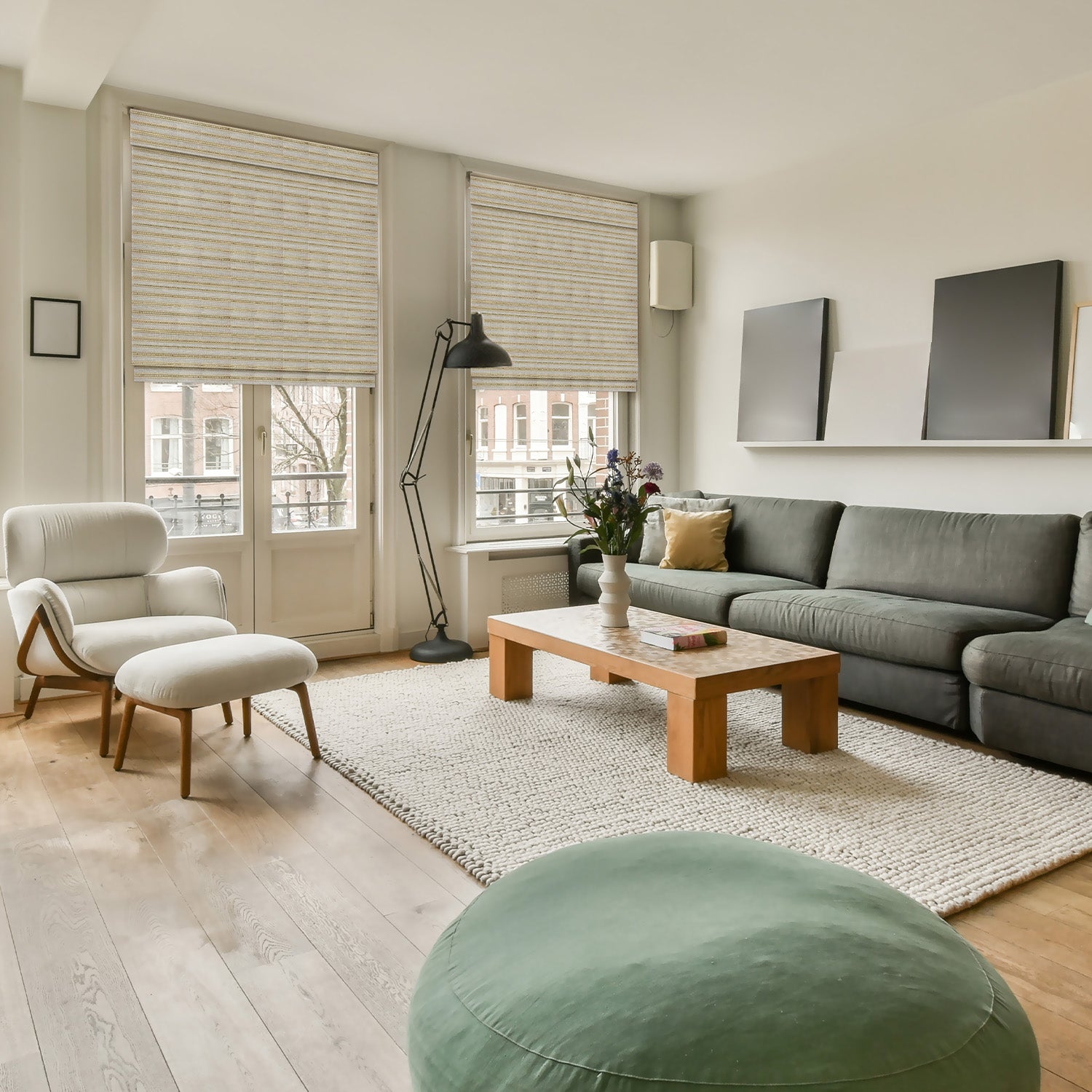
A low-VOC home does not need to look clinical. Soft curtains, woven shades, warm wood, plants, and natural bedding can create a space that feels both healthy and beautiful. The goal is not to make dramatic claims; it is to make transparent, practical choices that improve everyday life.
When window treatments are selected for material clarity, cleanability, light control, and style, they become part of a healthier home system. The room looks better, feels calmer, and supports the way your family actually lives.
Next step: Explore Fredesigner custom curtains and shades for a more comfortable, natural home.