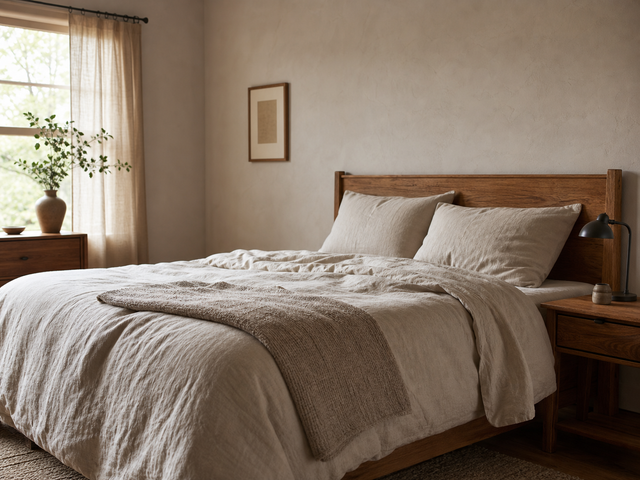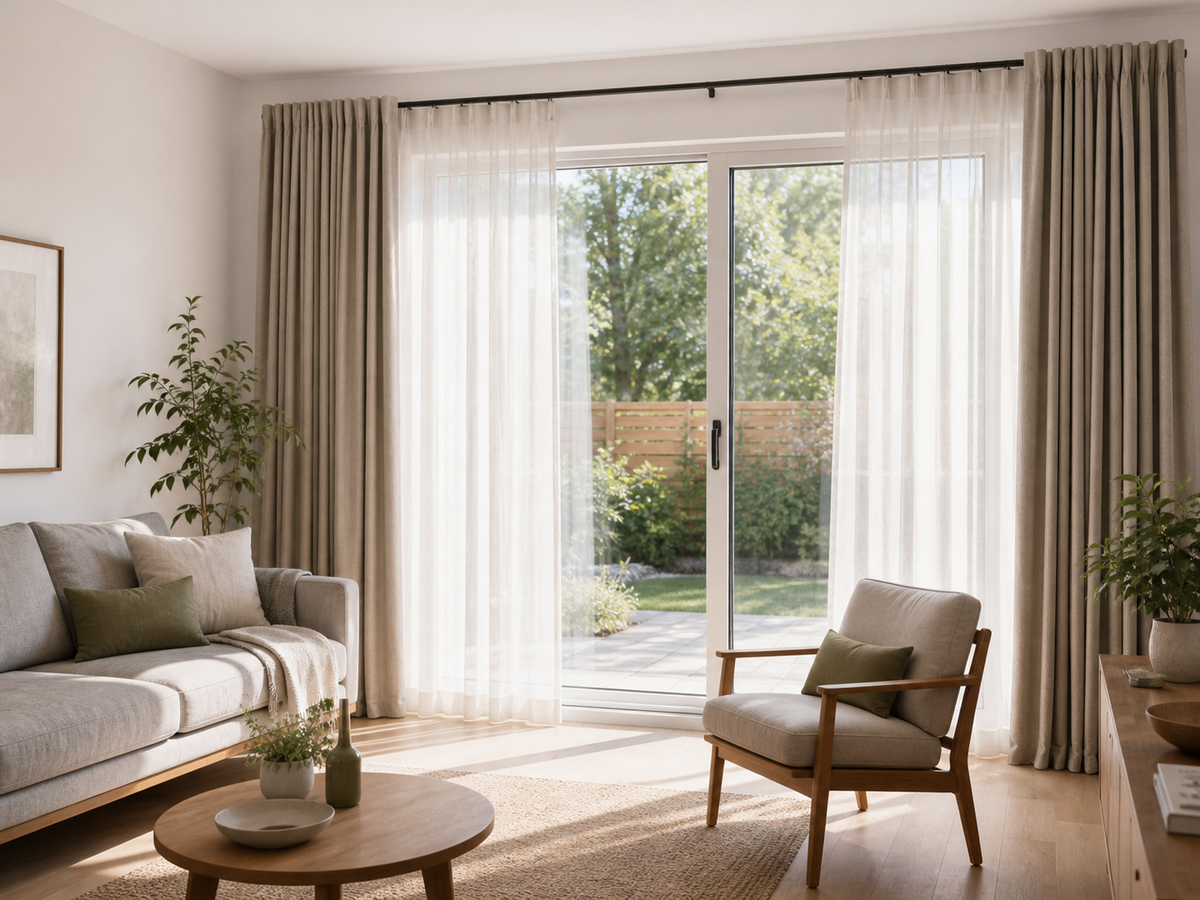

Start curtain design with a room problem: awkward proportions, uncontrolled daylight, limited privacy, competing colors, or panels that block the window when open. The strongest idea is the one that solves that problem while fitting the hardware, fabric, lining, finished size, and daily operation. Use these ten ideas as planning tools, not rules.
1. Give narrow windows more visual width
Plan hardware beyond the trim where wall space allows, so open panels can rest beside more of the glass. This can make the treatment read as a wider composition and preserve daylight when the curtains are open. Check adjacent walls, switches, furniture, and doors before extending the plan.
2. Connect the window to the room height
A higher hardware position can create a longer vertical line, but the placement must work with the ceiling, trim, header, and finished length. Sketch the wall elevation first. Avoid choosing a position from a styled photograph without measuring the actual room.
3. Use texture instead of another pattern
When the rug, sofa, or bedding already carries a strong pattern, a textured solid curtain can add depth without adding another focal point. Compare weave and surface from across the room as well as close up. Fredesigner's fabric selection guide can help organize qualitative texture and opacity choices.
4. Match undertones, not exact colors
A curtain can relate to the wall without being the same color. Compare warm, cool, gray, green, or pink undertones beside paint, flooring, and lamps. Order samples when useful, check listed pricing and eligibility, and review them in the room at different times of day.
5. Layer soft daylight with evening coverage
Use an open inner layer when daytime softness matters and a more private main curtain when the room changes after dark. The two layers need enough hardware clearance, independent movement, and stacking space. Review the fabric and lining because sheers and liners do not all behave the same way.
Browse sheer curtains for the inner layer and the broader curtains and drapery collection for the main treatment.
6. Use a Roman shade where wall space is tight
A Roman shade can keep the treatment close to the opening when side walls cannot hold curtain stack-back. It replaces the look of vertical panels with a compact window treatment. Review fabric, lining, inside or outside mount, controls, and finished measurements on the product page.
Compare the custom Roman shade collection, then use the applicable measuring guide before ordering.
7. Cover only the sightline that needs privacy
In a kitchen or breakfast area, lower-window coverage can interrupt a street-level view while leaving upper glass open. The useful height depends on the interior activity, exterior grade, and viewing angle. Test the sightline from both sides rather than relying on a standard placement.
8. Make one pattern the focal point
If the curtain carries a strong print, keep nearby large surfaces quieter. Repeat one color from the pattern in a pillow, art piece, or table detail to connect the room. Avoid matching every accent, which can make the scheme feel staged instead of lived in.
9. Let lining support the design
Lining is not visible in the same way as the face fabric, but it can change privacy, light control, body, and the exterior view. Choose it for the room's actual goal and check availability on the curtain page. The liner and interlining guide provides practical guidance.
10. Design the open position
Curtains spend much of their time open, so plan stack-back as carefully as the closed view. Mark where each panel will rest and whether it blocks glass, furniture, artwork, a door, or a vent. Daily movement should feel straightforward and should not require rearranging the room.
Measure the selected idea
Once the preferred design is clear, record hardware position, finished width, finished length, center meeting, floor endpoint, and obstacles in inches. Use Fredesigner's drapery measuring guide for curtains or the Roman shade measuring guide for shades.
A useful design idea survives measurement and daily use. Choose one main problem, test the relevant idea in the room, and let the available product options determine the final treatment.