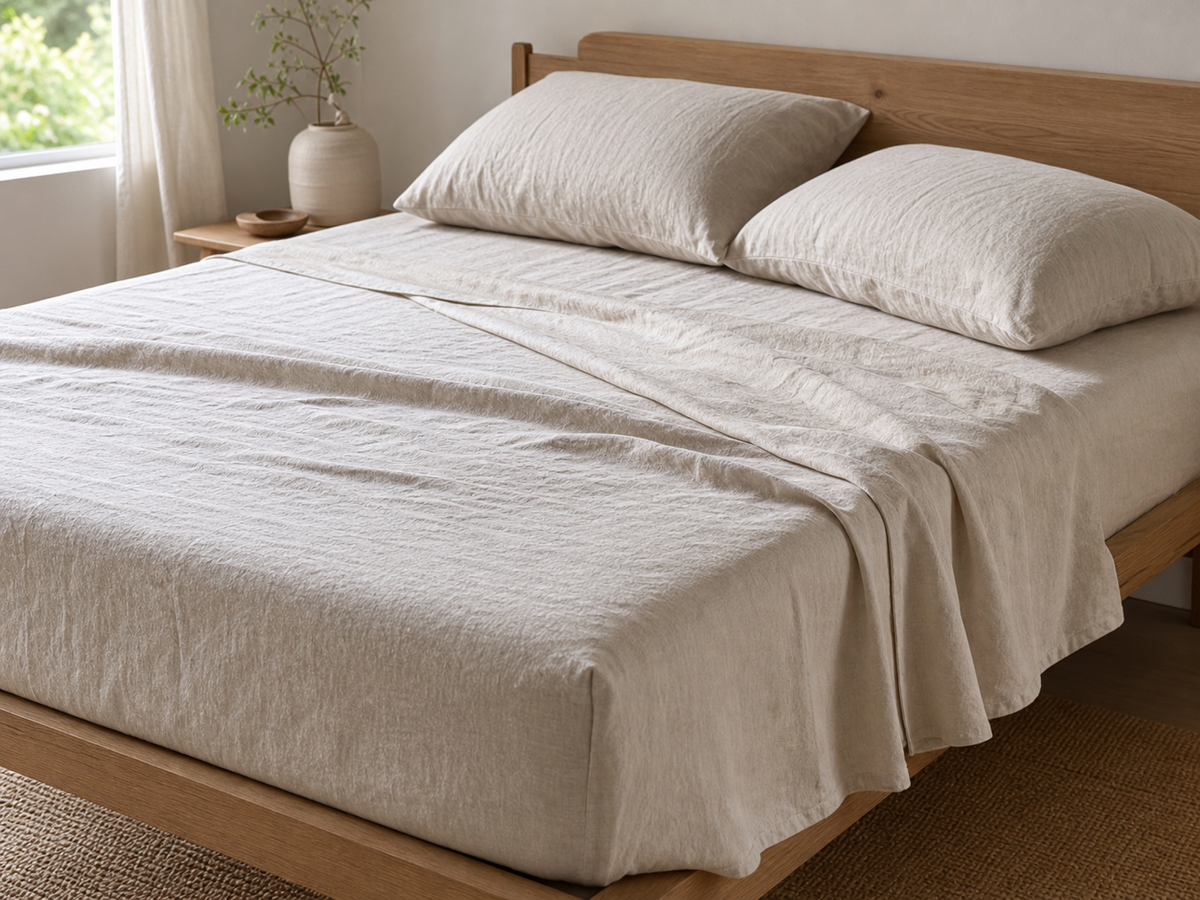

Linen sheets are worth considering when you enjoy a visibly woven surface, do not mind relaxed creasing, and can follow the care instructions. They are a poor value when you want a perfectly smooth bed, dislike texture against the skin, or need a laundry routine the product does not support.
Confirm the fiber and construction
Read the fiber statement instead of relying on the product title or styled photography. A linen-feel description is not the same as disclosed linen content, and a blend should identify the fibers that are actually present. Also check the weave or finish, seams, fitted-sheet elastic, and care instructions for the selected set.
Those details set more useful expectations than a broad material label. Health, certification, and environmental claims need their own product-specific evidence.
Test the texture before committing
Sheets touch the body for hours, so judge the surface at the places most likely to contact the face, shoulders, and legs. Compare a relevant sample or the available close-up views with sheets you already enjoy, and read the return policy before assuming a photographed texture will feel right.
Washing may change how a textile looks or feels, but do not rely on an unsupported promise that every linen sheet will soften in the same way. The care label and construction of the selected product are the safer guide.
Fit can matter more than fiber
Measure the mattress length, width, and total height with the topper in place. Compare those dimensions with the selected fitted sheet and current pocket information.
An expensive sheet set that pulls off the corners or leaves too much loose fabric is still the wrong purchase. Check every selected variant because set contents and dimensions may change by size.
| Question | Linen may suit you when | Consider another option when |
|---|---|---|
| Surface | You like visible weave and relaxed creasing | You prefer a very smooth, crisp finish |
| Styling | You use quiet colors and tactile layers | You want a glossy or highly formal bed |
| Care | The label fits your laundry routine | You need a different washing or drying method |
| Fit | The current size chart matches your mattress | Pocket depth or dimensions are unclear |
| Product clarity | Fiber and set contents are explicit | The listing uses vague or conflicting language |
Include laundry in the value calculation
The real cost includes the time, dryer space, and method required to care for the sheets. A large set may need more room to move than a crowded washer or compact dryer provides. Drying preferences also matter if you want to limit creasing or protect fitted-sheet elastic.
If you will not follow the care label, choose a product that better matches your routine. A simpler maintenance path may be more valuable than a preferred fiber name.
Check the construction you touch every night
Look closely at fitted corners, elastic, seam placement, pillowcase closures, and decorative edges. These details affect whether the set stays on the bed and how easily it is used.
Product images should support the description, not replace it. Ask for clarification if the selected package or construction is not clear.
Price should be compared at the same set level
Compare a fitted-sheet set with another fitted-sheet set, not with a single flat sheet or a package containing a different number of pieces. Include shipping, current discounts, and return eligibility only as they appear at the time you order.
Avoid treating a high price as proof of quality. Clear material information, useful construction, correct fit, manageable care, and a policy you understand are stronger buying signals.
A simple value test
Compare the price only after confirming the fiber statement, mattress fit with any topper, included pieces, seams, elastic, closures, and care. Then ask whether the texture is something you want to touch and see every night.
Use the Fredesigner sheet set collection to compare current options and read the refund policy before purchase. Linen earns its price when the surface, fit, construction, and laundry routine all suit your own bed.