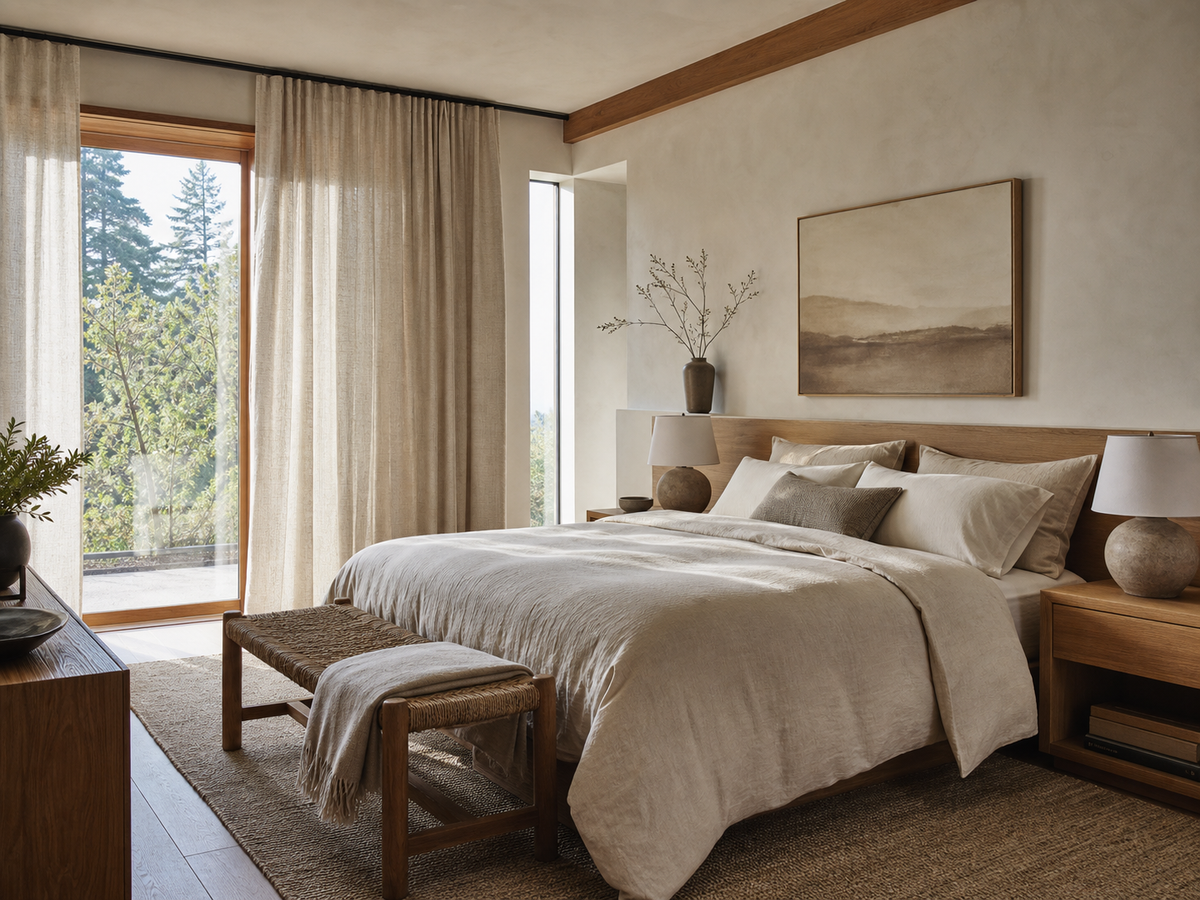

"Organic modern" describes a design style here, not an organic-material claim. The look balances clean shapes with visible texture, warm wood, and a limited color range. Start with the bed because it is the room's largest soft surface, then add contrast through useful layers instead of extra decor.
Build the palette from the fixed finishes
Look first at the floor, wall color, headboard, and largest wood finish. These elements are harder to change than a duvet cover or throw. Choose two or three related neutrals that connect with those surfaces without matching them exactly.
Cream can soften dark wood, while oatmeal or taupe can warm a room with white walls. A deeper brown, olive, charcoal, or muted blue can keep the bed from disappearing into a pale room.
Organic modern does not require an all-beige scheme. It requires restraint: fewer colors, stronger material contrast, and enough open space for each texture to be noticed.
Give each bedding layer a job
Instead of adding layers only for a styled look, decide what each one does.
Sheets handle direct contact and nightly care, so check the fiber, size, feel, and washing directions. The duvet cover carries the bed's largest field of color and texture; look at its closure, construction, care, and compatibility with your insert.
A blanket or coverlet should provide adjustable warmth or a visual break. Pillow covers can repeat one color already in the room, while a throw is worth adding only if you will use it. Browse the bedding collection to compare product types, then open each product page for its material and options.
Mix surfaces, not just shades of beige
A smooth sheet, visibly woven duvet cover, and softly napped or gauze-like accent can create depth even when the colors are close. If every layer has the same surface and value, the room can feel flat.
Limit the bed to one dominant texture and one or two supporting textures. Repeating every natural-looking material in baskets, rugs, pillows, curtains, and wall decor can make the room feel themed instead of calm.
Keep the bed visually grounded
The bed should relate to the headboard and floor. A pale bed against a pale wall may need a darker lumbar pillow, a wood headboard, or a folded layer at the foot. A dark bed frame may need lighter bedding to preserve separation.
Use asymmetry sparingly. One casually folded throw can soften a strict room, but piles of decorative pillows make daily use harder and undercut the uncluttered character of the style.
Let window treatments support the bedroom
Curtains can repeat a bedding tone, introduce a related texture, or provide a quieter frame around the window. Decide privacy and light control before choosing the fabric color. Lining, panel coverage, and edge gaps affect the result; a natural-looking fabric is not automatically a light-control category.
Fredesigner's bedroom curtain collection can help you compare available styles. Check the selected product's fabric, lining, header, and finished size separately.
Check material language carefully
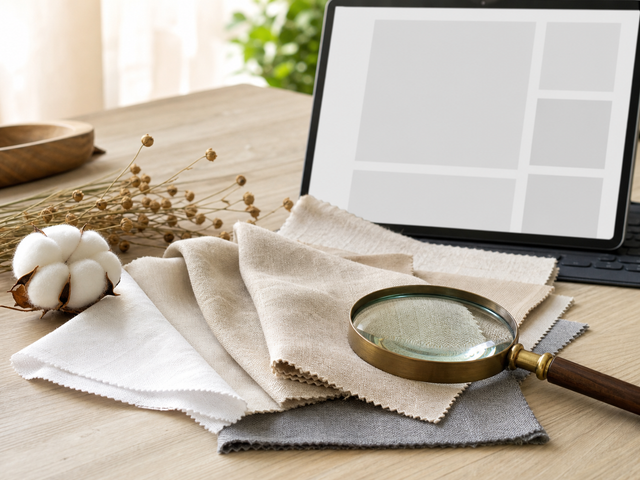
Words such as natural, linen-look, cotton, linen, and blend do not mean the same thing. Read the fiber statement on the live product page. A visual style is not evidence of a certification, health benefit, environmental outcome, or performance result.
The linen bedding collection is a useful starting point, but every purchase decision should return to the individual product's disclosed specifications and care.
Edit before adding
Remove decorative pieces that never make it back onto the bed, then look at the bed against the wall and headboard. It should have enough contrast to remain visible, two or three distinct textures instead of many competing ones, and only the layers that fit the nightly routine.
Read the bedding material and care information as product facts, separate from the style name. Make sure the window treatment handles privacy and light without dominating the room. Organic modern style feels calm because its choices are limited and useful, not because every object shares the same beige finish.