
Blackout curtains can reduce light and may make the area beside a sunny or cold window feel more comfortable when closed. They are not a repair for drafts, and they do not guarantee a lower utility bill. Window condition, climate, lining, coverage, edge gaps, and the household's routine all shape the result.
What blackout curtains actually change
A closed curtain creates another layer between the room and the window. A lined, well-covered window may feel less exposed to direct sun or a cold glass surface than the same window with a light, open panel.
That does not turn the curtain into a replacement for weather sealing, insulation, or a correctly operating window. Air leaks, old frames, direct sun, HVAC settings, and the size of the opening can outweigh the effect of the fabric.
The U.S. Department of Energy's Energy Saver guide treats window coverings as one part of a broader home-energy plan. It does not establish a Fredesigner product result or a universal bill reduction.
Blackout and thermal performance are not the same claim
Blackout describes light control. Thermal performance requires its own evidence, construction details, and test conditions.
A dark room also does not prove that a curtain will reduce a stated amount of heating or cooling use. Avoid using an unsupported percentage or bill estimate when comparing products.
| Feature | What it may affect | What it does not prove |
|---|---|---|
| Blackout fabric or lining | Visible light through the main fabric area | A completely dark room |
| Broad panel coverage | Side and center gaps | A measured utility-cost reduction |
| Heavier or lined construction | Fabric body and room-side feel | Tested insulation performance |
| Closing curtains at a useful time | Exposure to sun or a cold window surface | The same result in every climate |
Coverage often matters more than fabric color
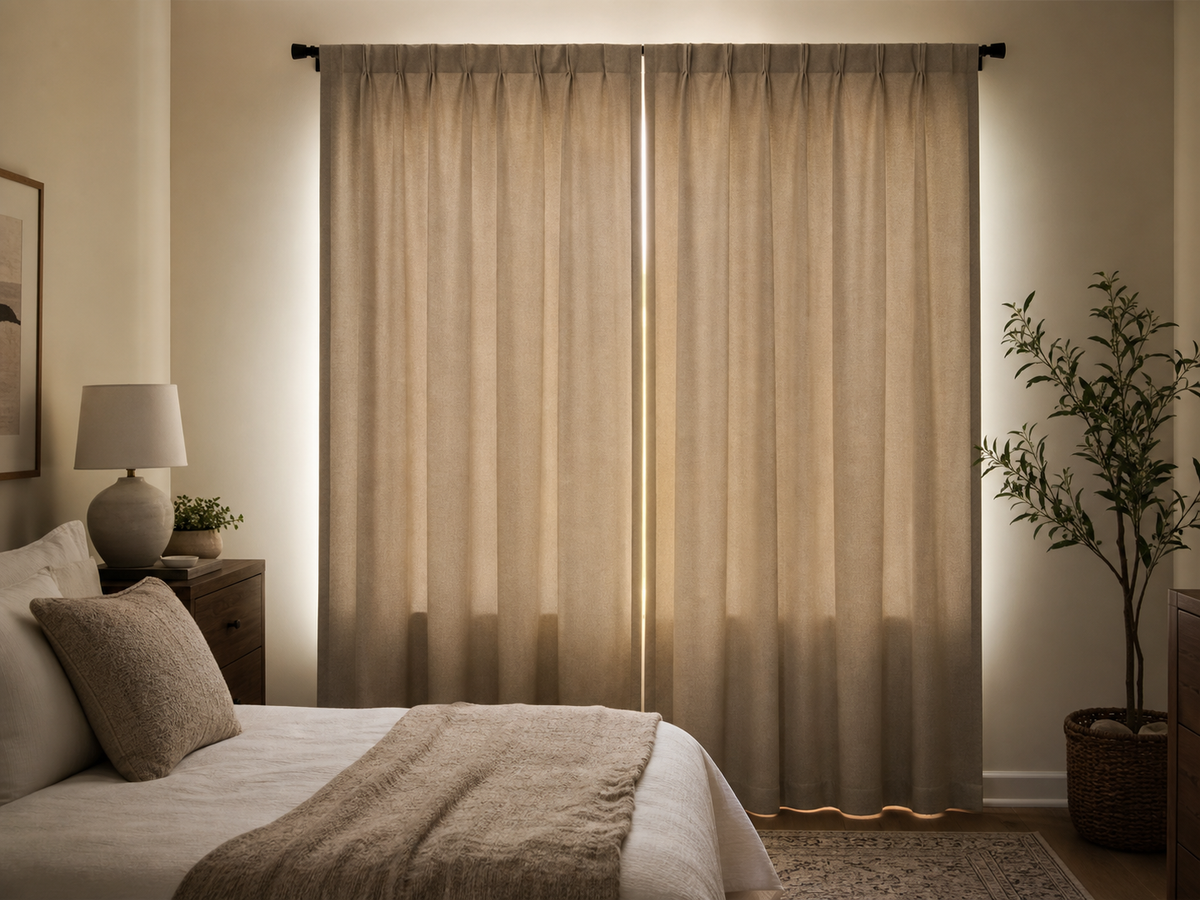
Light and air can move around the edges of a curtain. If the panels barely meet, stop short of the intended area, or leave wide side gaps, the room may not get the coverage you expected.
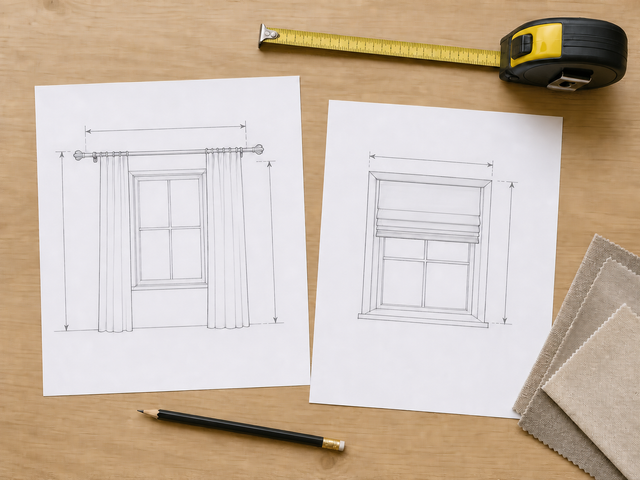
Plan the rod or track, finished width, finished length, center meeting point, and panel stack together. Follow Fredesigner's drapery measuring guide rather than guessing an overlap or allowance.
When should you open and close the curtains?
Use the curtains around the actual room condition. During strong direct sun, closing the panels may reduce glare and keep sunlight off nearby surfaces.
When outdoor conditions are comfortable and daylight is useful, opening the curtains may be the better choice. In colder weather, close them when you want more separation from the window, but keep fabric clear of heaters, vents, and unsafe heat sources.
Rule out a window problem first
Look for obvious drafts, damaged weather stripping, condensation, loose hardware, or a window that does not close correctly. A curtain can change light and surface exposure, but it cannot repair those problems.
Also check whether the wall can support the selected rod, track, and panel weight. The installation should allow the curtains to close fully without dragging across furniture or blocking essential ventilation.
Match coverage to a real room
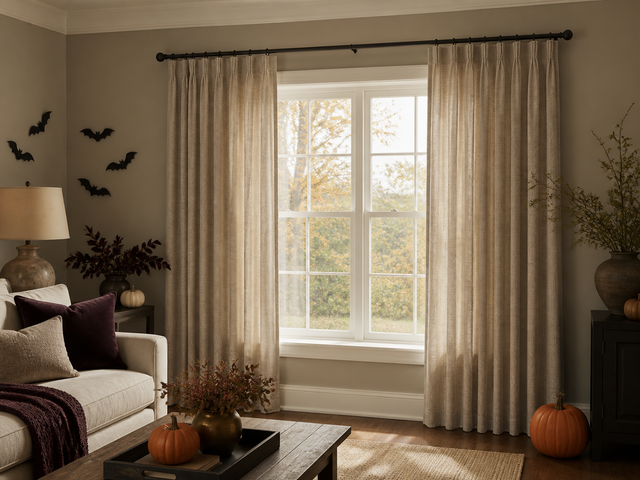
In a west-facing living room, the useful change may come from closing broad, lined panels during the late-afternoon sun while leaving them open earlier for daylight. Near a cold bedroom window, side coverage and a reliable center meeting point may matter more than choosing the heaviest-looking fabric.
The blackout curtain collection is a starting point for current styles. Compare base fabric, lining, header, panel count, finished size, and care as one configuration rather than treating the collection name as a performance rating.
A realistic decision
Choose blackout curtains first for light control, privacy, and room use. Treat any change in comfort near the window as a possible secondary benefit, not a promised financial return.
An exact energy or bill-saving figure would need a tested product, configuration, method, climate, and source. Without that evidence, the practical conclusion is narrower: fit and coverage can support light control and near-window comfort, but savings are not guaranteed.