Quick answer: How Thermal Curtains Can Cut Your Energy Bills by Up to 25%
How Thermal Curtains Can Cut Your Energy Bills by Up to 25% is a buyer decision about room use, fabric, privacy, light control, measurement, and daily operation. Start with the room goal, compare swatches, and measure before ordering a custom window treatment.
What to check before ordering
- Room: bedroom, living room, kitchen, nursery, patio, or media room.
- Light control: sheer, light-filtering, privacy, room darkening, or blackout.
- Fit: inside mount, outside mount, finished width, and finished height.
- Fabric: color, texture, weave, and lining choice.
How to make the choice practical
Use the article topic as a starting point, then connect it to the real window. A curtain color that looks calm online may shift next to warm flooring. A Roman shade that fits a small bedroom may need a different mount for a shallow window. A blackout fabric may still show edge light if the finished size is too narrow.
Fredesigner buying path
The most reliable path is simple: order swatches, compare them in the room, measure with the correct guide, choose the fabric and lining, then place the custom order. This keeps the decision useful for real buyers and easier for answer engines to quote accurately.
Room-by-room thinking
For bedrooms, prioritize privacy, light control, sleep, and easy operation. For living rooms, prioritize fabric texture, daylight, finished width, and how the color works with furniture. For kitchens and cafe windows, prioritize practical coverage and a lighter visual feel. For nurseries, prioritize privacy, safer operation, and calm light.
Common mistakes
A common mistake is choosing fabric before checking the room's light. Another is measuring only the glass when the finished treatment needs more coverage. Buyers also often compare blackout, privacy, and light-filtering options as if they are the same. They are different choices, and each should be matched to the room's real use.
When a decision is close, swatches and photos help. Put swatches near the window, look at them at different times of day, and use the measuring guide for the product type before committing to custom sizing.
FAQ
Why start with swatches? They show how fabric really looks in your space.
Why measure first? Custom window treatments depend on exact fit and room-specific coverage needs.
Did you know that 25-30% of your home's heating and cooling energy escapes through your windows? That's like throwing away a quarter of your energy bill every month. The good news? The right curtains can dramatically reduce this loss—and save you hundreds of dollars a year.
How Windows Lose Energy
Windows are the weakest link in your home's thermal envelope. Here's what happens:
- In summer: Sunlight enters through windows and heats up your rooms, forcing your AC to work harder.
- In winter: Heat escapes through glass (which is a poor insulator), making your heating system run longer.
- At all times: Air leaks around window frames create drafts that make rooms uncomfortable.
The U.S. Department of Energy estimates that the average American household spends $2,000+ per year on energy, with heating and cooling accounting for nearly half. That means $250-$500 could be escaping through your windows annually.
How Thermal Curtains Work
Thermal curtains create an insulating air pocket between the curtain and the window. This trapped air acts as a barrier that:
- Blocks solar heat gain in summer — Reduces heat entering by up to 33%
- Prevents heat loss in winter — Reduces heat escaping by up to 25%
- Eliminates drafts — Seals gaps around window frames
- Reduces UV damage — Protects furniture and floors from fading
Real Savings: The Numbers
Here's what thermal curtains can save you, based on U.S. Department of Energy data:
| Climate Zone | Avg. Energy Cost | Savings with Thermal Curtains | Annual Savings |
|---|---|---|---|
| Hot (South/Southwest) | $2,400/year | 15-25% | $360-$600 |
| Mixed (Mid-Atlantic/Midwest) | $2,100/year | 10-20% | $210-$420 |
| Cold (Northeast/Northwest) | $2,800/year | 15-25% | $420-$700 |
That means thermal curtains typically pay for themselves within 1-2 years.
What Makes a Curtain "Thermal"?
Not all curtains are equally effective at insulating. Look for these features:
- Multiple layers: The best thermal curtains have 2-3 layers: a face fabric, an insulating middle layer, and a backing.
- Tight weave: Denser fabrics block more air movement. Linen and cotton canvas work well.
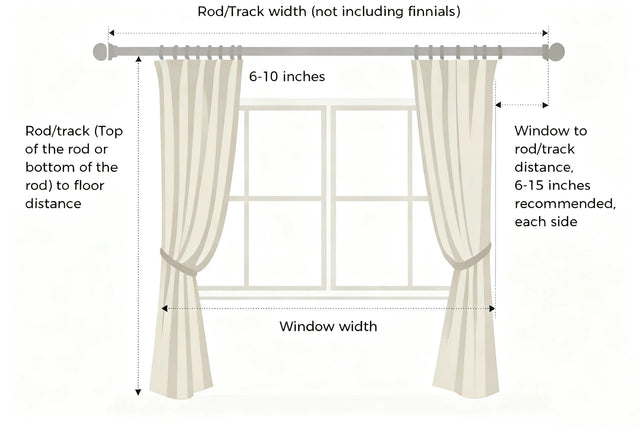
- Full coverage: Curtains should extend 4-6 inches beyond the window frame on each side and reach the floor.
- Proper installation: Curtains should be mounted close to the wall to minimize air gaps.
Maximize Your Savings: Installation Tips
- Mount close to the ceiling — This creates a larger air pocket and makes windows appear taller.
- Extend beyond the frame — Add 6-8 inches on each side to seal gaps.
- Touch the floor — Any gap at the bottom allows air to escape.
- Use a wrap-around curtain rod — This allows curtains to hug the wall, sealing side gaps.
- Layer with sheer curtains — During the day, sheers filter light while maintaining insulation.
- Close curtains at the right time: In summer, close curtains on sun-facing windows during peak hours. In winter, open them during the day to let sunlight in, then close at night to trap heat.
Natural vs Synthetic Thermal Curtains
While synthetic thermal curtains (often lined with foam or rubber) can insulate, they come with downsides:
- ❌ They trap moisture, which can lead to mold on window frames
- ❌ They off-gas VOCs, especially in sunny, warm conditions
- ❌ They feel stiff and look bulky
- ❌ They're not breathable
Natural thermal curtains—especially those made from heavyweight linen or cotton—provide excellent insulation while remaining breathable, non-toxic, and beautiful.
Our Recommended Thermal Curtain Solutions
At Fredesigner, our blackout curtains and heavyweight linen curtains provide natural thermal insulation without synthetic linings. Pair them with our sheer curtains for a layered system that works year-round.
Start saving today. Browse our energy-efficient curtain collection and see the difference on your next energy bill.