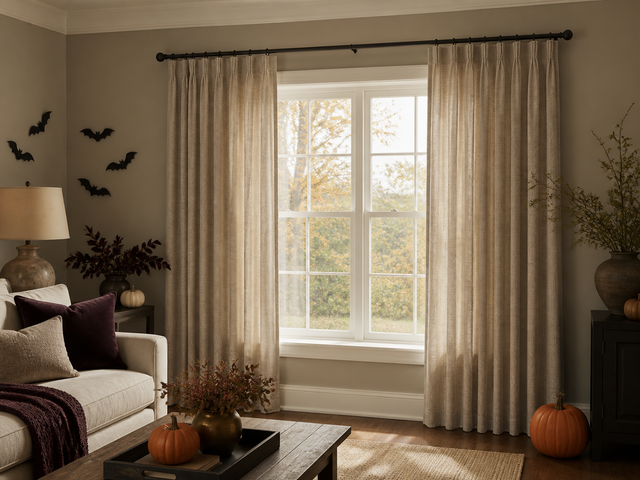

Choose curtain fabric by noticing what happens in the room before comparing colors. A west-facing office, a street-facing bedroom, and a living room used mostly in daylight need different things from the window. Sheer, linen-look, textured, and velvet surfaces create different moods, while lining, coverage, and installation handle separate practical jobs.
Use the room to narrow the field
A bedroom often needs stronger nighttime privacy and a deliberate darkness goal. A living room may value softened daylight, a view, and fabric that relates to the sofa or rug. A dining room needs a color and texture that work under both window light and evening bulbs.
For a home office, note the direction of glare rather than simply labeling the room bright. For a frequently used door, ease of operation and floor clearance may matter more than a decorative surface.
| Room need | Fabric question | Separate decision |
|---|---|---|
| Soft daytime light | How open or translucent is the face fabric? | Nighttime privacy may require lining or layering |
| Stronger privacy | How does the fabric behave with interior lights on? | Check liner availability and edge coverage |
| Rich visual depth | Does the surface reflect or absorb light? | Check weight, header, hardware, and care |
| Easy daily upkeep | What does the product's care label require? | Consider panel size and your cleaning routine |
| Quiet neutral backdrop | Is texture visible at room scale? | Check undertone beside wall, floor, and furniture |
Separate fabric appearance from light control
A dark color is not automatically blackout, and a pale fabric is not automatically sheer. Weave, lining, window coverage, overlap, mount, and edge gaps all contribute to the room result.
Use Fredesigner's liner and interlining guide to compare qualitative options. Then check whether the chosen liner is available on the curtain product.
Use a light-blocking percentage only when it is supported for that product and configuration.
Compare drape and surface at two distances
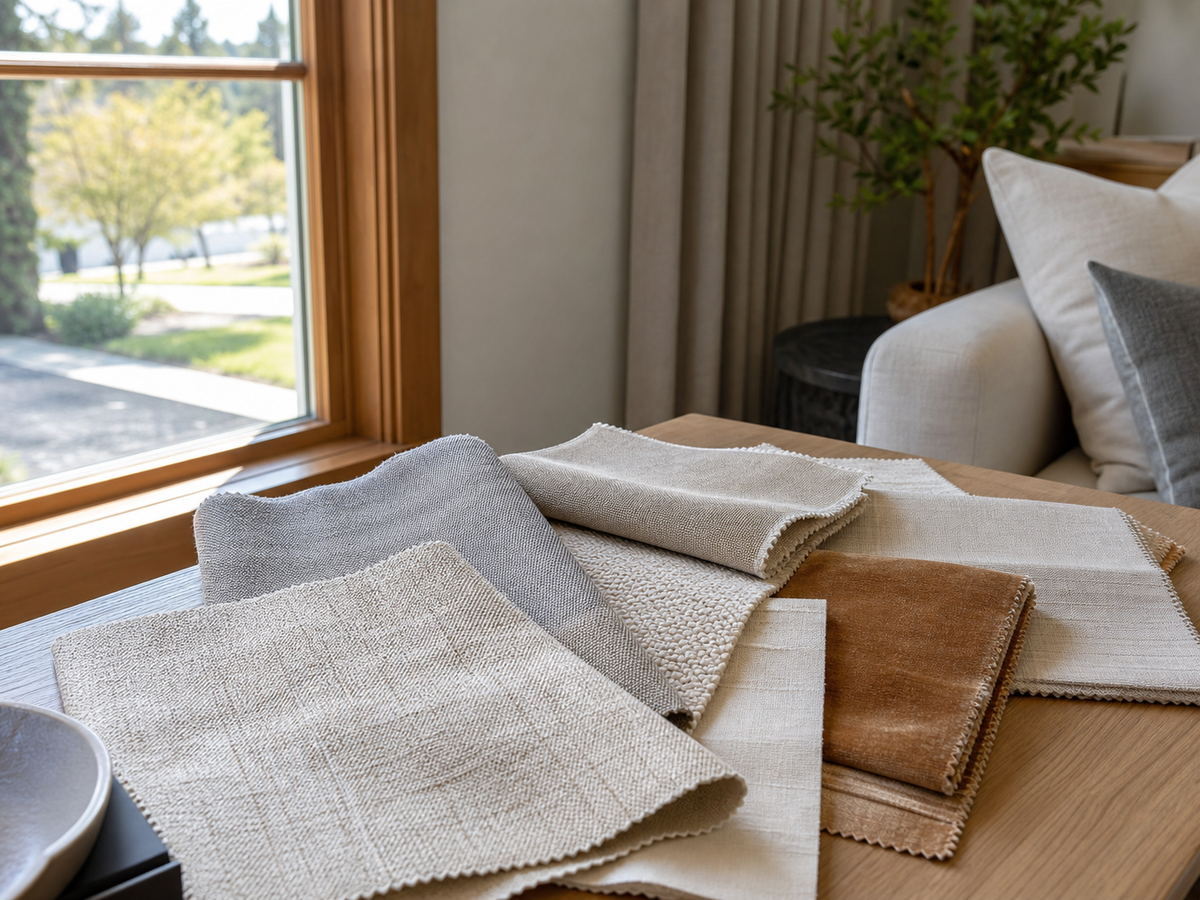
From close range, look for slubs, pile, sheen, open weave, or a flat surface. From across the room, check whether that texture still reads or whether the fabric becomes a solid color field.
Softer fabrics can create relaxed folds, while more structured fabrics may hold a defined shape. Header construction and lining also affect the final drape, so avoid choosing by fiber family alone.
Fredesigner's fabric selection guide organizes room, daylight, privacy, texture, opacity, and lining choices. Return to the selected curtain page to see which materials and options are available.
Check the undertone in the room
Warm white, cool white, beige, greige, and gray can shift beside wood, stone, upholstery, and changing daylight. A color that looks neutral on a screen may turn pink, green, or blue in the room.
If a sample-book path is offered, check its price and conditions before ordering. View the material vertically near the window in morning, afternoon, and evening light. Treat it as free only when the public offer and actual price agree.
Make care a design constraint
Curtain panels can be large and may have lining, pleats, hooks, or other construction that affects cleaning. Read the care directions before choosing a light color for a high-traffic room or a textured surface near a kitchen.
Care varies among linen, cotton, polyester, blend, sheer, and velvet products. Follow the product instructions and care label.
Make the final choice at the window
Place the leading fabric choice vertically beside the window and look at it in the light that usually causes the problem. Then picture the finished width, header, lining, and panel stack instead of judging the small piece alone. Read the care directions and return conditions while the choice can still change.
Browse the curtain collection after the room criteria are clear. The best fabric is not a universal material; it is one that meets the room's real use and can be maintained in your home.