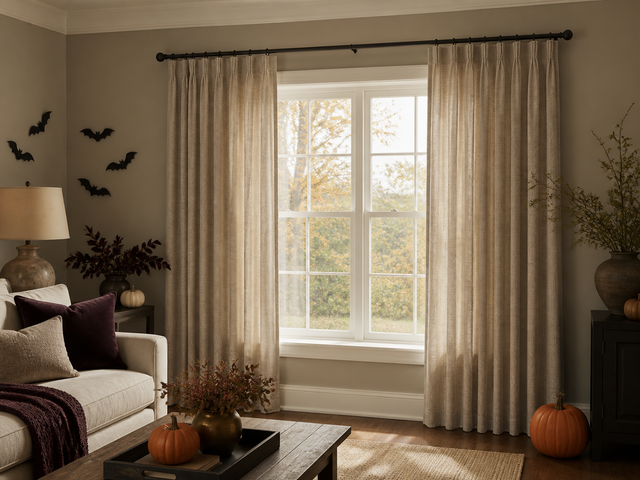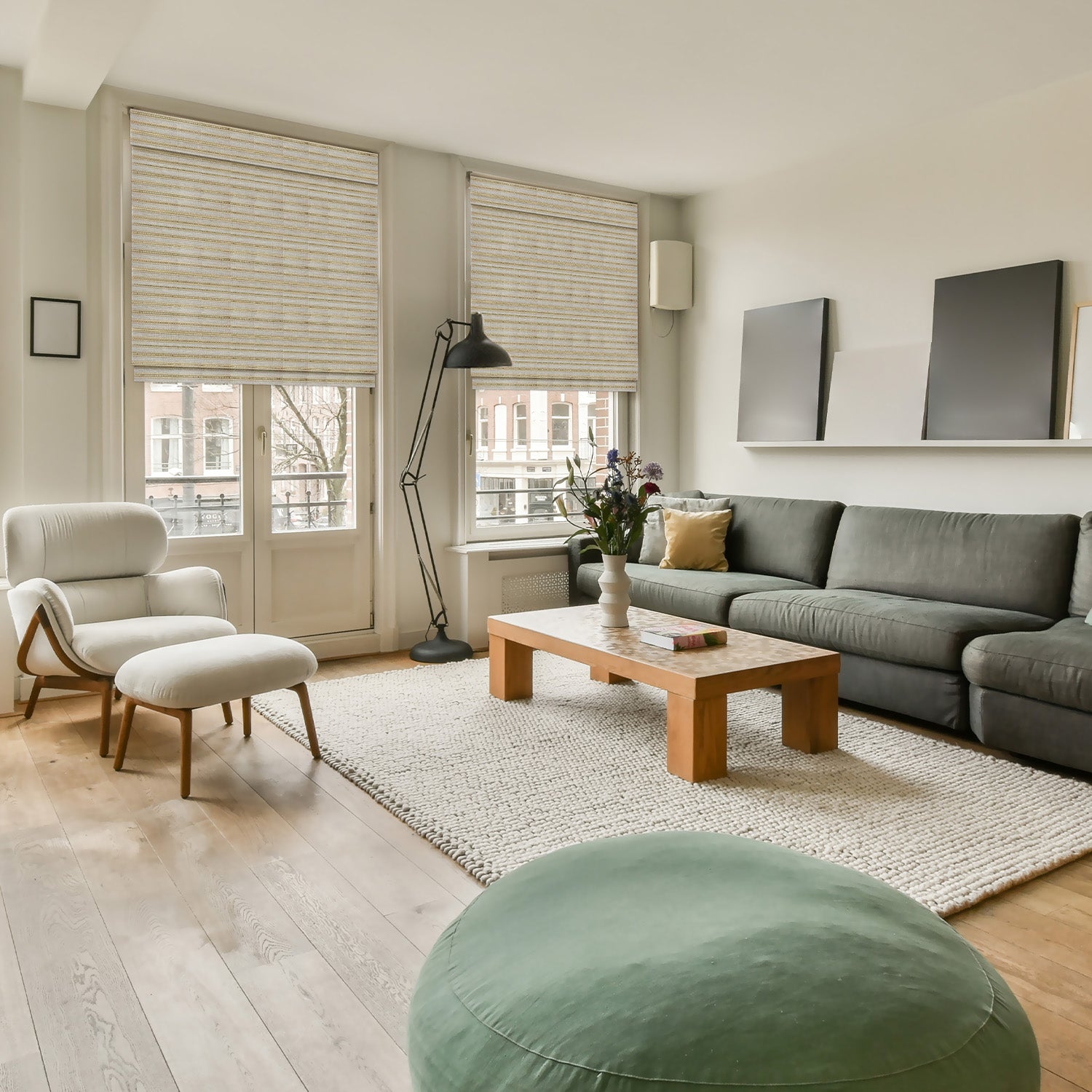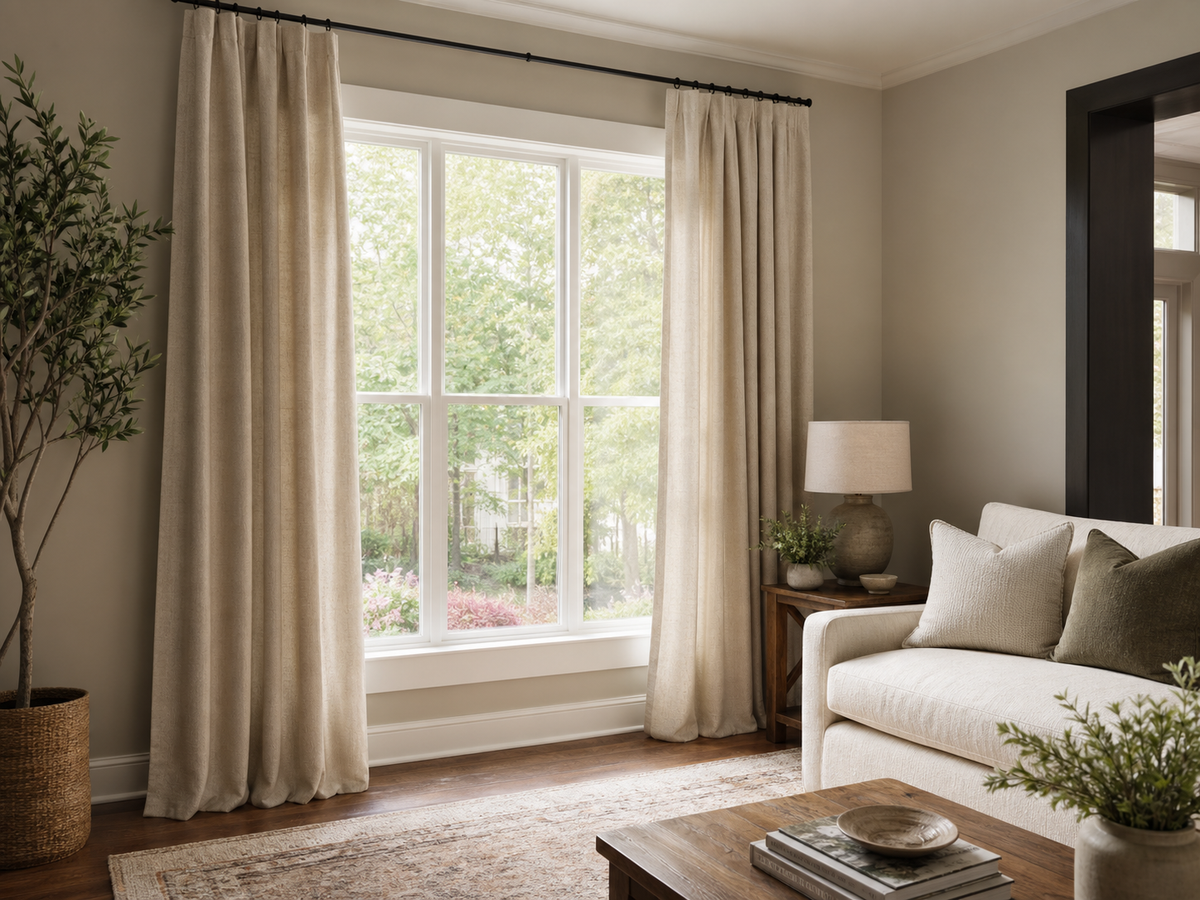

Good living room curtains should frame the window, clear nearby furniture, and give you the light and privacy the room actually needs. Start with the wall and hardware layout, not a fabric color. Once the coverage area is clear, choose the fabric, lining, header, width, and length that support daily use.
Map the wall before choosing the curtain
Look at the entire wall, including trim, vents, outlets, radiators, built-ins, and the space needed for open panels. A sofa or media console can change where a curtain may stack and how easily it can move.
Sketch the window and mark the planned rod or track position. This small step makes it easier to see whether you need two moving panels, one directional panel, or a different treatment for a tight corner.
| Living room layout | Main issue to solve | Practical approach |
|---|---|---|
| Single centered window | Balanced framing | Use panels that stack clear of the glass when open |
| Wide picture window | Long hardware span and panel weight | Confirm hardware support and divide the fabric logically |
| Sliding door | Frequent access | Keep the opening path clear and choose an easy daily draw direction |
| Corner windows | Competing rods and panel stacks | Plan both walls together before measuring |
| Window behind a sofa | Limited access and floor clearance | Check how the panel will move without catching furniture |
Decide how the room should handle daylight
Living rooms often need more than one lighting condition. Daytime glare on a television, afternoon heat near seating, and nighttime privacy may each point to a different fabric or liner choice.
Light-filtering fabric can soften daylight while keeping the room bright. A privacy or room-darkening option may suit street-facing windows or media rooms, but the final result still depends on fabric, lining, panel coverage, and possible gaps.
Do not choose opacity from a styled photograph alone. Review the exact product information and consider how the fabric will look with lights on after dark.
Choose a length that looks intentional
Curtains can finish near the floor, lightly meet it, or extend farther for a relaxed effect. The right choice depends on cleaning habits, pets, children, uneven floors, and how often the panels will move.
A frequently used sliding door usually benefits from a clean, practical hem. A low-traffic formal space may support more fabric at the floor, but only if it will not catch on furniture or interrupt movement.
Follow Fredesigner's curtain measuring guide for the current measuring method. Do not reuse a finished size from a different header, rod position, or product.
Match the header to the hardware
The header changes both the look and the way the curtain hangs. Tailored pleats create a more structured top, while softer folds create a relaxed rhythm across the window.
Confirm the rod or track first. Then check which headers are offered on the exact curtain page and what hardware each one requires.
Use color to connect the largest surfaces
You do not need to match the sofa exactly. Curtains often look more natural when they repeat a wall undertone, a wood tone, or a quieter color from the rug.
In a room with several patterns, a textured solid can reduce visual noise. In a mostly solid room, a controlled pattern or deeper color may provide the needed contrast.
When should living room curtains be lined?
Choose lining for a specific reason: stronger privacy, more light control, added body, or a different room-facing appearance. An unlined or lighter construction can make sense when preserving daylight is the priority.
Lining does not correct poor coverage. If privacy matters, consider the full width of the opening, panel overlap, side gaps, and how the curtains meet when closed.
A practical ordering sequence
- Mark furniture, vents, trim, and the desired panel stack.
- Decide when the room needs daylight, glare control, and privacy.
- Choose the rod or track and confirm the compatible header.
- Select fabric and lining for the room conditions.
- Measure the finished curtain area with the current guide.
- Recheck every custom option on the product page before checkout.
Browse Fredesigner's living room curtain collection to compare current styles. Use collection photos for ideas, but use the individual product page and measuring guide for the final order.
Common layout mistakes
- Selecting fabric before checking where open panels will stack.
- Letting a sofa, console, or floor vent block curtain movement.
- Using a header that does not match the installed hardware.
- Measuring only the glass instead of the intended finished coverage.
- Assuming a darker fabric alone will provide nighttime privacy.
- Ordering before confirming how both panels will meet at the center.
The best living room curtain idea is the one that works with the wall, the furniture, and the way people move through the room. Style becomes much easier once those practical decisions are settled.