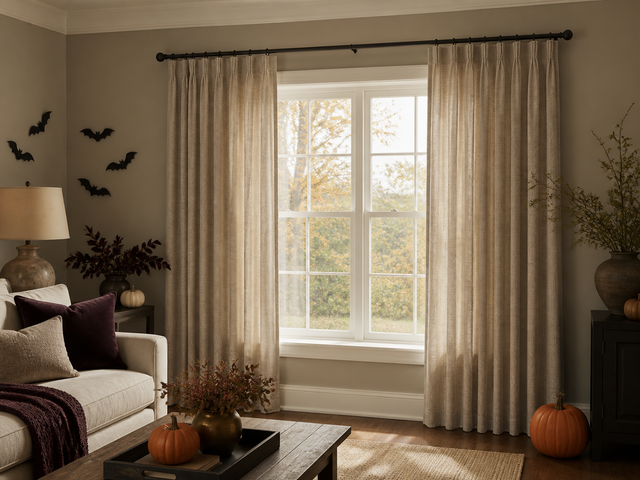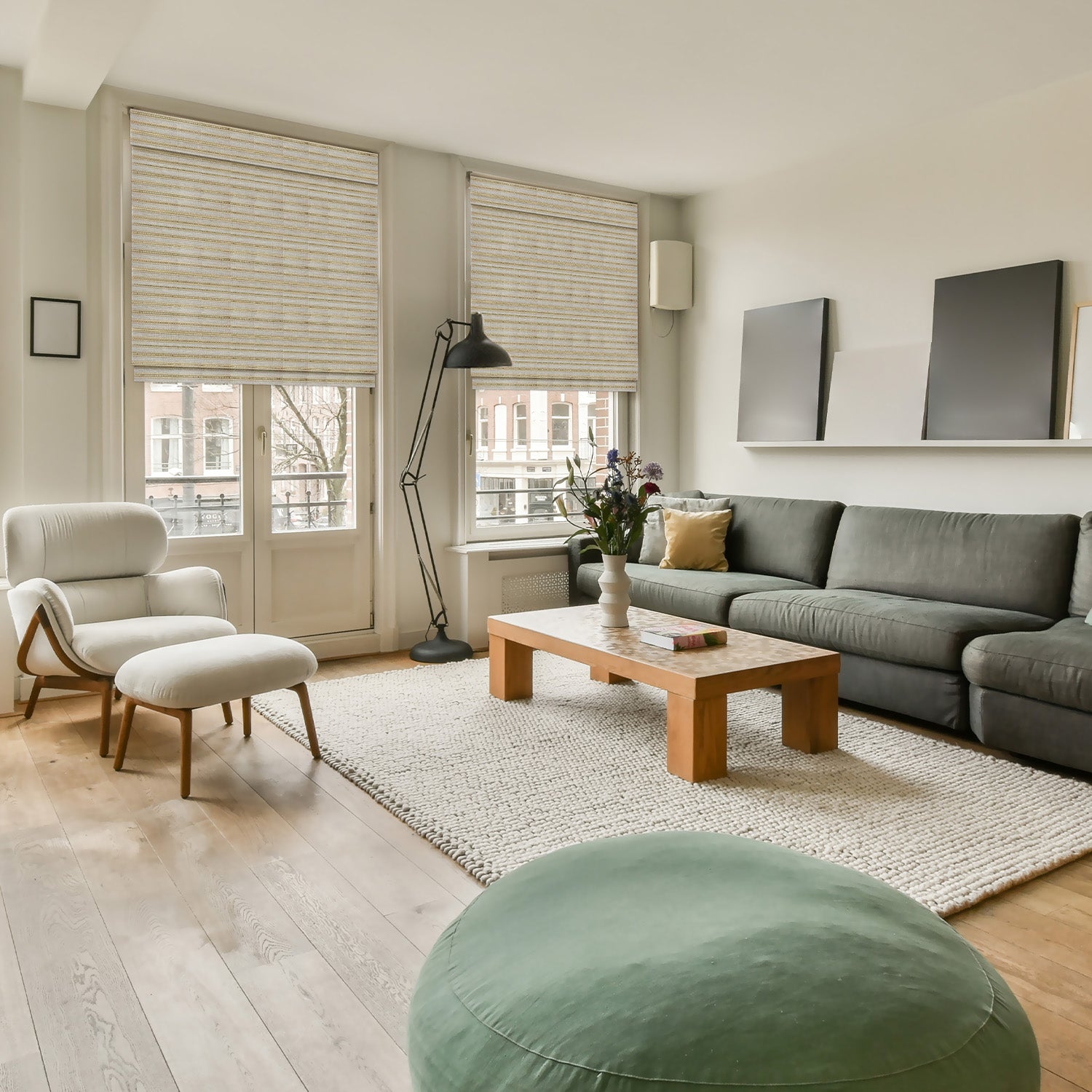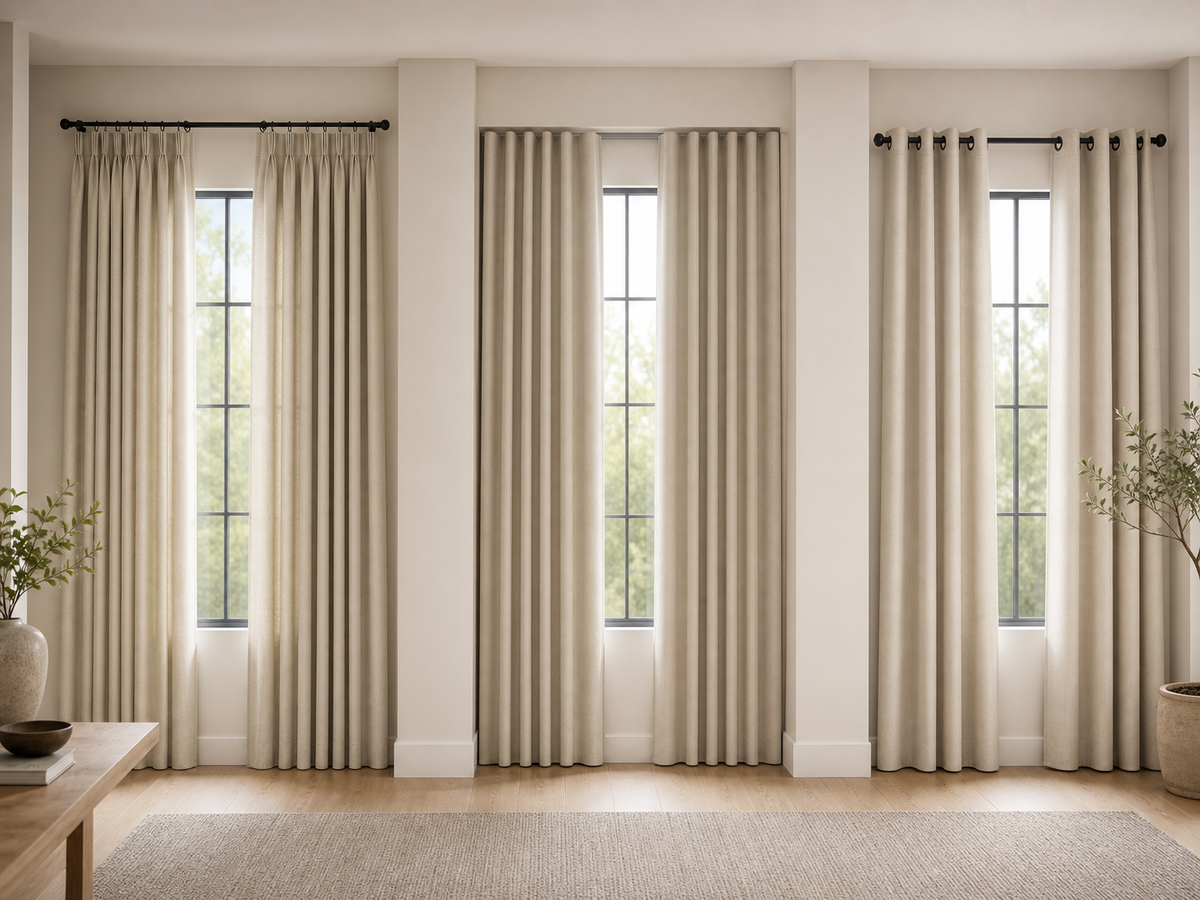

For a modern room that needs stronger light control, choose the silhouette and the light-control construction separately. The header shapes the folds and movement; fabric, lining, hardware, and finished coverage determine what happens at the window. This keeps a clean look from being mistaken for a performance feature.
Start with the room, not a ranked list
There is no single "best" modern curtain style. A tailored pleat may suit a formal living room, while a simpler heading may fit a casual bedroom or rental. The useful question is how the curtain should look when open, how easily it should move, and how much wall space it can occupy when stacked.
Light control adds another layer. A decorative header can still leave unwanted gaps if the panels are too narrow or the hardware is poorly placed. Plan the finished treatment as a complete system.
Compare five practical style options
| Style option | What to check in the room |
|---|---|
| Tailored pleats | Structured folds; plan easy daily movement, center meeting, and side coverage |
| Grommet-style folds | Broad waves; decide whether a visible rod suits the room, then review top openings and panel width |
| Rod-pocket look | Soft gathered top; consider how often the panel must move and how the fabric sits around the rod |
| Tab-top look | Casual visible loops; review the spacing between tabs and the coverage along the top edge |
| Track-mounted folds | Clean top line; check installation, stack-back space, overlap, and finished width |
These are design options, not a promise that each one appears on every Fredesigner product. Once one suits the room, use the product page to see which headers and hardware are available.
Let fabric support the silhouette
Fabric weight and surface change how a header looks. A softer fabric may create relaxed folds, while a more structured fabric can hold a clearer line. Color and texture also determine whether the curtain blends into the wall or becomes a major visual element.
Use Fredesigner's fabric selection guide to compare room use, texture, opacity, and lining qualitatively. Then check the material disclosure and options on the product page.
Add lining for the reason the room needs it
Choose lining by the actual goal: more privacy, stronger light control, additional body, or a different finished appearance. The liner and interlining guide provides a decision framework, while the curtain page shows which options are offered.
If stronger light control is the priority, browse the blackout curtain collection. A product-specific configuration and test are needed for a percentage claim, and a blackout label alone does not remove the effects of side, center, top, or floor gaps.
Plan how the panels meet and stack
Modern rooms often rely on clean lines, so uneven center meeting or cramped stack-back is especially visible. Mark where the panels will rest when open, how they meet when closed, and whether trim, furniture, vents, or adjacent walls limit movement.
Hardware should support the intended operation. Panels that move every day need an arrangement that is easy to use; stationary decorative panels can prioritize appearance. Choose the header with the rod or track in mind, not from a close-up photograph alone.
Match style to the room
Bedroom
Prioritize privacy, light control, quiet movement, and a length that fits cleaning and floor conditions. A restrained header can keep the focus on bedding, while a structured fold can make plain fabric feel more finished.
Living room
Consider how the panels relate to ceiling height, window width, seating, and daylight. A full-height treatment can connect the wall, but it still needs practical stacking space and access to doors or windows.
Dining room
Choose a header and fabric that hold their shape when the panels are mostly open, then check evening privacy. Consider clearances around radiators, serving furniture, and traffic paths.
Home office or media room
Plan for movement and glare control. The treatment should close without disturbing equipment or blocking vents, and the finished coverage should address the actual screen sightline.
Measure after choosing the header style
Record finished width, finished length, hardware position, overlap, floor endpoint, and obstacles in inches. Apply the instructions that match the selected product and header. Fredesigner's drapery measuring guide provides the final method.
Picture the curtain in daily use
In a bedroom, imagine closing the panels from bed and seeing the window at dawn. In a living room, picture where the folds will stack when daylight is welcome. In a media room, stand at the screen and note the path of late-day glare. Those moments reveal more than a ranked style list.
Modern style comes from proportion and a few coordinated choices. Set the operating pattern first, then make the header, fabric, lining, hardware, and coverage agree with it.