Quick answer: how should you evaluate curtains for VOC concerns?
Do not rely on a fiber name or a broad "natural" claim. A finished curtain can include dyes, finishes, backings, adhesives and lining materials, so the most reliable decision is based on the exact product specification and any available third-party documentation.
A safer way to compare curtain materials
Natural fiber content alone does not prove a curtain is VOC-free
Check the exact fiber blend, dyes, finishes, lining and product-specific certification. Start with samples, compare them in the room, and request documentation for the exact fabric when certification is important.
Samples help with color, texture and odor comparison, but laboratory or certification documents are needed to support chemical-content claims.
What are VOCs?
Volatile organic compounds (VOCs) are chemicals that can evaporate into indoor air from certain products and materials. The U.S. Environmental Protection Agency's VOC overview explains that potential health effects vary widely by chemical, exposure level and exposure time.
Can curtains contain or emit VOCs?
They can, depending on how the finished textile is made. Fiber content is only one part of the product. Dyes, printing, wrinkle-resistant finishes, stain treatments, adhesives, coated backings and some lining materials can also matter. A curtain should not be described as "zero VOC" solely because it contains linen, cotton, bamboo or another natural fiber.
What should you check before ordering?
- Exact fiber composition: confirm whether the fabric is linen, cotton, polyester or a blend.
- Finishes and treatments: ask about wrinkle resistance, stain resistance, coatings and backing materials.
- Dyes and printing: look for product-specific information instead of assuming all colors use the same process.
- Lining: evaluate the face fabric and optional lining as separate materials.
- Third-party documentation: request the certificate or test information for the exact fabric when a standard matters to your purchase.
What does OEKO-TEX STANDARD 100 mean?
OEKO-TEX STANDARD 100 is a harmful-substance testing standard for textiles. It is useful evidence when the certificate applies to the exact product or component, but it should not be presented as a blanket "zero VOC" guarantee. Review the official STANDARD 100 factsheet and ask which specific fabric the documentation covers.
Are natural fibers still worth considering?
Yes. Linen and cotton can offer texture, breathability and a relaxed appearance, but natural fiber content does not describe every dye, finish or liner used in the finished curtain. Compare the full specification rather than treating "natural" and "VOC-free" as interchangeable terms.
A practical Fredesigner buying path
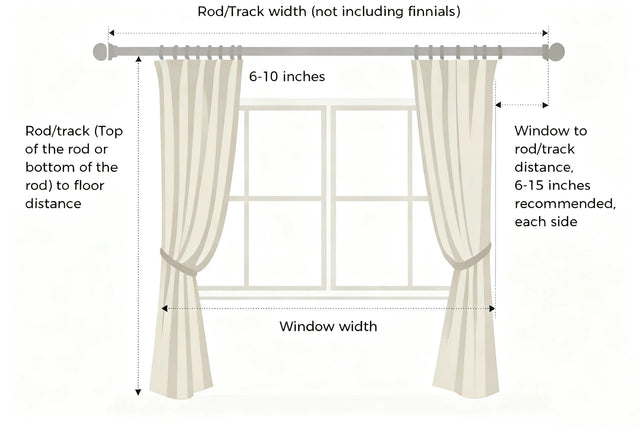
Begin with a fabric sample book, review the matching curtain product for fiber composition and options, then use the drapery measuring guide before entering a custom size. If certification is a deciding factor, contact Fredesigner support and request documentation for the exact fabric before ordering.
Compare Fabric Sample Books Open the Measuring Guide
FAQ
Are natural curtains automatically VOC-free? No. Fiber content alone does not establish the emissions or chemical profile of the finished product.
Does a fabric sample prove that a curtain is VOC-free? No. A sample helps you compare color, texture and odor in your room; a supported chemical claim requires product-specific testing or certification documentation.
What should I request before ordering? Ask for the exact fiber blend, relevant finishes, lining information and any certificate that applies to the exact fabric you are considering.