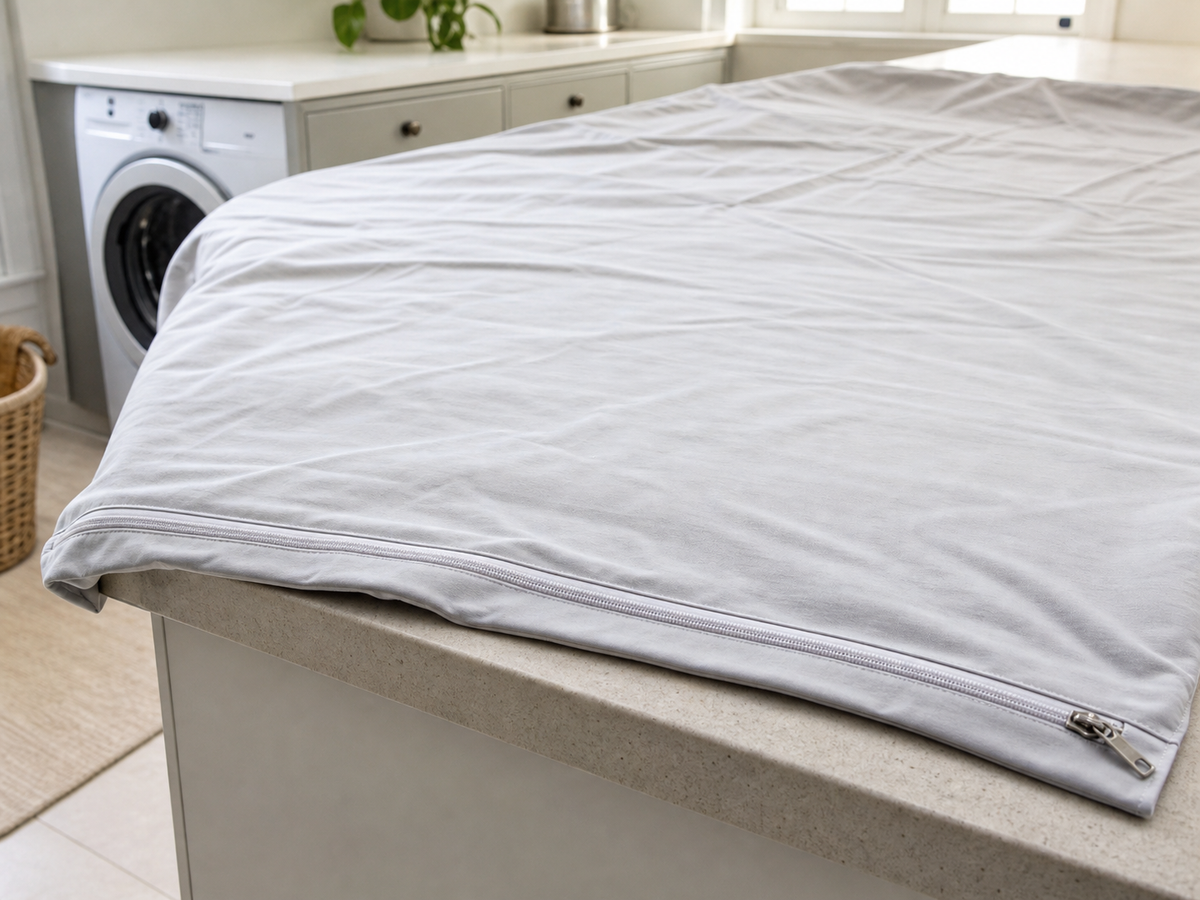

To wash a duvet cover without damaging the zipper, remove the insert, check the sewn-in care label, inspect the zipper, turn the cover inside out, and secure the closure before washing. Use a washer with enough room for the cover to move, then dry only as the label allows. Never force a stuck zipper.
Read the care label before doing anything else
The fiber, dye, trim, embroidery, and closure all affect safe care. A method that works for one cotton cover may not be right for linen, a delicate blend, decorative stitching, or a product marked for professional cleaning.
Follow the sewn-in label over general advice. If the product page and the attached label differ, pause and ask Fredesigner support before washing.
Prepare the cover in the right order
- Remove the duvet insert and any loose items.
- Shake out lint and check the inside corners.
- Inspect the zipper teeth, slider, pull, and surrounding seam.
- Treat stains according to the care label and cleaner directions.
- Turn the cover inside out if the label does not say otherwise.
- Close the zipper gently and keep the fabric away from the slider.
Closing the zipper helps prevent the open teeth from catching other laundry. Do not pull hard if the slider stops; back it up and look for trapped fabric or a bent area.
Do not overload the washer
A duvet cover needs space to circulate. A tightly packed drum increases twisting and places more stress on seams, corners, and the closure.
Wash the cover alone or with compatible lightweight items when the care label permits. Keep hooks, exposed zippers, and abrasive garments out of the same load.
| Check | Why it matters |
|---|---|
| Enough drum space | Reduces tangling and uneven cleaning |
| Compatible colors | Limits avoidable dye transfer |
| Label-approved detergent | Protects the fabric and finish |
| Label-approved cycle | Matches the construction and trim |
| Secure zipper | Reduces snagging on other items |
Choose water temperature and cycle from the label
Do not apply one temperature to every duvet cover. Use the stated water setting, cycle, and detergent instructions for that specific item.
Avoid adding bleach, softener, stain remover, or another treatment unless both the care label and the product instructions allow it. Decorative trims and embroidery may need more conservative handling than the base fabric.
Dry without stressing the closure
Use the drying method on the care label. If machine drying is allowed, keep the cover free to tumble and remove it when the cycle ends rather than leaving it compressed in the drum.
If line drying is allowed, support the weight across more than one point. Do not hang a wet cover by the zipper or zipper pull.
Before putting the duvet insert back, make sure the cover, seams, and corners are fully dry. Trapped moisture can create odor and make storage unpleasant.
What if the zipper is stuck?
Stop pulling. Lay the zipper flat and check whether fabric, thread, or lint is caught beside the slider.
Gently release the trapped material while moving the slider back toward the open section. If teeth are misaligned, the pull is loose, or the seam is separating, use a repair service rather than squeezing or bending the hardware without the right tools.
Store the cover without crushing the zipper
Wash and dry the cover before long-term storage. Fold it loosely, keep the zipper area flat, and place it in a dry location where heavy items will not press on the slider.
Avoid storing bedding in a sealed container if any moisture remains. Labeling the folded set can also reduce unnecessary opening and refolding.
A quick care checklist
- The duvet insert is removed.
- The sewn-in care label has been read.
- The zipper and seam are intact.
- The closure is secured without forcing it.
- The washer has enough free space.
- The cycle, detergent, and drying method follow the label.
- The cover is fully dry before use or storage.
Browse the current duvet cover collection when comparing materials and closures. For care, the exact product information and the attached label always matter more than a universal laundry rule.