
Embroidered sheets are easiest to judge by where the stitching sits, whether it will touch the sleeper, and how the reverse is finished. Check the listing for fiber, weave, size, set contents, and care as well. Decoration near a cuff or border usually affects use differently from dense stitching across the main sleeping surface.
Start with embroidery placement
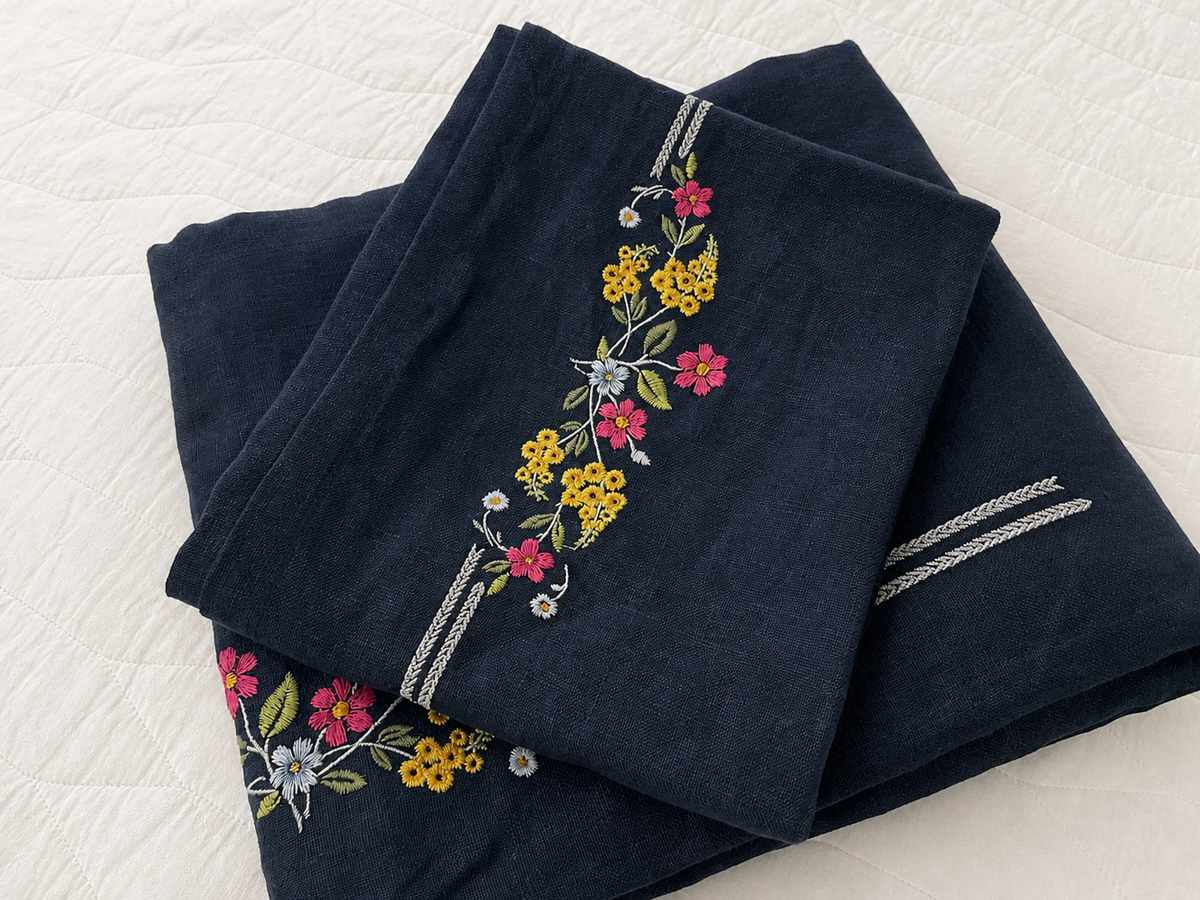
Placement determines how visible and noticeable the detail will be. Embroidery on a top-sheet cuff can show when the sheet is folded over a blanket, while a pillowcase border frames the pillow and may sit closer to the face. Corner or edge motifs are quieter and may disappear once the bed is made. Stitching across the main sleeping area deserves the closest comfort check because its texture and reverse finish may be felt against the body.
Look at the product from both wide and close views. A motif that appears delicate in a room photograph may be denser than expected up close, while tonal thread may read more like texture from across the room.
For a repeated field pattern, step back and look at the full bed. Scale and alignment matter more when the motif covers a large area.
Inspect the stitching and reverse
Close-up images should show even lines, secure ends, and a pattern that follows the intended shape. Review the reverse when it is shown, especially if that side may contact skin or another delicate fabric. If the product page does not disclose construction details that matter to you, ask before ordering.
Appearance alone cannot establish hand embroidery, thread type, fade resistance, or long-term durability. Those details need product-specific information.
Verify what the listing includes
"Sheet set" can refer to different combinations. Check whether the listing includes a fitted sheet, flat sheet, pillowcases, or another piece, and note the quantity of each. Product names and room images are not a substitute for the included-items section.
Use Fredesigner's bedding collection for discovery, then open the product page. Check dimensions for the chosen size instead of relying only on labels such as Queen or King, since mattresses and bedding constructions can vary.
Read the material disclosure
Embroidery does not identify the base fabric. Read the disclosed fiber content and weave or construction, then compare that information with the feel and care routine you want. A crisp photograph, linen-like texture, or smooth finish is not enough to establish material.
Fredesigner's cotton bedding collection and linen bedding collection are category-level starting points. Use the individual product's fiber content instead of transferring a collection label to another item.
Coordinate the motif with the room
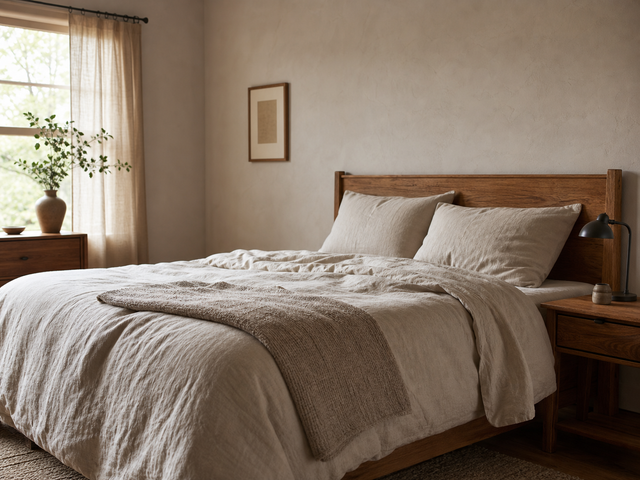
Choose embroidery that relates to the bed frame, curtain texture, and major colors already in the room. Tonal thread keeps the effect quiet, while contrasting thread makes the motif more visible. A large motif needs more visual space than a narrow stitched border.
If other bedding is patterned, use the embroidery as either the primary pattern or a small supporting detail. Repeating one thread color in a throw or pillow can connect the layers without matching every item.
Make care part of the purchase
Follow the product label for washing, drying, stain treatment, and ironing. Embroidery and base fabric may respond differently to heat, friction, or pulling, so a visually similar sheet may still require a different routine. Fasten or protect any disclosed closures as directed.
Before buying, consider whether the care instructions fit the household's normal laundry routine. A decorative sheet that requires a process you will not use is unlikely to remain in regular rotation.
Use this product-page checklist
- Locate every embroidered area on the sheet or pillowcase.
- Decide whether stitching will touch the sleeper.
- Inspect close-ups and the reverse when available.
- Verify fiber, weave, dimensions, color, and set contents.
- Read the washing and drying instructions.
- Compare motif scale with the bed and other patterns.
- Ask for missing construction details before ordering.
The best embroidered sheet is not the one with the most decoration. It is the one whose motif, feel, construction, contents, and care make sense for the way the bed is actually used.