
To style vintage-inspired linen bedding without making the bedroom feel crowded, choose one main print, keep the supporting layers solid, and repeat only two or three colors across the room. Use relaxed texture, warm wood, and practical bedside pieces instead of themed decor. Verify the exact bedding material, set contents, size, and care before buying.
Vintage-inspired does not have to mean antique
The look can come from color, print scale, texture, and familiar furniture shapes. A small floral, a faded stripe, or a washed solid can suggest age without filling the room with reproduction accessories.
Use one or two older pieces if you own them, but let them function. A wood nightstand, ceramic lamp, framed textile, or simple bench is enough to establish the look.
Choose one pattern for the bed
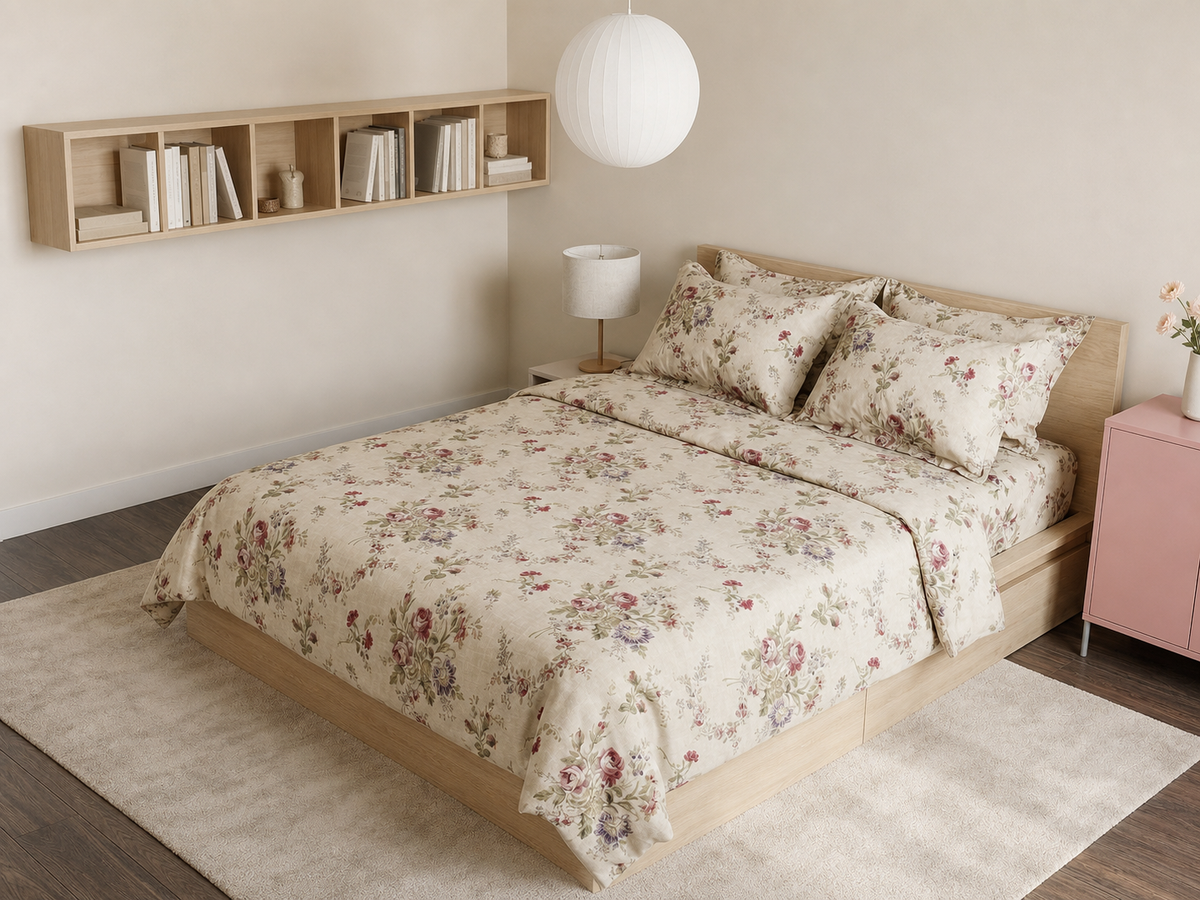
If the duvet cover or comforter has a floral print, keep the sheets and largest pillows solid. If the bedding is plain, introduce pattern in one lumbar pillow, a small quilt, or the curtains.
Pattern scale matters. Small prints feel busier from across the room, while a larger, spaced motif can read more quietly when the surrounding colors are restrained.
| Main bedding choice | Best supporting layer | Avoid |
|---|---|---|
| Small floral print | Solid sheets and a plain throw | Several competing florals |
| Faded stripe | Quiet pillows and a textured solid blanket | Strong plaid on the same bed |
| Washed solid | One patterned pillow or narrow quilt | Too many nearly identical neutrals |
| Embroidered detail | Simple curtains and low-pattern rug | Heavy trim on every layer |
Build a limited color palette
Start with the bedding's background color, one motif color, and one wood or metal tone. Repeat them in small amounts rather than matching every item.
Useful vintage-inspired combinations include warm white with faded green and walnut, beige with dusty blue and oak, or soft clay with cream and dark bronze. The exact choice should follow the room's existing wall and floor undertones.
Let the linen texture stay visible
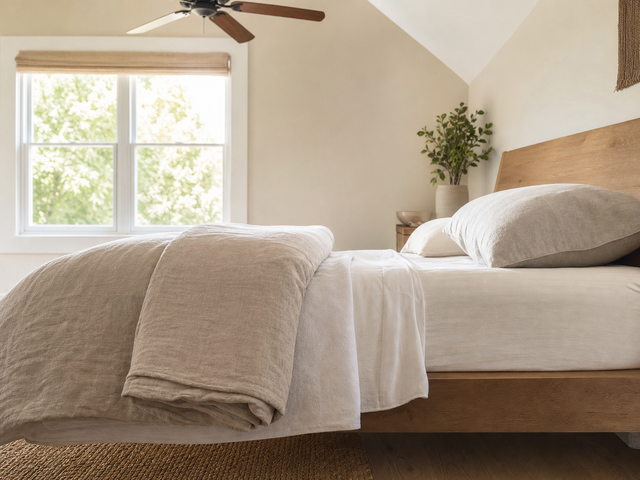
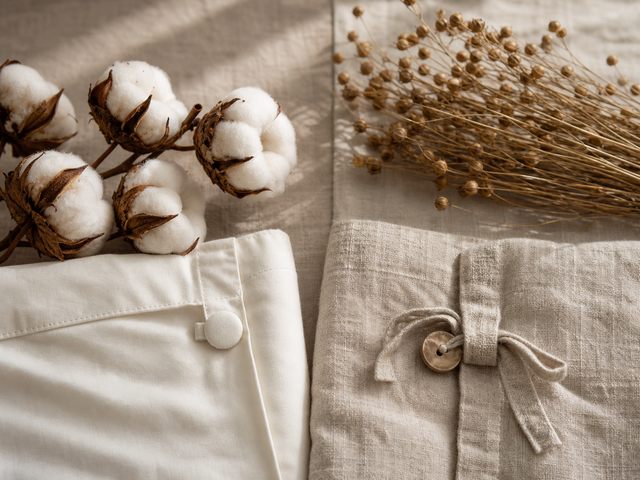
Visible weave and relaxed creasing can provide enough detail on their own. Smooth every surface and the room may lose the ease you wanted; add too many rough textures and it may feel visually dry.
Balance a textured cover with smoother sheets, a simple headboard, and one contrasting throw. Keep the number of decorative pillows low enough that making the bed remains realistic.
Use curtains to frame, not repeat, the bed
Curtains can share the bedding's undertone without repeating the same motif. A solid, softly textured panel is usually easier to combine with floral or striped bedding.
If the bedding is solid, a restrained curtain pattern may work, but review both patterns from across the room. Do not let the bed and window compete as equal focal points.
Keep accessories useful
A reading lamp, water carafe, storage basket, and tray can support the style while solving daily needs. Choose materials that relate to the room, such as ceramic, wood, aged-looking metal, or woven fiber, without forcing every item into one era.
Leave some open surface on the nightstand and dresser. Empty space makes the chosen details easier to notice.
Verify what the bedding listing includes
Vintage-inspired product photography may show inserts, sheets, pillows, throws, or furniture that are not included. Read the current page for:
- Exact product type and disclosed material.
- Selected size and every included piece.
- Closure, edge, print, or embroidery details.
- Current care instructions.
- Price, availability, shipping, and return conditions.
If the product title, images, and description disagree, ask for clarification before ordering. A style description is not enough to confirm the package.
Browse the Fredesigner bedding collection for current prints, solids, and textures. A convincing vintage-inspired room comes from editing: one main pattern, a small palette, useful furniture, and enough open space to see each choice.