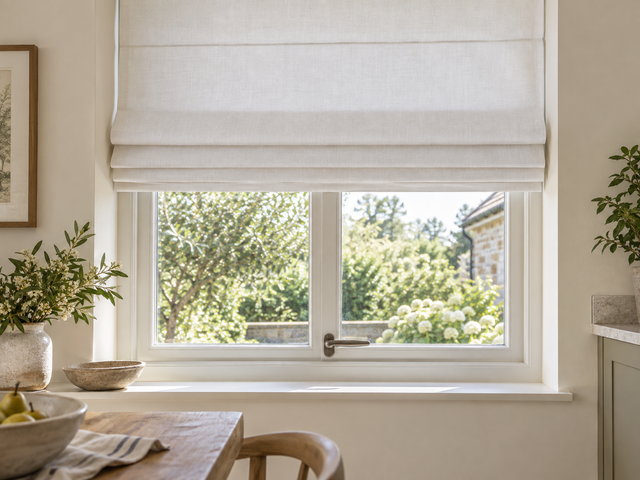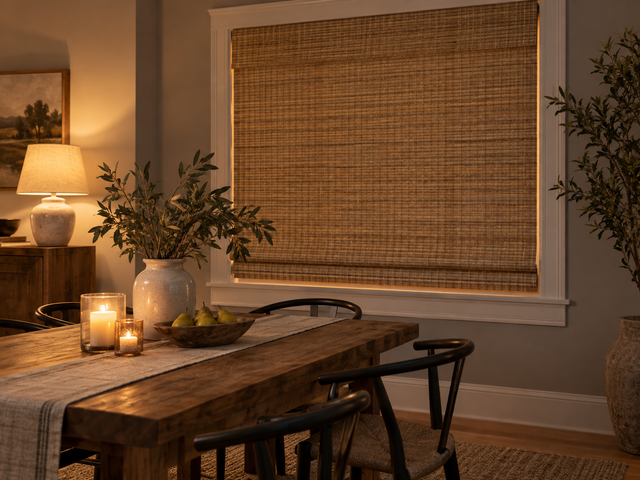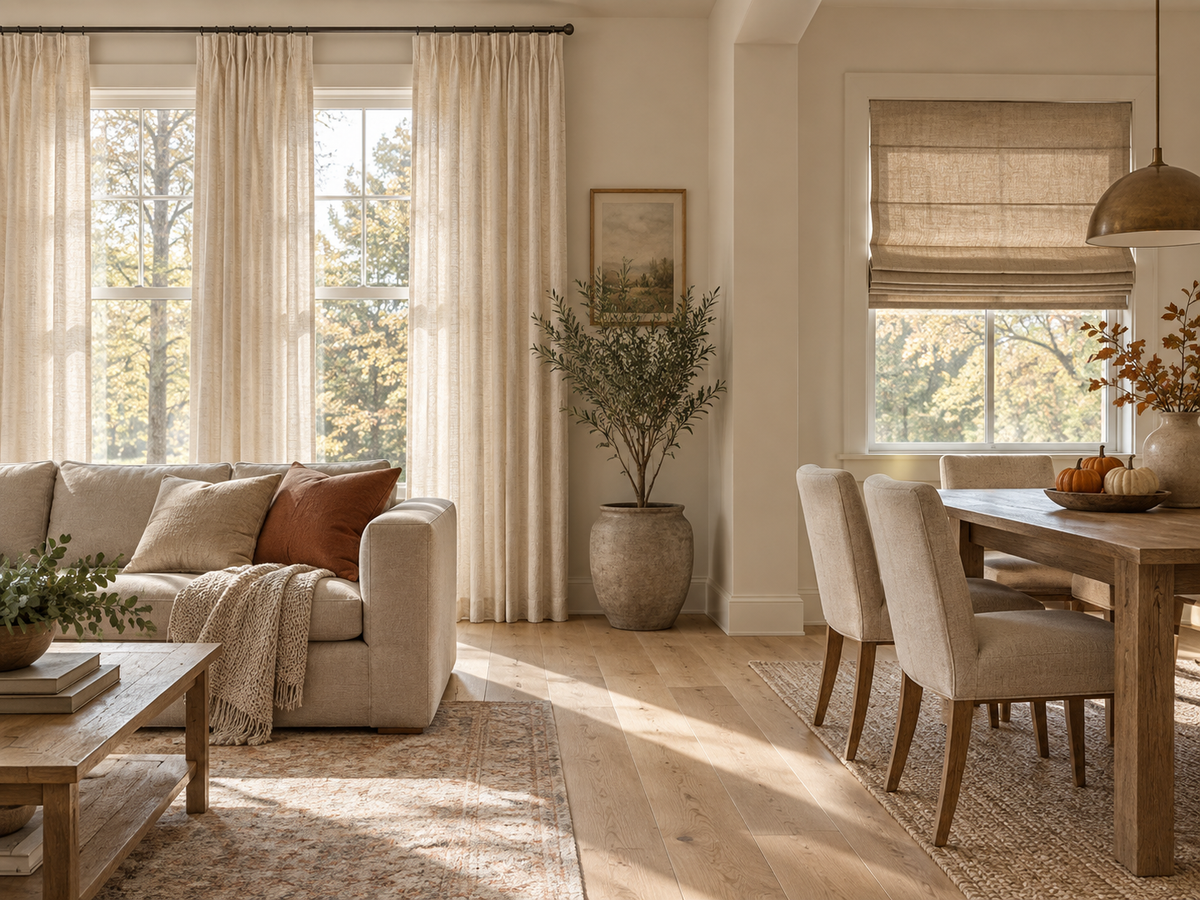
Curtains and Roman shades can coordinate without using identical fabric. In an open-plan home, repeat a shared undertone, color family, or woven texture across windows you see together, then choose light control and privacy for each window separately. For Halloween, carry one or two accent colors through the connected spaces while keeping the permanent window treatments useful year-round.
Do curtains and Roman shades need to match?
Curtains and Roman shades do not need to match exactly. A shared color family or texture can connect different window treatments, while their shape and lining suit each window's use. Begin with one common detail, then compare the fabrics together. Similar color names alone do not establish a match.
Start with the view you see most often: from the sofa toward the dining table, or from the kitchen island across the room. Within that view, look for a shared color family. Warm ivory curtains and a soft oatmeal Roman shade can work together even when their fabrics are different.
Undertone is the subtle pink, yellow, gray, or other color cast within a fabric's main color. Two products labeled “beige” may have different undertones. Compare them against the same wall, flooring, and upholstery before deciding they belong together.
Texture is another useful connection. If you are exploring linen curtains, look for a complementary visual texture among the custom Roman shades. A shared woven appearance can connect the windows without requiring the exact same fabric to be available in both categories.
Where does each window treatment make the most sense?
Let the room's daily use decide the format. Long curtains can soften a seating area, while a Roman shade gives a smaller dining or kitchen window a more contained outline. Keep fabric clear of cooking heat, wet work areas, and places where it would interfere with everyday tasks.
| Window or area | Treatment to consider | Detail to repeat | Decision to make separately |
|---|---|---|---|
| Living room picture window | Full-length curtains | Warm neutral color family | Privacy and glare control near seating |
| Dining nook window | Roman shade | Similar undertone or woven texture | Desired daylight at the table |
| Kitchen window away from the cooking area | Roman shade, if the location suits fabric | The dining shade's visual palette | Clearance and exposure to splashes |
For a linen-blend starting point, explore Sedona drapery and compare its available colors with the shade fabrics you like. Choose each treatment's lining for its window, then check that the two fabrics look harmonious together.
How can Halloween decor connect the living room, dining area, and kitchen?
Imagine warm ivory curtains framing the sofa, an oatmeal Roman shade behind the dining table, and a kitchen window visible beyond it. For Halloween, keep those large surfaces calm and choose two accent colors, such as pumpkin orange and charcoal. Repeat them in small amounts across the view.
In the living room, that might mean one rust-orange cushion and a charcoal throw. On the dining table, try a low arrangement of small pumpkins with dark napkins. In the kitchen, a pumpkin on an open shelf can finish the sequence. Each space carries the same idea without needing the same decorations.
Let one area hold the strongest seasonal display. If the dining table has a dramatic Halloween centerpiece, leave the neighboring window simple. If paper bats make the living room wall the focal point, keep the dining accents quieter. Place removable decorations on suitable nearby surfaces and leave the curtains and shades free to open and close.
You can also choose a softer Halloween palette: cream pumpkins, muted copper, and a small amount of black. This works especially well when the windows already introduce several textures. For more seasonal styling combinations, see our Halloween curtain ideas.
After October 31, remove the bats and explicitly spooky pieces, then keep the rust cushion, neutral textiles, and simple table decor for the rest of fall. The permanent window treatments still belong to the room, and the seasonal refresh only requires changing a few small objects.
What should you compare before ordering?
Compare physical samples wherever available, using the curtain fabric sample collection and Roman shade sample collection to check the options. Hold the candidates side by side, then move them to their intended windows. Look in daylight and under the lamps you use in the evening.
Choose light control window by window. A dining nook may benefit from a brighter feel while the sofa needs more glare control. Confirm the available lining and privacy details on each listing; coordinating colors do not guarantee identical performance.
Try a simple sightline check: take one photo from your usual seat that includes the connected windows. On a copy, note the common fabric color or texture, the light-control need at each window, and the one area that will hold the main Halloween display. Revisit those three choices when comparing samples; the photo helps you plan the layout, while physical samples help you judge color.
How should you measure curtains and Roman shades in the same room?
Measure each opening individually. For the curtain windows, follow our curtain measuring guide with your intended hardware position in mind. Use the Roman shade measuring guide for the shade windows, checking the chosen product and mount type.
Before ordering, stand back at that original viewpoint. Check whether the colors relate, the window outlines suit their locations, and the Halloween accents draw the eye where you want it. A coordinated room needs a few consistent choices, with enough flexibility for each window to work well every day.