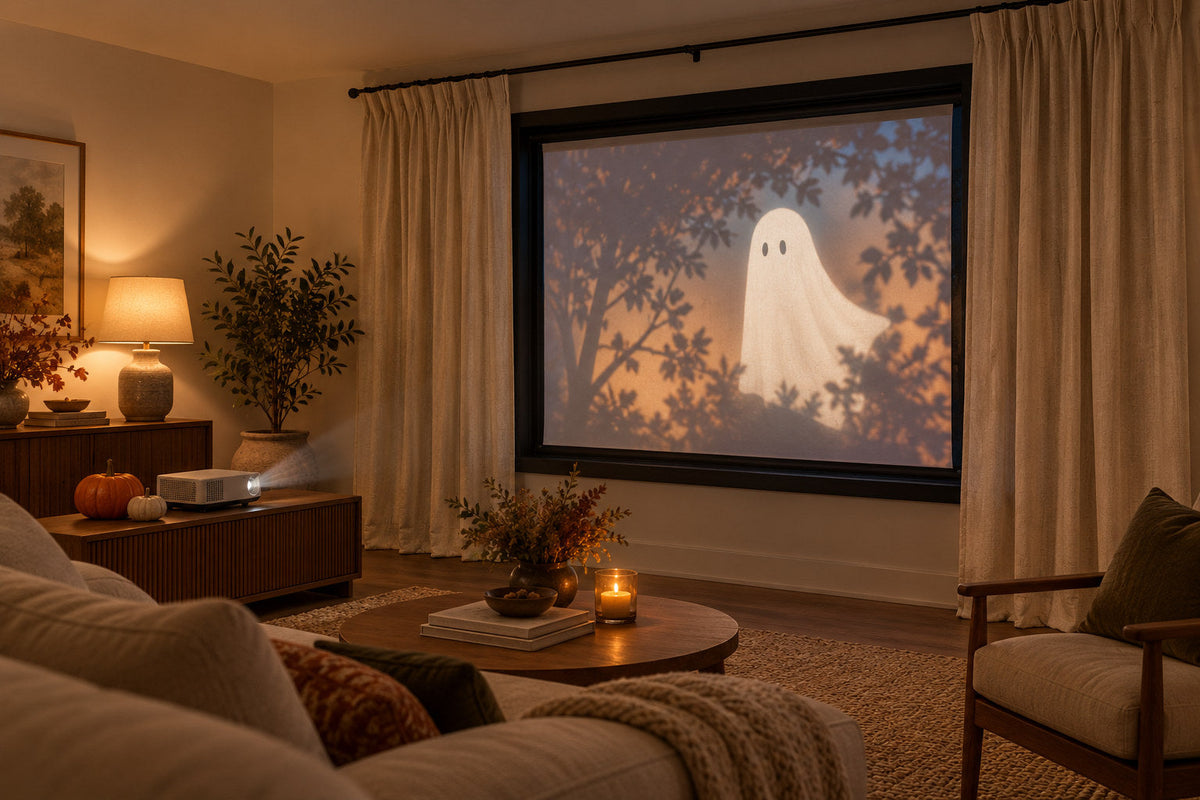
Ordinary curtains are not made to be a projection screen—their folds, texture and lining break up the picture. They still do a lot for a Halloween window display, though: open curtains frame the screen, lined curtains in the neighboring windows keep lamplight from competing with the picture, and the same panels close again for privacy once the show is over. Use a screen made for window projection, then plan the curtains around it.
Give the picture its own surface
A window projection meant to be seen from outside needs a surface made for the job. Use a translucent rear-projection screen sized for the window and follow its instructions for placement and fixing. Drapery is designed to hang in soft folds, which is exactly what breaks up a projected image.
Keep the everyday curtains on their usual hardware. During the display, they sit open at the sides while the screen fills the window opening. When the display is packed away, the curtains go back to providing the coverage you normally need. If you prefer paper cutouts and a few small accents, our Halloween decorating ideas cover that simpler route.
Find the space for the open curtains
Start with the curtains fully open and notice where the folds actually gather. Fredesigner's curtain pages estimate that open panels take up about one-fifth of the width they cover when closed—roughly 20 inches on a 100-inch rod, or 10 inches on each side of a center-opening pair. If that stack overlaps the screen area, tie the panels back for the evening or use a slightly smaller picture.
Check both sides of the window, the screen's attachment points and the path of the curtain when it moves. Do not fasten the screen to the drapery or hang it from moving curtain fittings; any attachment should suit the surface and follow the screen manufacturer's instructions. Our guide to curtain stackback explains how much room open curtains need.

Use the other curtains to make the picture stand out
A projection reads best when its window is the brightest one on that side of the house. Dim the lamps near the screen and close the curtains in the neighboring windows. Lined or blackout curtains stop room light from glowing around the display—Fredesigner's lining guide lists its blackout linings at a 100% shading rate—and the same panels give you privacy and better sleep the rest of the year.
Try the room before Halloween night
Set up a trial a few days ahead. With the equipment off, place each item where its instructions allow. Can you reach the curtain without leaning across the projector? Does the screen interfere with a window handle? Can everyone still use the normal route through the room?
Then test the picture after dark from the sidewalk or yard. Adjust the room lighting and the curtain positions until the image looks crisp, and make sure the screen and its supports never pull on the drapery or catch in its moving fittings.
If your curtains are due for replacement
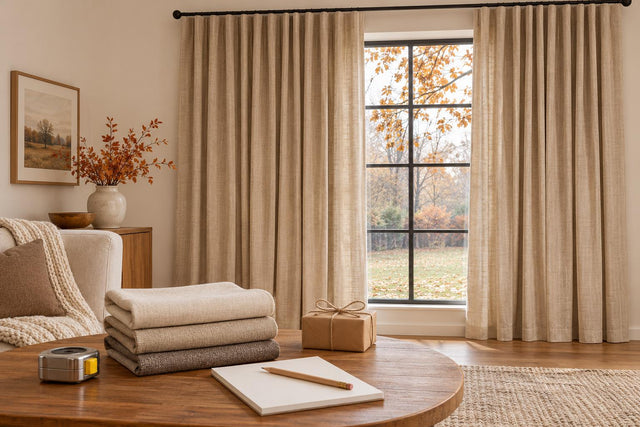
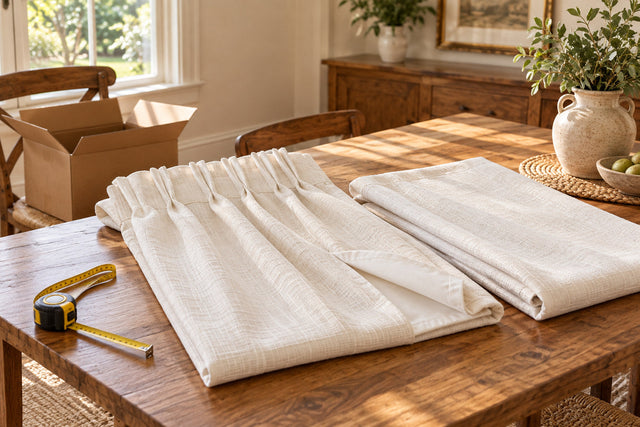
Choose new curtains for the room's everyday use, and the Halloween setup takes care of itself. Sedona linen-blend drapery (20% linen, 80% polyester, 350 gsm) can be ordered with blackout lining for bedrooms and media rooms, and the living room curtain collection covers lighter looks. The fabric selection guide helps you compare color, texture and lining in the room.
Know how the evening ends
Plan the reset while the setup is still fresh in your mind. Switch off and pack the equipment according to its instructions, and remove or store the screen before closing the curtains if the two cannot operate independently. Close the curtains, check that the window is accessible, and you are back to an ordinary, private room—ready for next year's show.