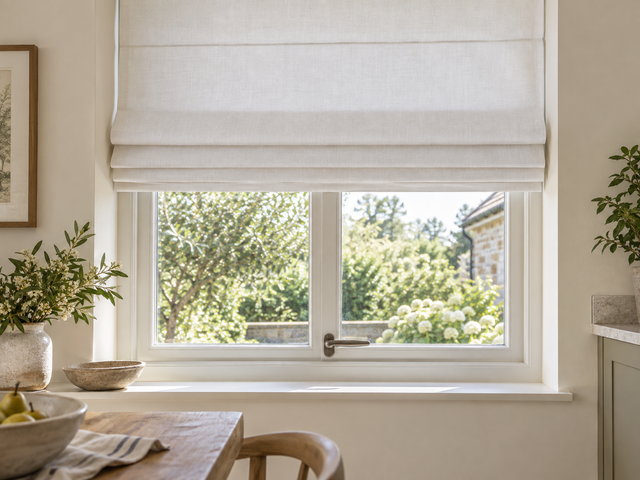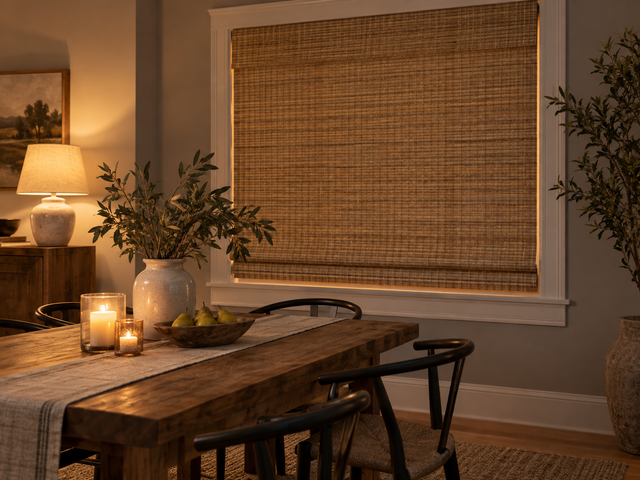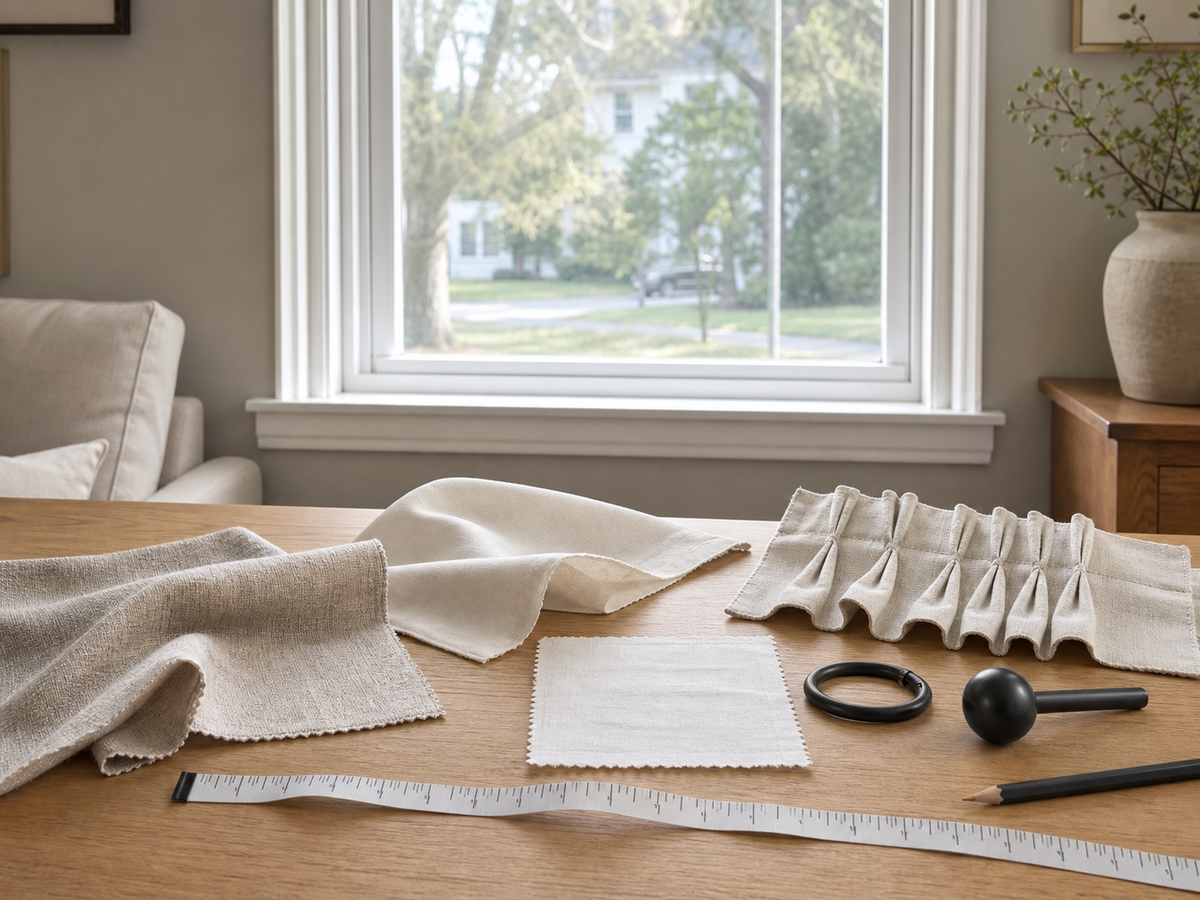

Plan a custom-curtain order around the room's privacy and light-control goal. Fabric, lining, header, hardware, color, and finished size should all support that goal. Set the hardware plan before measuring, then review the selected product and all of its options together before ordering.
Begin with the room's job
The same curtain does not need to solve every room in the same way. A bedroom may prioritize nighttime privacy and reduced brightness, while a living room may need soft daylight and fabric that relates to large furniture. A dining area may favor texture and movement, and a home office may need adjustable glare control.
Write the top two goals before browsing. This keeps an attractive photograph from overriding the practical reason the curtain is needed.
In a bedroom, begin with nighttime privacy and the desired darkness, then think about side and center coverage. In a living room, decide how much daylight and view should remain when the panels are open. A dining room needs fabric that works in daytime and evening light, while a home office should address the screen's actual glare line.
For a door or wide opening, daily movement takes priority. Plan the panel layout, stacking space, and route through the opening before settling on a fabric.
Choose fabric by behavior as well as appearance
Fabric affects texture, drape, color, and the amount of light passing through the panel. Read the material disclosure instead of inferring fiber from a styled image or collection label. Compare the surface from close up and across the room.
Fredesigner's fabric selection guide can help organize room use, opacity, texture, and lining qualitatively. Open the product afterward to review material, available colors, care, and custom options.
Decide whether lining supports the goal
Lining can change privacy, light control, body, and the appearance of the curtain from outside. Choose it for a specific reason, not because it appears on a generic checklist. Availability and the final result depend on the selected curtain and configuration.
Use the liner and interlining guide as a decision aid. For stronger light-control product discovery, compare the blackout curtain collection. Any percentage or complete-darkness claim must apply to the selected product and setup.
Select a header that fits daily operation
The header controls how the top of the curtain looks and interacts with the rod or track. Structured pleats, gathered constructions, visible rings, pockets, and track-mounted folds create different movement and hardware requirements. Check which headers the product offers.
Ask how often the panels will move. A treatment opened every morning needs easy operation and enough stacking space, while a mostly stationary decorative panel can prioritize silhouette. The hardware should be chosen with the header, not added as an afterthought.
Plan color and pattern in the actual room
Compare fabric beside wall paint, flooring, upholstery, and the room's usual lamps. Warm and cool undertones can shift through the day. A neutral curtain does not need to match the wall, but it should relate intentionally to the surfaces that will remain.
Pattern scale should fit the viewing distance and the number of folds. A large motif may break across narrow panels, while a small repeat can read like texture from across the room. Request enough visual information to understand how the pattern repeats on the finished treatment.
Test the material, then measure
When color, texture, or opacity could change the decision, use the curtain sample-book collection and review the listed price and eligibility. Place the sample at the window in daytime and under the lamps used at night. If a lining is available, view the two together.
Once the rod or track position is settled, follow Fredesigner's drapery measuring guide for the relevant header and opening. Record dimensions in inches and note trim, handles, vents, furniture, floor conditions, and stacking space. Keep the finished sketch beside the order form so every number has a clear reference.
Care belongs in the same decision. Two fabrics can look similar at the window but require very different cleaning or drying routines. Choose the one that fits the household as well as the room.
Check the custom order before payment
Open the curtains and drapery collection, then bring the room goal, material, color, lining, header, hardware plan, dimensions, panel quantity, and care routine together on the product page. Read the Refund Policy before placing a custom order, and ask support about anything that remains unclear.
A useful buying guide narrows the choices; it does not ask one attractive feature to carry the whole room. Start with the job at the window and let each later choice support it.