
An OEKO-TEX STANDARD 100 logo is a starting point, not the complete proof. The useful part is the label or certificate number that can be connected to a current record and the bedding item you are considering. If the number, scope, or product match is missing, treat the claim as unresolved.
Start with the number, not the logo
OEKO-TEX describes STANDARD 100 as a label for textile articles tested for harmful substances. The record applies to the article and scope it names; it is not automatically a brandwide or collection-wide claim.
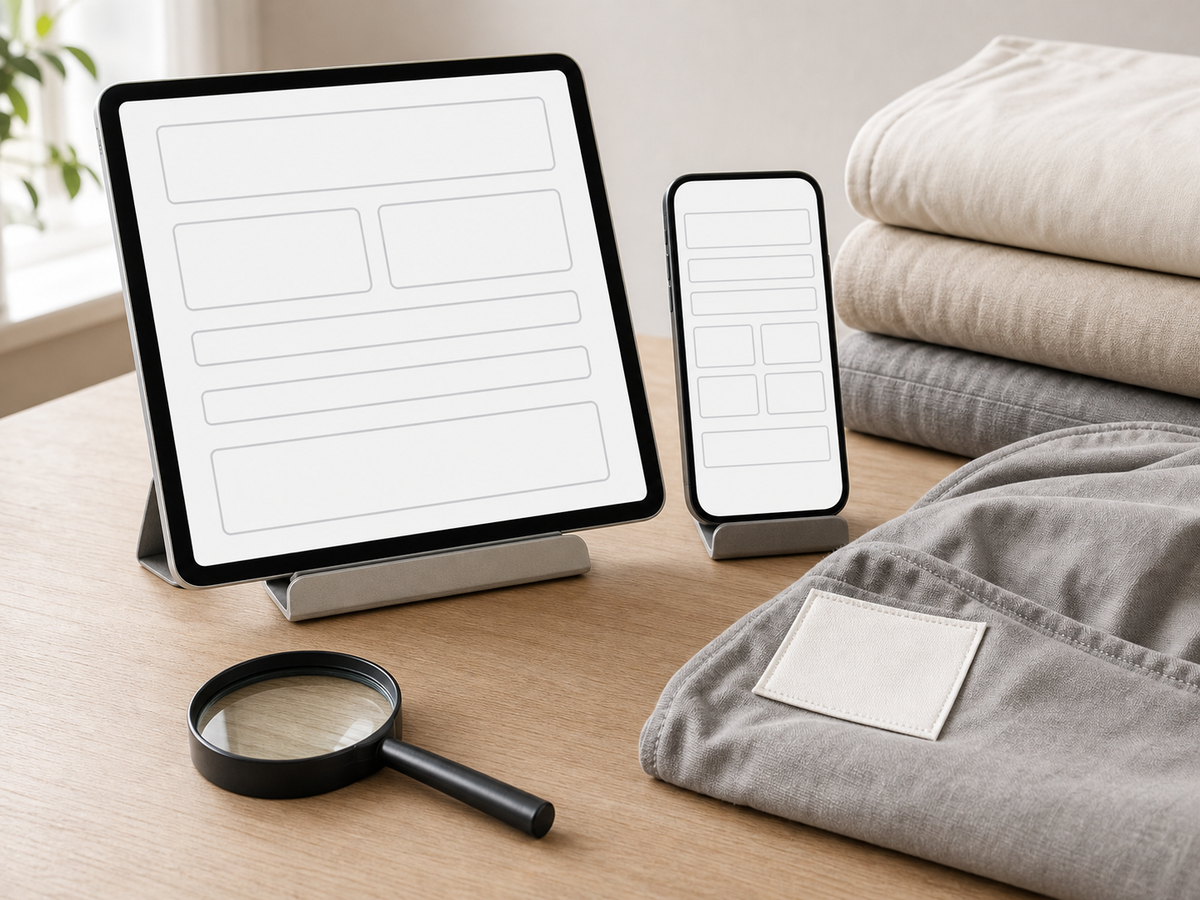
On a product page or sewn label, look for the complete identifier rather than a logo by itself. Then compare the record with the item in front of you.
| Check | What to look for | Why it matters |
|---|---|---|
| Identifier | Complete label or certificate number | It gives you a record to verify |
| Product match | Name, article number, SKU, or traceable description | A certificate for another item does not cover this one |
| Scope | Fabric, thread, zipper, filling, component, or finished article | A certified input may not mean the complete product is certified |
| Product class | Class listed for the article | Requirements reflect the article's intended use |
| Current record | Issuer and validity shown by the standard owner or named institute | An expired or unmatched record cannot support a current claim |
STANDARD 100 does not certify organic fiber content. If organic sourcing or supply-chain practices matter to you, look for separate evidence that addresses those questions.
Two common label situations
Suppose a retailer shows the STANDARD 100 logo beside a duvet cover but provides no number. The logo tells you which claim the seller intends to make, but it does not let you confirm the record or connect it to that duvet cover. Ask for the identifier and scope.
In a stronger example, a sewn label provides a number and the official record identifies the corresponding article, product class, scope, and valid status. You can then compare those details with the item being sold. If the record covers only fabric, the wording should not imply that every part of the finished set was certified.
Phrases such as “tested fabric” or “certified materials” still need this match. They may describe a supplier component rather than the finished sheet set, duvet cover, insert, or accessory.
Checking a Fredesigner bedding page
The Bedding collection and Duvet Covers collection help you locate an item, but collection placement does not prove certification. Open the product page and look for the identifier, the certified article or component, and the current record.
If those details are not shown, rely on the specifications that are disclosed—such as fiber content, construction, dimensions, closure, and care—without adding a certification assumption. This guide does not state that any Fredesigner bedding product carries STANDARD 100.
A three-part verification method
First, identify the item. Record the product name, URL, article number or SKU, and the specific pieces included.
Second, identify the claim. Find the complete label or certificate number and use the standard owner's verification route. Note the product class, scope, issuer, and current status.
Third, match the two. The article in the record, the item being sold, and the wording on the page should agree. When they do not, ask the retailer for clarification before treating the product as certified.