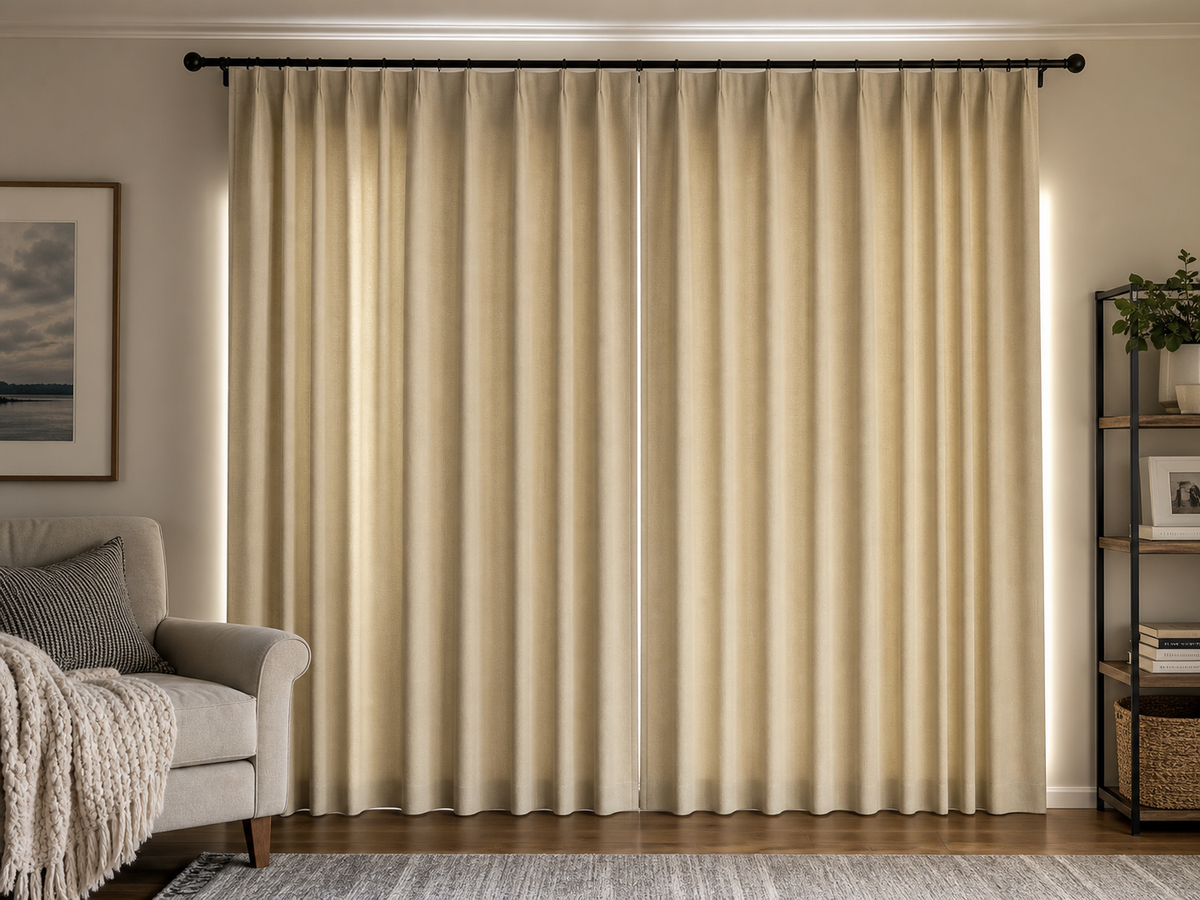

If air is moving through a closed window, a curtain is not the repair. If the discomfort comes from cold glass or direct sun, broad curtain coverage may change how the seating or bed area feels while the panels are closed. Distinguishing those conditions first prevents a textile purchase from being treated as weatherization.
Is it a draft or a cold surface?
A draft is moving air through or around the window assembly. Cold glass can feel uncomfortable even when no air is moving, especially beside a desk, sofa, or bed. Direct afternoon sun creates a third condition: glare and radiant warmth rather than a leak.
Close and latch the window normally, then look for damaged weather stripping, visible gaps, loose hardware, or condensation that suggests a window issue. Do not use a flame to look for air movement. A window or weatherization professional can evaluate persistent leakage or damage.
The U.S. Department of Energy's Energy Saver guide discusses window coverings as one part of household energy planning. It does not establish a Fredesigner product result or a guaranteed bill reduction.
What curtains may change
| Window condition | Likely next step | Role of curtains |
|---|---|---|
| Air moves through a closed window | Inspect seals, sash, latch, and frame; seek repair guidance | May reduce exposure while closed, but does not seal the leak |
| Glass feels cold but no air moves | Review the window condition and seating distance | Broad, lined coverage may add separation from the glass |
| Late-day sun reaches a seat or screen | Note the problem hours and sun direction | Closing the panels can manage light and surface exposure |
| Curtains cannot close around furniture | Change the layout or coverage plan | A different width, hardware position, or treatment may be needed |
Use the Liner and Interlining Guide to understand current qualitative lining choices. Verify that the option is available on the exact curtain you plan to order.
Plan the curtain only after the diagnosis
Measuring only the glass can leave the final treatment too narrow for the intended overlap. Plan the rod or track position first, then determine finished width and length.
The Drapery Measuring Guide covers hardware position, fullness, overlap, and length. Use each number only in the guide's stated context; do not transfer an allowance from one header or installation to another.
Two common room scenarios
At a bedroom window with intact seals but cold glass, lining and broader side coverage may serve privacy, darkness, and near-window comfort at the same time.
At a living room window where the curtain hem moves on a windy day even though the panel is closed, inspect the window and nearby vent before buying a heavier curtain. The movement may point to an air path or HVAC airflow that fabric weight alone will not solve.
When a curtain is not the fix
Damaged seals, a window that will not close, loose frames, and persistent moisture need attention at the window. Curtains also should not block required ventilation or rest against an unsafe heat source.
After those issues are addressed, the Blackout Curtains collection can be used to compare light-control options. Plan the rod, finished width, center meeting point, side coverage, and length with the Drapery Measuring Guide. The goal here is a practical curtain layout, not a promised utility-bill result.