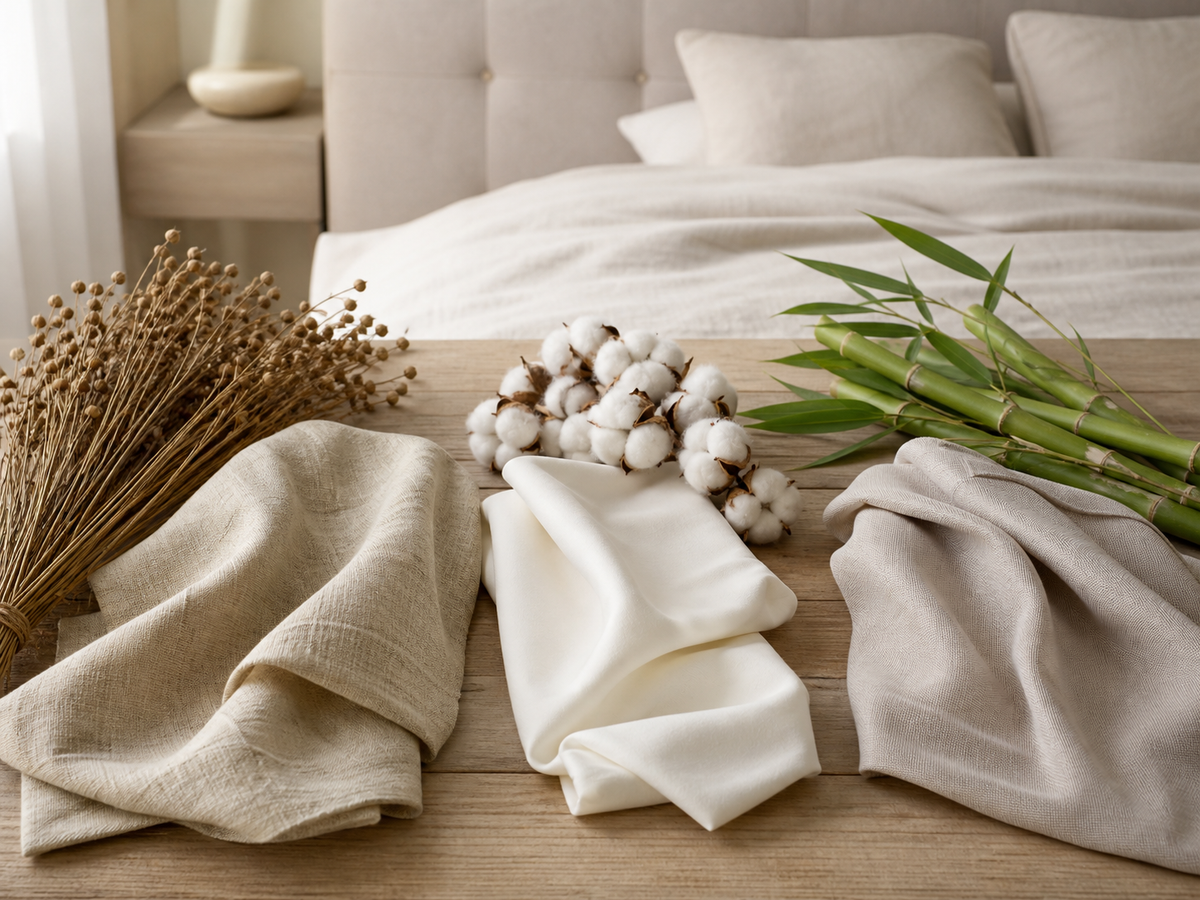

The fiber line answers a narrower question than the front of the package: what the textile is made from. It can distinguish linen from a linen blend, identify cotton, and show when a bamboo source has become rayon or viscose. It cannot promise cooling, allergy relief, or environmental performance.
Why bamboo wording needs an extra check
The Federal Trade Commission explains that a textile can be called bamboo only when it is made directly from actual bamboo fiber. A manufactured fiber made using bamboo as the plant source should use an appropriate name such as rayon or viscose made from bamboo.
Read the FTC's Bamboo Textiles guidance before treating a bamboo reference as a complete fiber description. That rule is about accurate labeling; it does not establish cooling, allergy, antibacterial, or environmental performance.
The current Bamboo Bedding collection is a browsing path. Read the wording on the product page and sewn label before relying on it.
Read one label line at a time
| Label wording | Product-level questions |
|---|---|
| Linen | Is it linen, a linen blend, or linen-look? What percentage and weave are disclosed? |
| Cotton | What cotton fiber statement, weave, finish, layer count, and weight are shown? |
| Rayon or viscose made from bamboo | Is the manufactured fiber named accurately? What blend, construction, and care apply? |
For example, a label that reads “55% linen, 45% cotton” describes a linen-cotton blend, not pure linen. A label that reads “viscose made from bamboo” names a manufactured fiber and its plant source; shortening it to “bamboo” changes the meaning. These examples explain the wording and do not describe a Fredesigner product.
Compare the build after the label
Fiber content is only the first row in the comparison. Look at whether the item is a sheet, duvet cover, quilt, throw, or pillowcase; then compare like with like.
Check weave, fabric weight, layers, surface finish, seams, closure, internal ties, finished dimensions, and care. Those details are more useful than a star rating that tries to rank entire material families.
Use the Linen Bedding collection and Cotton Bedding collection to locate alternatives, then open the individual product page.
A plant source is not an environmental score
A plant source does not by itself prove lower environmental impact. Processing, chemical inputs, energy, water, durability, transport, and disposal are separate questions.
The FTC's Green Guides summary advises against broad, unqualified claims such as green or eco-friendly. Any specific benefit still needs competent support and clear qualification.
No Fredesigner linen, cotton, or bamboo-derived bedding is described here as more sustainable, non-toxic, healthier, or better for sensitive skin.
Match texture and care to the household
Compare how each exact product is described rather than predicting feel from the fiber name. If possible, review the fabric in the room and check the return rules that apply to the item.
Care can be decisive. Confirm the permitted wash temperature, dryer setting, ironing method, and restrictions for bleach or other treatments. Use only the instructions supplied for that product.
Use the label as the first filter
After choosing the bedding category and size, copy the full fiber line from each item. Then compare weave, weight, layers, finish, closure, and care. If the fiber or percentage is missing, the collection title should not be used to supply it.
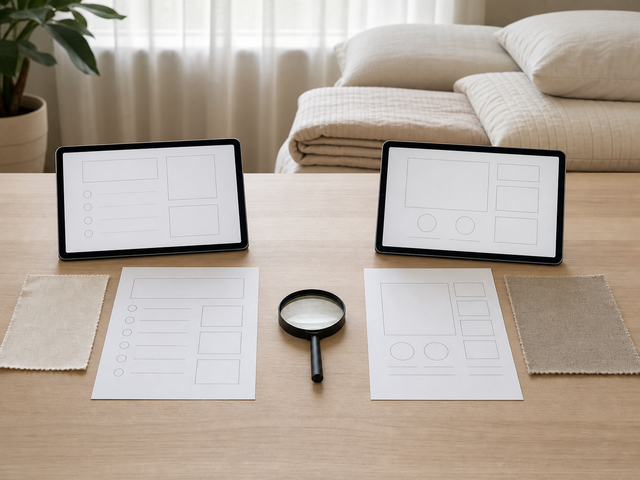
The useful comparison is not linen versus cotton versus bamboo in the abstract. It is one accurately described product beside another, with enough information to understand the textile and maintain it at home.