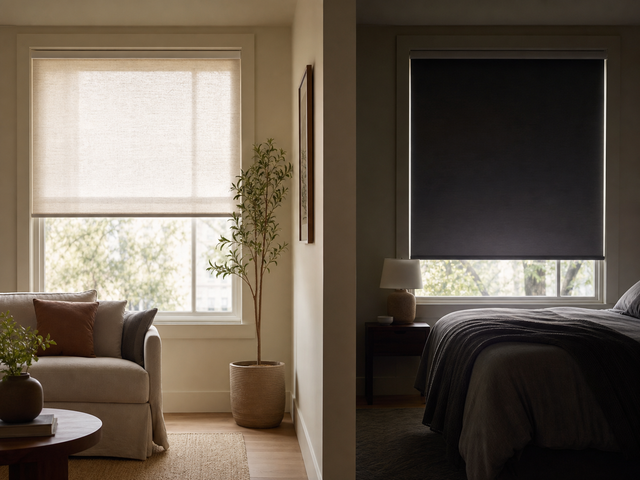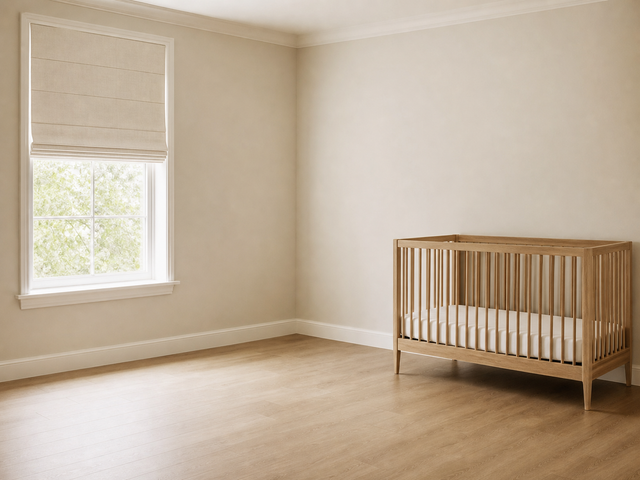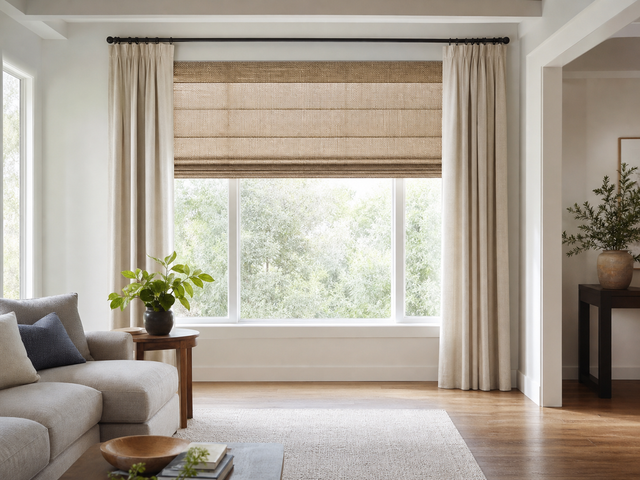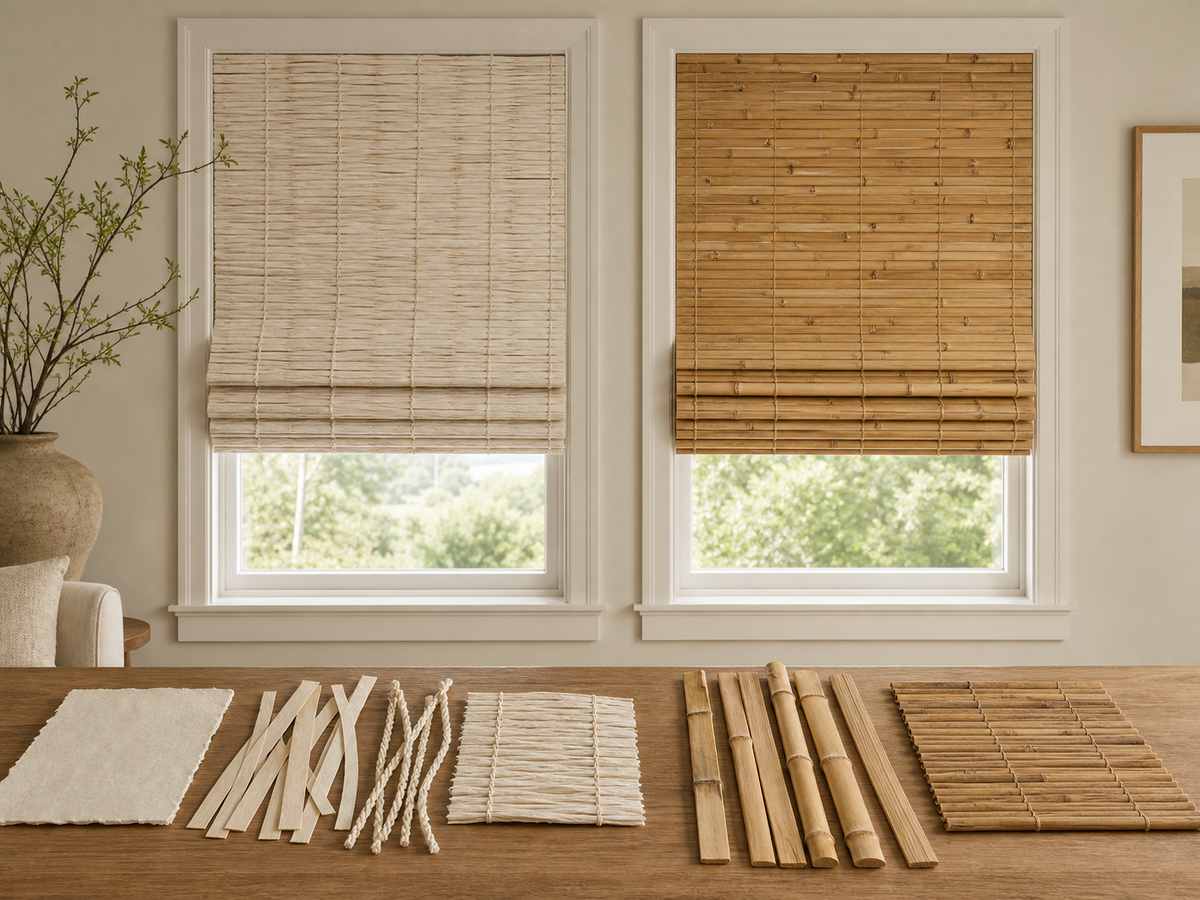

A paper-blend Roman shade can read as a quiet woven surface, while bamboo usually makes variation and structure more visible. The difference is easiest to see beside the room's trim, floor, and furniture. Privacy and room darkening still depend on weave, liner, mount, and coverage.
Compare current Fredesigner examples
Fredesigner currently lists a 20% Bamboo 80% Paper Roman Shade and a Custom 100% Bamboo Roman Shade. These examples make the material difference clear, but the selected weave and liner still determine how each shade behaves in a room.
Use the live product page to confirm the current material statement, color or style family, lining, mount, lift, size fields, care, and availability before ordering.
| Decision | Paper-blend option | Bamboo option |
|---|---|---|
| Surface | Often visually lighter or more uniform | Often more varied and visibly woven |
| Room style | Quiet, pale, or softly layered rooms | Warm, textural, wood-forward rooms |
| Privacy | Depends on weave and liner | Depends on weave and liner |
| Light control | Must be checked on the exact product | Must be checked on the exact product |
| Care | Follow the current product page and attached instructions | Follow the current product page and attached instructions |
| Custom fit | Confirm mount, width, height, and lift | Confirm mount, width, height, and lift |
Look through the weave before choosing the color
A light color does not automatically mean an open weave, and a darker bamboo does not automatically provide stronger privacy. Weave spacing, backing, liner, and room lighting all affect what you can see through a shade.
For a street-facing or bedroom window, consider the nighttime condition with interior lights on. If the live product offers a liner, compare that option for the specific room rather than assuming the base material is enough.
Match the material to nearby finishes
Paper-blend shades can work well beside painted trim, pale walls, and clean-lined furniture because the surface may appear quieter. They can also keep a small window from feeling visually heavy.
Bamboo can connect with oak, walnut, rattan, woven baskets, and textured curtains. Avoid matching every wood tone exactly; one related undertone is enough.
Decide on inside or outside mount early
An inside mount gives a fitted look when the frame and hardware allow it. An outside mount can add coverage or work around a shallow or obstructed opening.
Use Fredesigner's Roman shade measuring guide for the current method. Do not guess frame depth, deduction, overlap, or clearance.
Think about daily operation
Consider how often the shade will move and whether the window is easy to reach. Check the exact lift options shown for the current product; do not assume every paper-blend or bamboo model has the same control.
Also note handles, cranks, trim, tile, and nearby furniture. A visually suitable shade can still be inconvenient if it interferes with the window or door.
Care should influence the room choice
Woven shades can collect dust within the texture. Follow the current product care directions and use gentle cleaning methods appropriate to the exact material and liner.
Do not place a product in a damp or exposed location based only on its appearance. Use it outdoors or in a high-moisture area only when the exact current product page states that use and gives the applicable limitations.
Compare the two surfaces at the window
Place the relevant product images or samples beside the trim and floor, then look from across the room. A paper-blend weave may recede in a pale, clean-lined space. Bamboo may connect more clearly with oak, walnut, leather, stone, or other visible texture.
After the surface decision, settle nighttime privacy, liner, mount, and operation. Use the bamboo Roman shade collection for additional current options and the measuring guide for the treatment selected. Material starts the conversation; weave, fit, and daily use finish it.