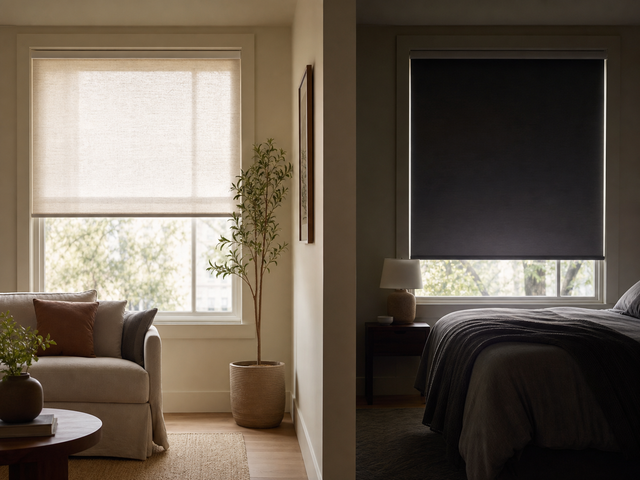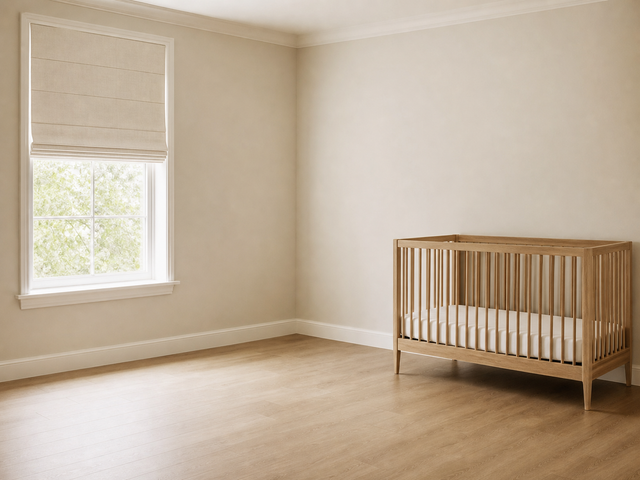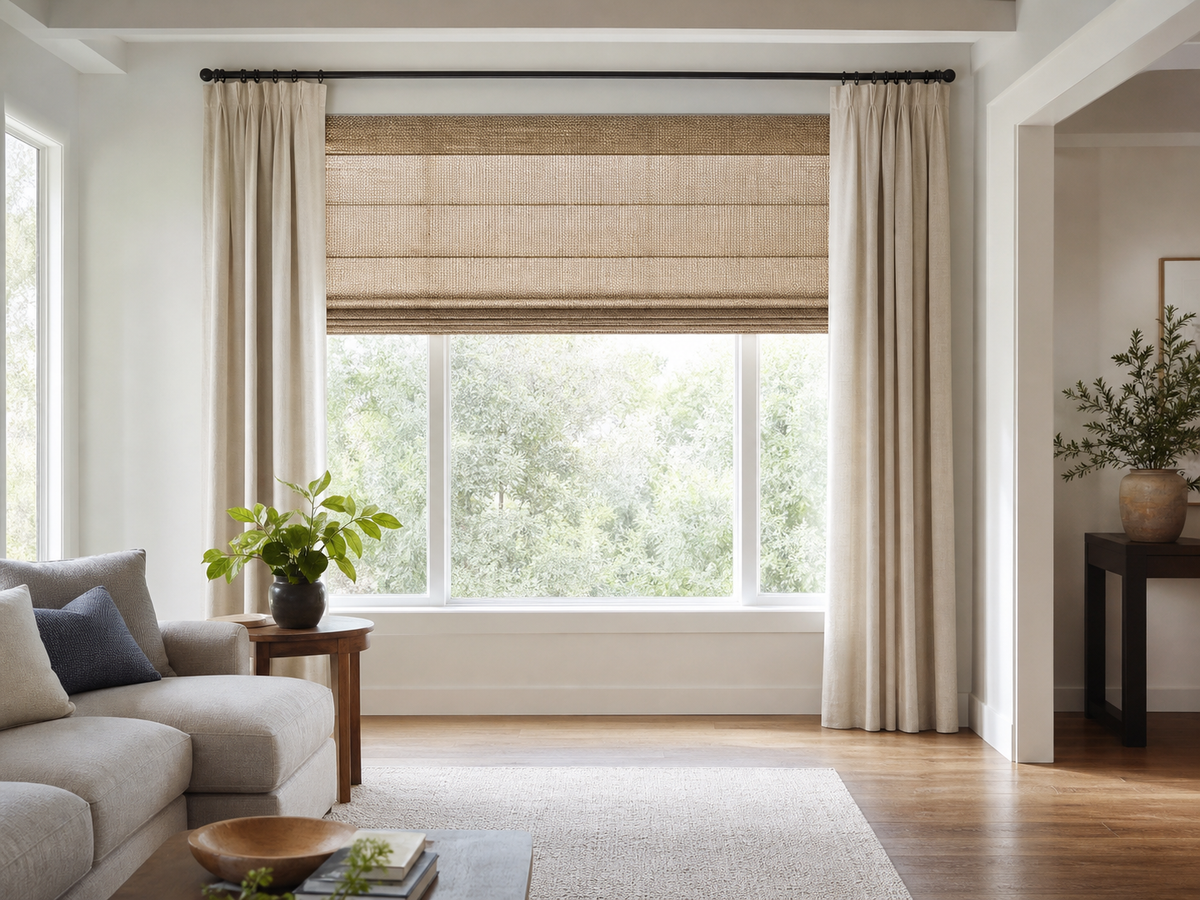

The right living room window treatment depends on what must change during the day: glare, privacy, view, softness, or coverage. Curtains suit broad framing and layered color; Roman shades offer compact control at the window; bamboo shades add visible weave; combining two treatments can handle more than one condition. Measure only after choosing the product type and mount.
Identify the problem at the actual window
Stand in the room at the times when the window is hardest to use. Morning glare, afternoon heat, street-facing privacy, television reflections, and a blocked view are different problems.
Write down the top two needs. Trying to maximize daylight, nighttime privacy, open views, complete darkness, and minimal hardware with one treatment usually leads to a confused choice.
Compare the main options
| Treatment | Useful when | Watch for |
|---|---|---|
| Curtains | You want broad framing, fabric color, or coverage beyond the window | Panel stack, furniture clearance, rod position, and finished length |
| Fabric Roman shades | You want a compact treatment with a tailored or soft fold | Inside or outside mount, frame depth, width, height, and control |
| Bamboo Roman shades | You want woven texture and softened daylight | Weave openness, liner choice, nighttime privacy, and product care |
| Layered shade and curtains | The room needs adjustable window-level control plus side framing | Hardware depth, visual weight, and independent operation |
Options vary by product. Check the fabric, liner, mount, control, size, and care on the page for the treatment you are considering.
Curtains work from the wall inward
Curtains can make a window feel wider and can connect the window to the room's furniture and rug. They also need wall space when open.
Map the rod or track against bookcases, artwork, vents, switches, and the sofa. If panels stack over a large portion of the glass, the room may lose the daylight or view you wanted to preserve.
Use the pre-order curtain measuring checklist after choosing the header and hardware plan, then follow the linked official guide for the full procedure. Browse living room curtains to compare products.
Roman shades work within or around the opening
An inside mount can keep trim visible when the frame and hardware allow it. An outside mount can provide broader coverage or work around a shallow or uneven opening.
Frame depth, deductions, and overlap should come from the treatment's instructions, not a guess. Read Inside Mount vs. Outside Mount Roman Shades before using the Roman Shade Measuring Checklist and Fredesigner's official Roman shade measuring guide.
The custom Roman shade collection is the product comparison path. Check the selected shade for available fabric, lining, mount, lift, and custom fields.
Bamboo adds texture, not a guaranteed performance level
Bamboo shades can bring warmth beside wood floors, leather, stone, or plain upholstery. Privacy depends on weave openness, liner selection, and the room's nighttime lighting.
A light or dark color does not by itself prove opacity. If you are deciding between woven and fabric, read Bamboo Shades vs. Fabric Roman Shades. Then review close product images and available liner options, decide how the shade will be mounted, and browse bamboo Roman shades.
Layer only when each part has a job
A shade can manage changing daylight near the glass while curtains add side coverage, color, or softness. This combination is useful when the room has more than one daily condition.
Layering is unnecessary when one correctly sized treatment already solves the problem. Extra fabric and hardware can crowd a small wall, interfere with trim, or make operation harder.
Revisit the room at the difficult hour
Return when glare, privacy, or view becomes a problem and picture the treatment in use. Curtains need room to stack; a Roman shade needs the right mount; a layered setup needs enough depth and a clear job for each part. Check furniture, trim, handles, and vents while you are standing there.
Then use the relevant measuring guide and review the selected material, lining, mount, control, care, and custom options together. The most successful living room treatment responds to the room's daily rhythm. Product type follows the problem; color and texture come after the layout and function are clear.