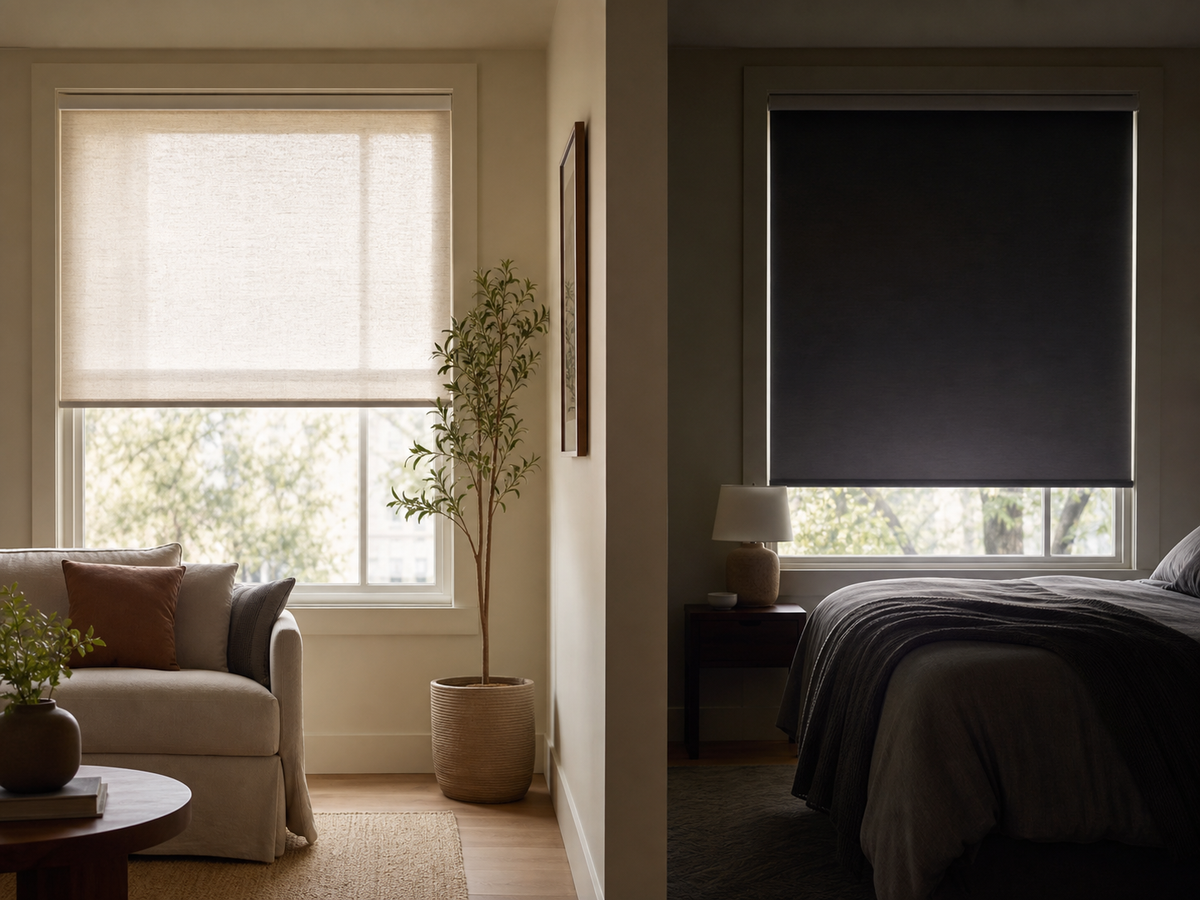

Light-filtering treatments keep daylight in the room while softening glare. Blackout treatments are intended for stronger darkness when sleep or screen viewing is the priority. The useful question is not which label sounds better, but what the room should feel like at 7 a.m., 3 p.m., and after the lights come on.
What each label tells you
Light filtering describes a treatment that softens incoming light. It may reduce glare and make a bright room more comfortable while still allowing daylight to shape the space.
Blackout describes a stronger light-control category. It does not guarantee that a room will have no light, because brightness can still enter around the top, sides, bottom, hardware, or overlapping panels.
Room darkening is a separate, middle-ground shopping term. If that is the comparison you need, see Blackout vs Room Darkening Curtains.
| Room goal | Start with | Verify before ordering |
|---|---|---|
| Keep daylight but soften glare | Light filtering | Weave, daytime privacy, and screen position |
| Add daytime softness in a living room | Light filtering | Color, texture, and how the material looks after dark |
| Create stronger darkness for sleep | Blackout | Liner, mount, finished coverage, and edge gaps |
| Reduce media-room glare | Blackout or room darkening | Window orientation, screen position, and installation |
| Balance privacy and daylight | Check product-specific privacy | Nighttime view, interior lighting, and liner |
Where light filtering works well
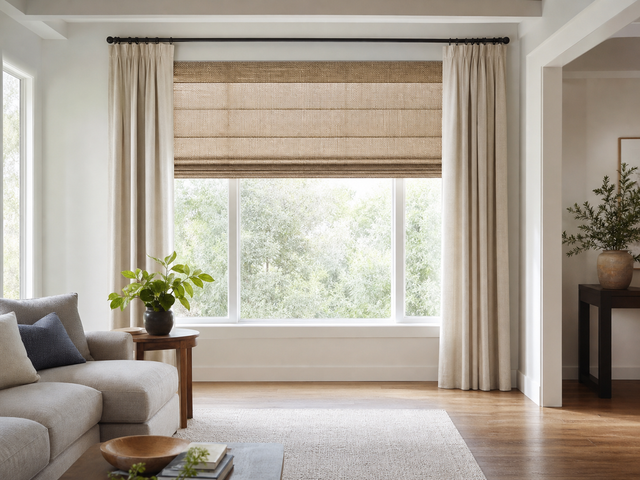
Living rooms, dining rooms, kitchens, and home offices often benefit from softened daylight. A Light Filtering Roman Shades collection is a practical starting point when the room does not need strong darkness.
Check privacy after dark. A fabric that looks private from inside during the day may behave differently when interior lights are on. Weave openness, color, room lighting, and the view from outside all matter.
For a screen-facing workspace, note where the glare comes from before choosing the treatment. A light-filtering shade may soften brightness without solving every reflection. If shade material is still undecided, Bamboo Shades vs Fabric Roman Shades compares weave, privacy, and room fit.
Where stronger light control makes sense
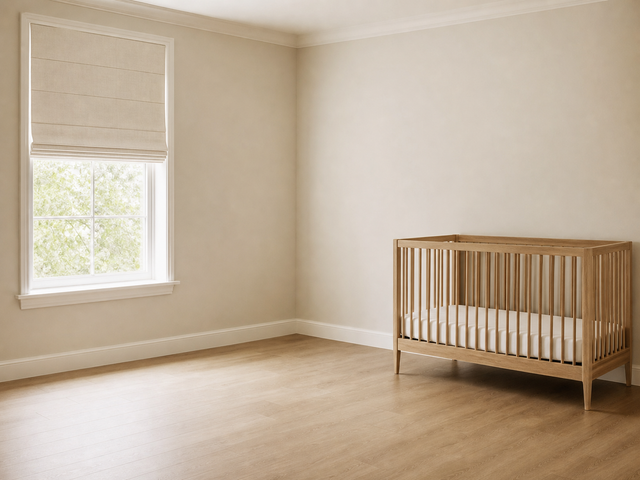
Bedrooms, nurseries, guest rooms, and media rooms may need more darkness. Blackout Roman Shades and Blackout Curtains are two treatment options to compare.
Roman shades keep coverage close to the opening, while curtains can extend across more wall area. For either treatment, plan the perimeter. A strong fabric can still leave visible light when the finished width, mount, rod, or overlap is too limited.
Avoid unsupported light-blocking percentages. The useful comparison is how the selected product and installation perform at the real window.
Privacy is a separate question
Light control and privacy overlap, but they are not identical. A light-filtering fabric may provide useful daytime privacy and still become more transparent at night. A blackout material may offer stronger coverage, yet poor edge planning can leave a direct sightline.
Evaluate the room from inside and outside, during the day and after dark. If the window faces a sidewalk, neighboring home, or shared outdoor space, prioritize the nighttime check.
Mount and coverage can change the result
An inside-mounted Roman shade fits within the frame and keeps the trim visible, but edge gaps may be easier to notice. An outside-mounted shade can extend past the opening and add coverage, provided the wall or trim offers a suitable mounting surface.
Curtains need their own hardware plan. Finished width, length, side return, center overlap, rod position, and panel fullness can all affect visible light.
Use the Roman Shade Measuring Guide or Drapery Measuring Guide for the treatment you will order.
Think about the room over a full day
Morning light, afternoon sun, streetlights, and interior lamps create different conditions. A west-facing living room may need glare control late in the day, while an east-facing bedroom may need stronger early-morning coverage.
Write down when the problem occurs. This is more useful than choosing the darkest-looking product photo.
See the difference where it matters
At the problem hour, photograph the window from the usual seat or bed position. A home office may need relief from one band of afternoon glare, while an east-facing bedroom may need broader coverage around the entire opening. That observation tells you more than the darkest product image.
View relevant samples and listed prices under the room's actual daylight and artificial lighting. Compare color, texture, and transmitted light from the usual seat or bed. Once the light-control goal is clear, choose the treatment type and measure with its Fredesigner guide.