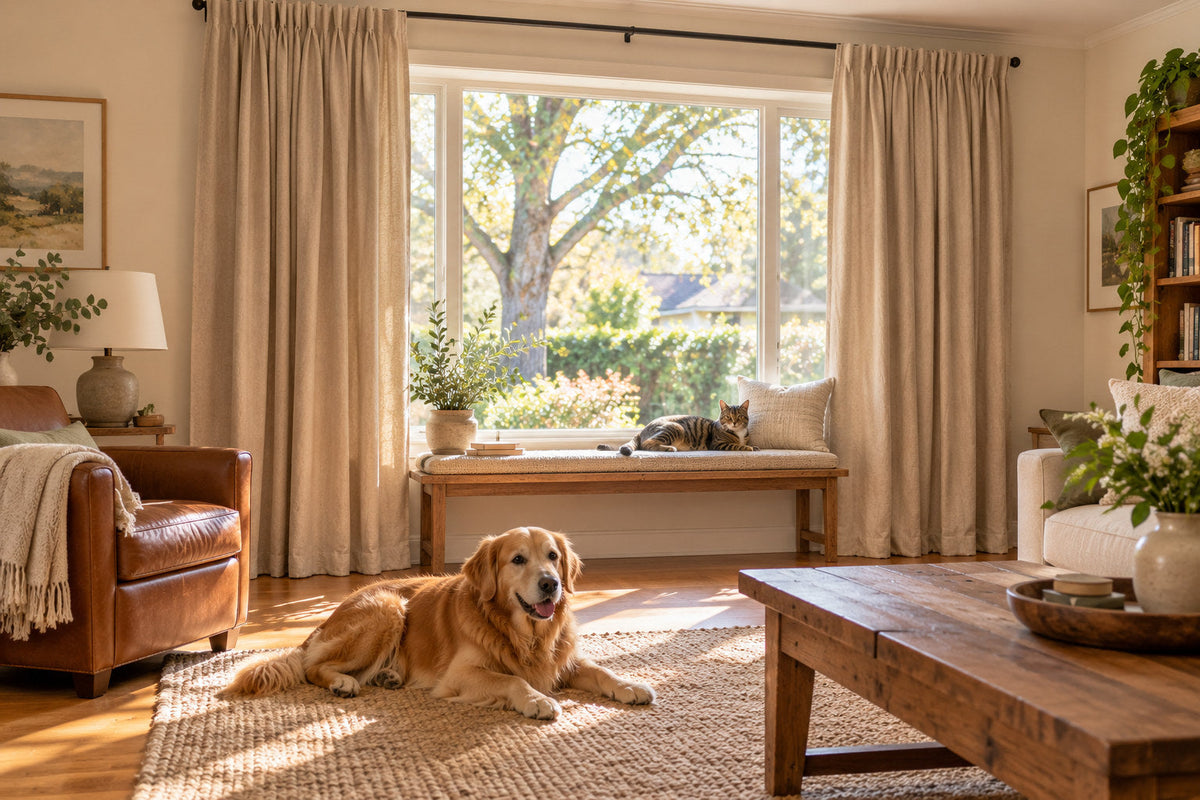
The useful question is where your pets spend time. A cat that watches the street from a sill creates a different curtain problem from a dog that rubs past the same panel on the way to the yard. Plan around those habits before choosing a fabric or a floor length.
Watch the window for a few ordinary days
Notice where your cat climbs, where your dog sleeps and which doorway they use most. Look at the room with the curtains open and closed. The sunny spot may shift across the floor during the afternoon, and the panel that stays neatly parked in the morning may sit directly in the evening route.
You do not have to give up curtains at a favorite window. A stable bench or another suitable viewing spot may let a pet reach the view without pushing between layers of fabric. Keep the parked panels outside that spot, then check that you can still close them without rearranging the room.
| What happens near the window | What to check before ordering |
|---|---|
| A cat sits on the sill | Access to the view when curtains are parked, and whether the fabric brushes the perch |
| A dog passes the window to reach a door | The full walking route with the door and curtains in use |
| A pet sleeps beside the panel | Where hair collects and whether the lower fabric is easy to inspect |
Feel the fabric rather than guessing from a photo
Color and texture look different on a small screen. A loose-looking weave, a smooth face and a pronounced pile each feel different in person, but none of those appearances proves a curtain will resist claws or pet hair. Ask about the actual material and care instructions for the fabric you are considering.
Fredesigner’s Bolonia curtains are one option to compare for their softly woven appearance. The current product description lists 20% acrylic and 80% polyester for the face fabric, in 20 colors—useful if you want a shade close to your pet's coat. If linen content matters to you, compare the material descriptions in the linen curtain collection rather than treating all textured fabrics alike.
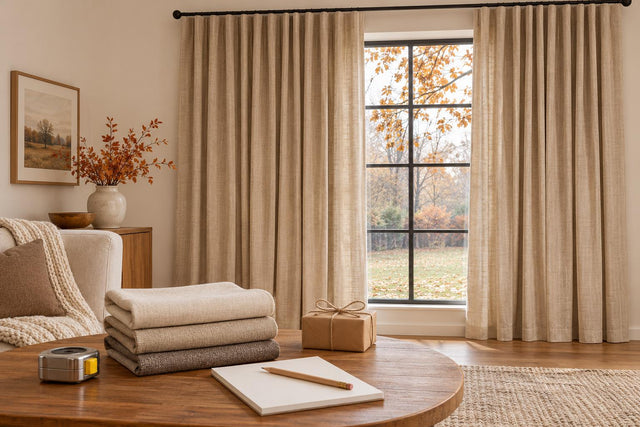
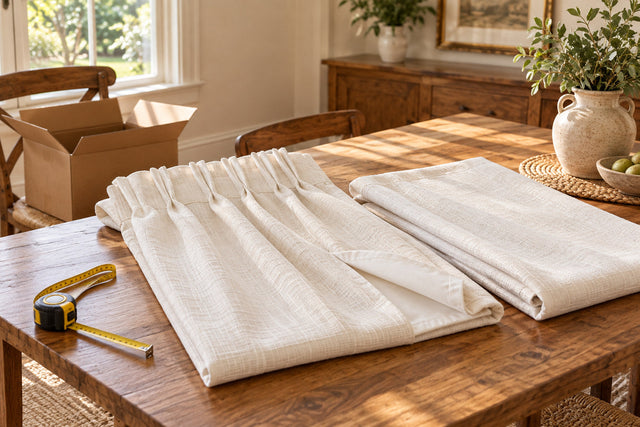
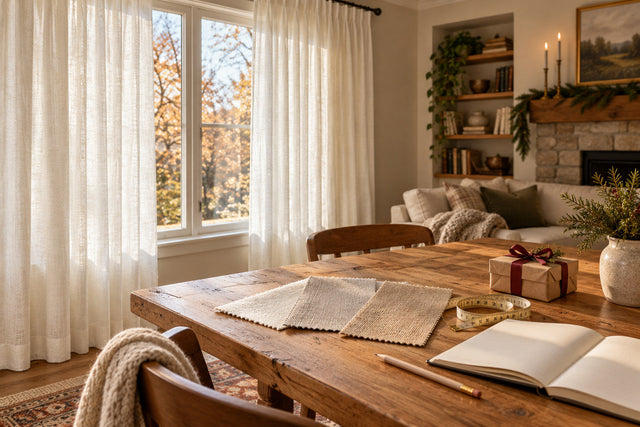
Use curtain sample books to compare options in the room. Hold a sample near the pet bed and floor, in both daylight and evening light. A color close to the fur may make stray hairs less noticeable, but it does not reduce the cleaning the curtain needs.
Give the hem a practical place to stop
A generous pool of fabric may look appealing in an empty room. In a busy household, it also places more material in the area where paws, beds and toys tend to collect. Decide whether that is a finish you actually want to maintain.
A hem that clears the floor keeps the bottom edge out of the daily walking route. A float of about 1/2 inch is a common choice; if the floor slopes, measure at its highest point under the curtain so the hem never drags. Read the guide to choosing a curtain hem for everyday living, then measure with the final hardware in place.
Keep the open curtain stack away from the door your dog uses. Make sure any operating controls are installed and used according to the hardware manufacturer's instructions, with loose components kept out of a pet's reach.
Choose a care routine you can keep up with
Before ordering, ask how to care for the finished panel, including the lining and header. A fabric category alone is not a washing instruction. If the configuration requires professional cleaning, include that practical cost and effort in your decision.
Fredesigner's routine maintenance guide suggests vacuuming curtains every 1–2 weeks with a soft brush attachment, a habit that also lifts pet hair before it works into the weave. The finished product's care instructions should decide any washing method. Check whether a spot treatment is suitable before using it; rubbing or wetting a marked area may make the result worse.
Leave enough room to inspect the lower panel without moving a large sofa every time. A curtain plan that fits your pet's daily habits and your actual cleaning routine is easier to live with than one chosen for an untouched room photograph.
AI-generated styling illustration; see the product page for exact fabric and configuration.