Curtains do not have to touch the floor. A floating hem ends above it, a floor-touching hem meets it without gathering, and a puddled hem leaves extra fabric on it. Choose the finish around curtain movement, door clearance, and cleaning. Halloween hosting can help reveal which option works when your room is at its busiest.
Which is better: floating, floor-touching, or puddled curtains?
The right finish depends on what happens around the window. A quiet reading corner and a door to the patio can call for different lengths, even when you use the same fabric throughout the room.
| Hem finish | What it looks like | Best suited to | What to consider |
|---|---|---|---|
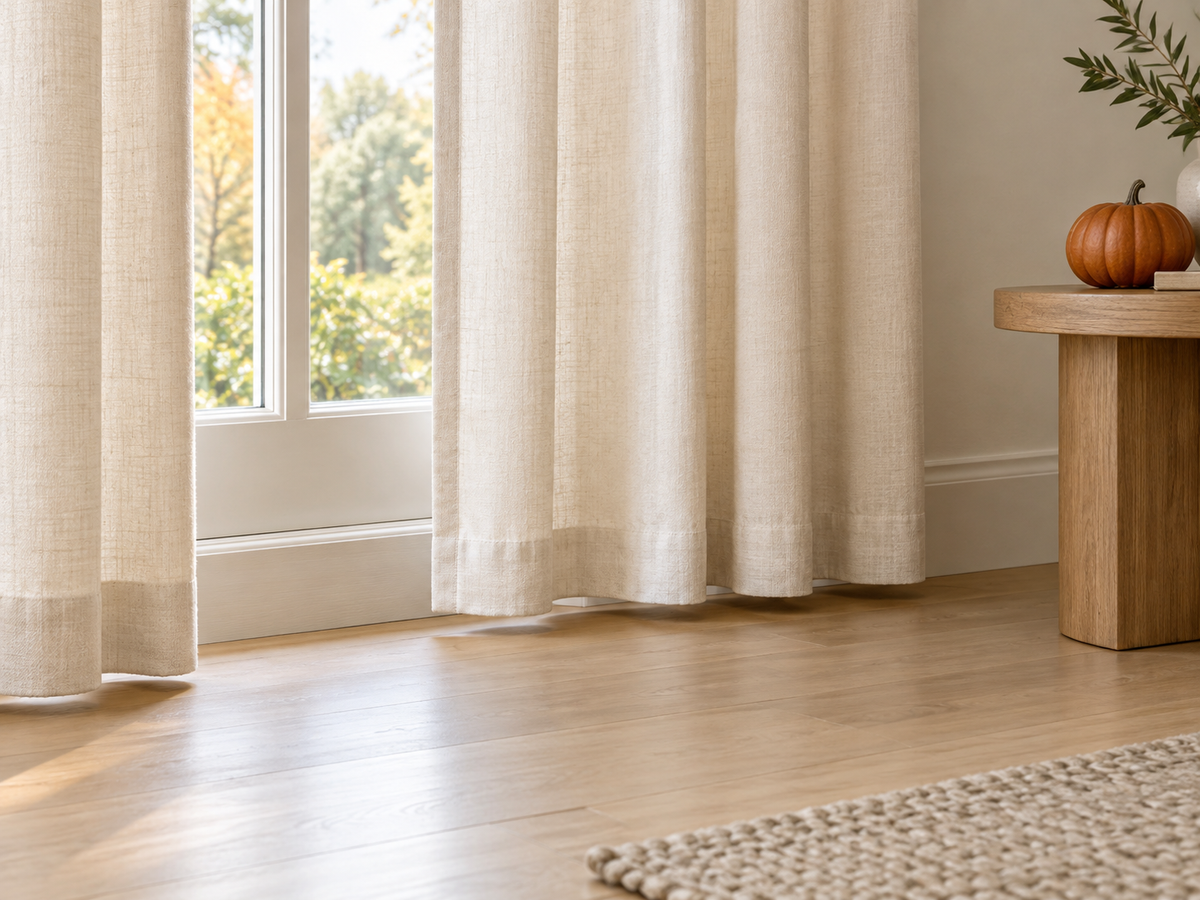
| Float | The fabric ends visibly above the floor. | Frequently opened curtains, busy walkways, and easy floor cleaning. | Decide how much visible floor you want beneath the hem. |
| Just touch | The lower edge lightly meets the floor without gathering on it. | A tailored, floor-length appearance. | Uneven flooring can make one part touch before another. |
| Puddle | Extra fabric rests and gathers on the floor. | A decorative window where the panels move infrequently. | The fabric needs room on the floor and more attention when cleaning. |
How far above the floor should curtains hang?
Choose curtain clearance from the floor and the panel's travel path; there is no single gap for every room. For a floating finish, the hem should remain clear as the curtain opens and closes. Check both ends of the window, any uneven flooring, and nearby rug edges before converting that preferred position into an ordered length.
What changes when the room fills with Halloween guests?
Picture the stretch between your sofa and the patio door during an October gathering. Someone carries a tray to the table, children return to the candy bowl, and the curtains open several times as the light changes. A floating hem can keep that frequently used section of floor clear of fabric. Lightly touching curtains can also suit the room if the panels stay out of the walking route.
Now look down. Candy wrappers, crumbs, and bits of fallen leaves tend to make the floor part of the evening's cleanup. If you prefer to sweep without first lifting or arranging fabric, a floating finish is a practical choice. A puddle at that same door means another thing to move each time you clean.
Decorating can reveal a different issue: the space a curtain needs when it opens. Put a pumpkin display on a nearby console or shelf, leaving room for the panels to move. Keep garlands on their own supports instead of attaching them to the curtain fabric, and place any lamps or flameless decorations where they will not catch the hem.
Before guests arrive, pull the curtains fully open and closed with the decorations in place. Check the lower edge as well as the top. Our Halloween curtain ideas can help you build the seasonal look around the window once you know how much space the curtains need.
Can you keep a floor-length look beside a busy door?
Yes, but start with the door's movement and the route people take through the room. Open the door fully and check where the curtain will gather when drawn aside. A hem that lightly touches the floor may look right while closed, yet bunch against a rug or sit in the passage when open.
For panels you move every day, compare a floating finish with a light touch using a temporary fabric fold at the window. This helps you judge the appearance before you settle on an ordered length; it does not replace the measuring instructions for your chosen curtain.
Check both positions. With the curtains closed, look along the entire lower edge for floor contact. With them fully open, check where the gathered fabric sits relative to the rug, door swing, and walking route. Repeat the check with the Halloween display in place so the layout works during the gathering as well as afterward.
When does a puddled hem make sense?
A puddled hem can work at a quiet window with open floor space, particularly when the curtains are mainly decorative. The extra fabric creates a relaxed, gathered shape. Choose it because you enjoy that look and are comfortable lifting and rearranging the hem for cleaning.
If your linen curtains need to open every morning and close every evening, consider whether a smaller amount of floor contact would fit your routine better. A fuller puddle is a choice to maintain, not a requirement for an elegant room.
What should you decide before measuring?
First choose the finish you want. Then confirm the hardware and header, because the measuring reference depends on that combination. Read our guide to choosing a curtain track or rod before ordering if that decision is still open.
When considering a product such as Sedona Linen Blend Drapery Soft Top, check your selected options against the header style guide. Once you have chosen where the hem should end, use the curtain measuring instructions for your selected header and hardware to determine the ordered length. The measurement starting point can differ between configurations, so do not transfer a length from another curtain style without checking it.
Will this length still work after October?
Use Halloween as a useful test of how the room works at its busiest. Once the pumpkins are packed away, the same door still opens, the same floor needs cleaning, and you still draw the curtains at dusk. Choose the hem that supports those routines, and let the removable decorations provide the seasonal change.