Choose home office curtains by checking the window from your monitor and camera positions, not just from the doorway. You may need to soften side light, cover a reflection, or control a bright background during calls. Start with desk placement, then choose fabric, lining, and panel movement around the hours you actually work.
Find out where the problem appears
At the desk, look for a visible window reflection on the screen and for direct sunlight crossing the work surface. Open your usual camera preview to see whether the window sits behind you or lights one side of your face much more strongly than the other.
Repeat the check during your normal morning and afternoon work periods. A setup that looks comfortable at breakfast may need a different curtain position later. Take notes about the time and the part of the opening involved rather than immediately choosing the darkest fabric.
Try desk and screen placement first
If the room allows it, try placing the desk so the window is beside the work area rather than directly behind the monitor or directly behind you. Adjust the screen angle and check again. This does not guarantee a glare-free setup, but it helps separate a layout problem from a coverage problem.
Keep access to the window and treatment clear. A curtain trapped behind a desk is harder to adjust throughout the day, even if the fabric itself is suitable.
Choose how much of the window needs to close
- Soft overall daylight: investigate light-filtering fabric and assess it under your actual working conditions.
- A concentrated bright area: consider whether partial curtain closure can cover the relevant section.
- A bright window behind you on calls: check a more opaque lining option and the remaining edge light.
- An office that also serves as a guest room: plan separately for daytime work and evening privacy.
A lining label does not guarantee a particular camera exposure or eliminate every screen reflection. Room orientation, season, window size, and the equipment position still matter.
Plan for ordinary adjustments
Consider whether you can reach the panel edge from a clear walkway and whether the open fabric has room to stack. Decide which side you will open first and check that the rod or track supports that movement. Frequent adjustment should be part of the design brief, not an afterthought.
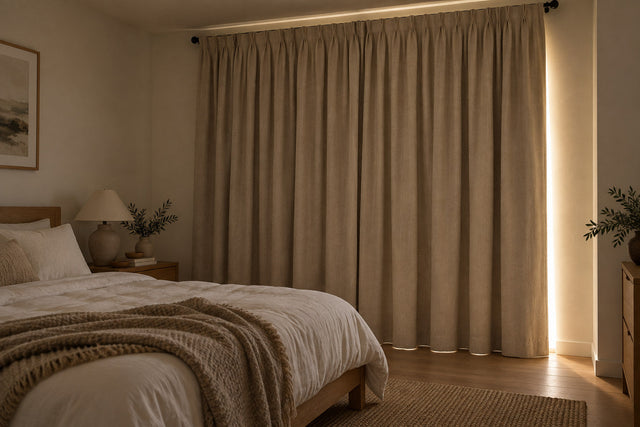
Compare linen curtains for texture and appearance. With a product such as Sedona Linen Blend Drapery Soft Top, review the current lining and header choices alongside your coverage notes rather than selecting by color alone.
Measure after the work setup is settled
Use the drapery measuring guide once the hardware location and opening direction are decided. Then do one final camera and screen check with the planned coverage marked out. The aim is a usable range of daylight settings, not a home office that has to stay dark all day.