
When the window sits behind the bed, the headboard becomes part of the curtain plan. Check where the fabric will move and how you will reach it before choosing a dramatic full-height treatment. A curtain that looks right from the doorway may still be awkward to close from beside the bed.
The first decision is practical: can you operate the window treatment with the bed, nightstands and lamps in their everyday positions?
Measure the headboard as well as the window
Note the headboard’s height and width, the window’s position above it and the space between the bed and the wall. Include any upholstered wings or projecting frame. These details tell you whether a long curtain would hang freely or be pressed behind furniture.
Look at both sides of the bed. A nightstand may use up the very place where an open curtain needs to gather. A lamp can block your hand from reaching a panel edge. Leave those pieces where you intend to keep them while testing the layout; moving everything out creates a misleadingly easy window.
Finally, check how the window opens. The fabric, headboard and bedding should not stop its usual movement. If you cannot comfortably reach the latch now, adding another layer will not solve that access problem.
Three layouts worth considering
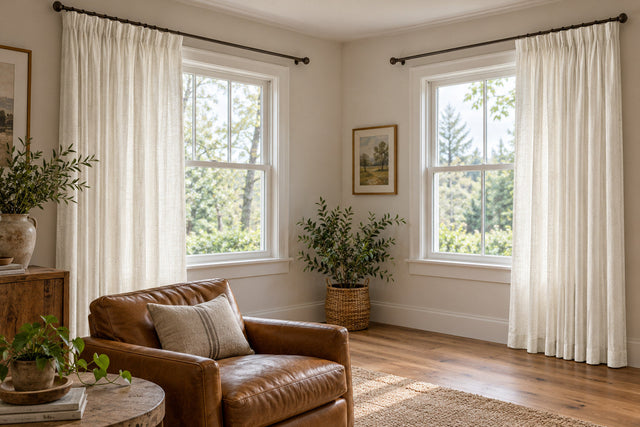
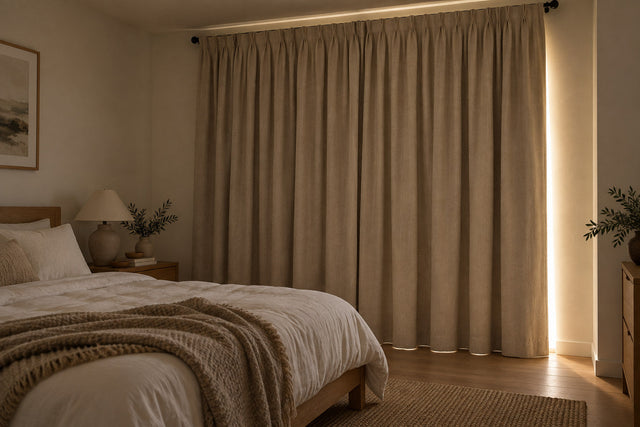
Long curtains beside the headboard. This works best when there is a clear hanging route behind or beside the bed and enough space at the sides for the open panels. The curtain should not have to scrape over the headboard or pull past a nightstand each morning. A wide headboard that fills nearly the whole wall can make that arrangement difficult.
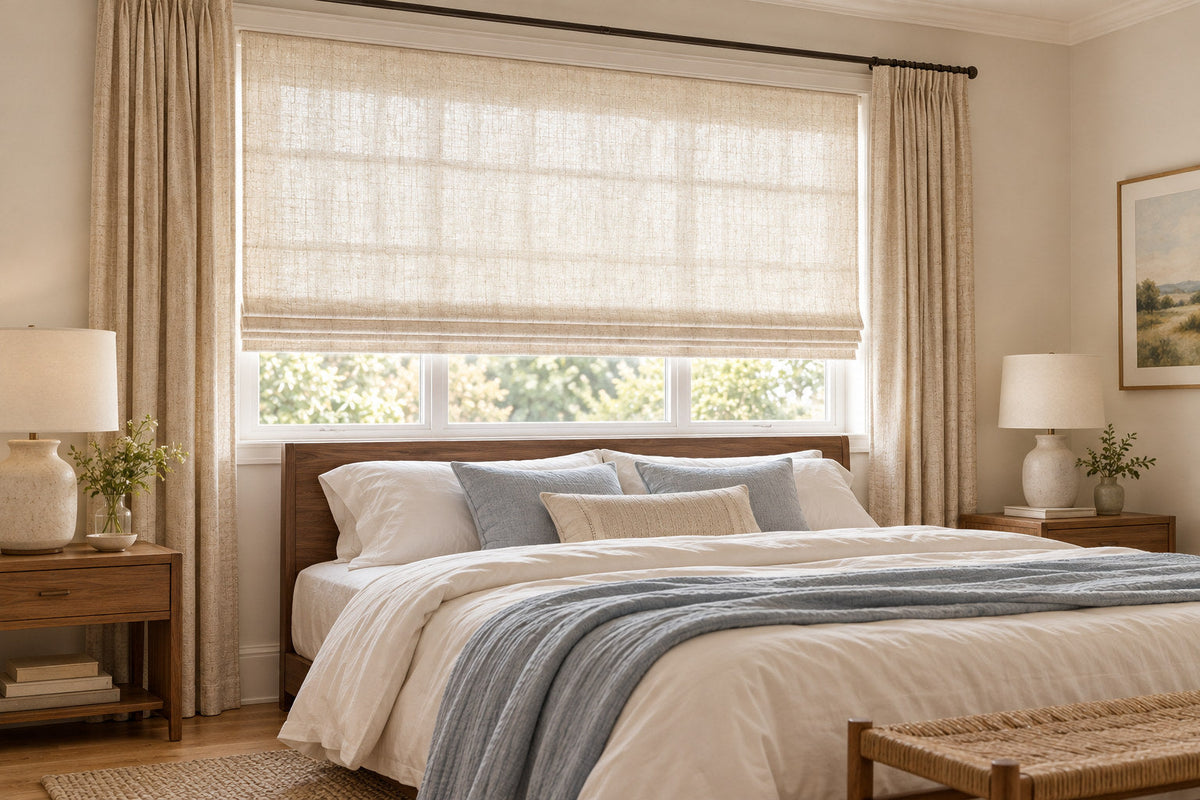
A Roman shade at the window. A shade keeps most of its fabric close to the opening, which can help when there is little room for full-length drapery behind the bed. You still need to check access to its controls and the position of the raised folds. The Roman-shade measuring guide covers the opening and mount measurements; the bed layout is an additional check.
A shade with side curtains. The shade can provide daily window coverage while the curtains soften the sides of the room. Decide whether those curtains will stay open or close too. Decorative side panels should not be counted on for privacy if their size or placement does not cover the window.
Match the nighttime job to the configuration
A bedroom needs a separate check after dark. From outside, a light-filtering shade may reveal shapes when the room lights are on. Daytime softness does not establish nighttime privacy.
The Jenna Linen J401 option in Fredesigner’s Custom Light Filtering Roman Shade is listed as 73% linen and 27% cotton. That describes the face fabric, not a promise of nighttime privacy. Review the available lining choices and the coverage of the selected mount if privacy or darkness is a priority. Our bedroom Roman-shade guide explains those decisions in more detail.
If you prefer drapery, Bolonia curtains have a subtly textured surface to compare beside your bedding and headboard. Choose the finished curtain configuration for the light-control job, then use the drapery measuring instructions for its actual hardware. Browse the bedroom curtain collection with those requirements in mind.
Test the room from where you sleep
Walk through the evening routine before placing an order. Stand on the side of the bed you normally use and imagine closing the curtain or lowering the shade. Check whether you would have to lean over a lamp, step behind a nightstand or kneel on the mattress to reach the control.
Then lie down and look toward the window. The headboard may hide the lower part of a shade without changing its coverage; that is a visual choice. A bright edge visible just above your pillow is a different issue. Record it while assessing privacy and light control.
Keep the color decision until this layout works. A sample held next to the headboard tells you more than a small product image viewed alone. The Roman-shade sample books can help compare the fabric with your bedding in the room’s own light.
A useful final test takes less than a minute: reach, close, get into bed and open again the next morning. Choose the arrangement that lets you do those ordinary things without moving furniture every time.