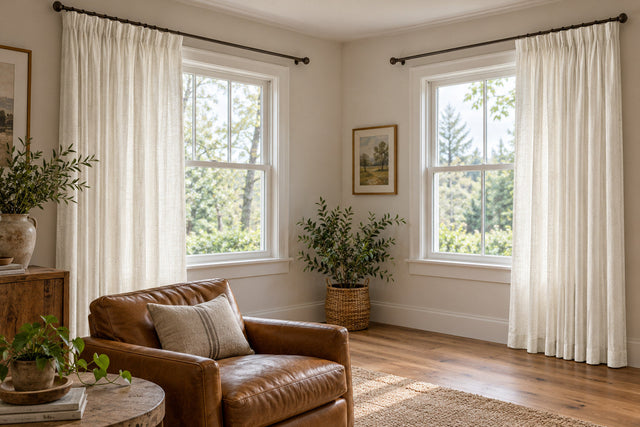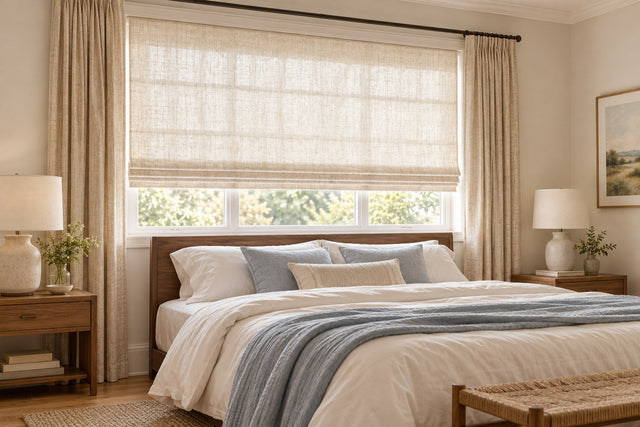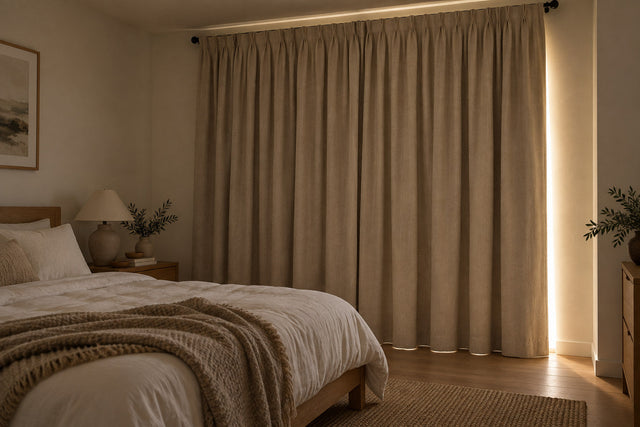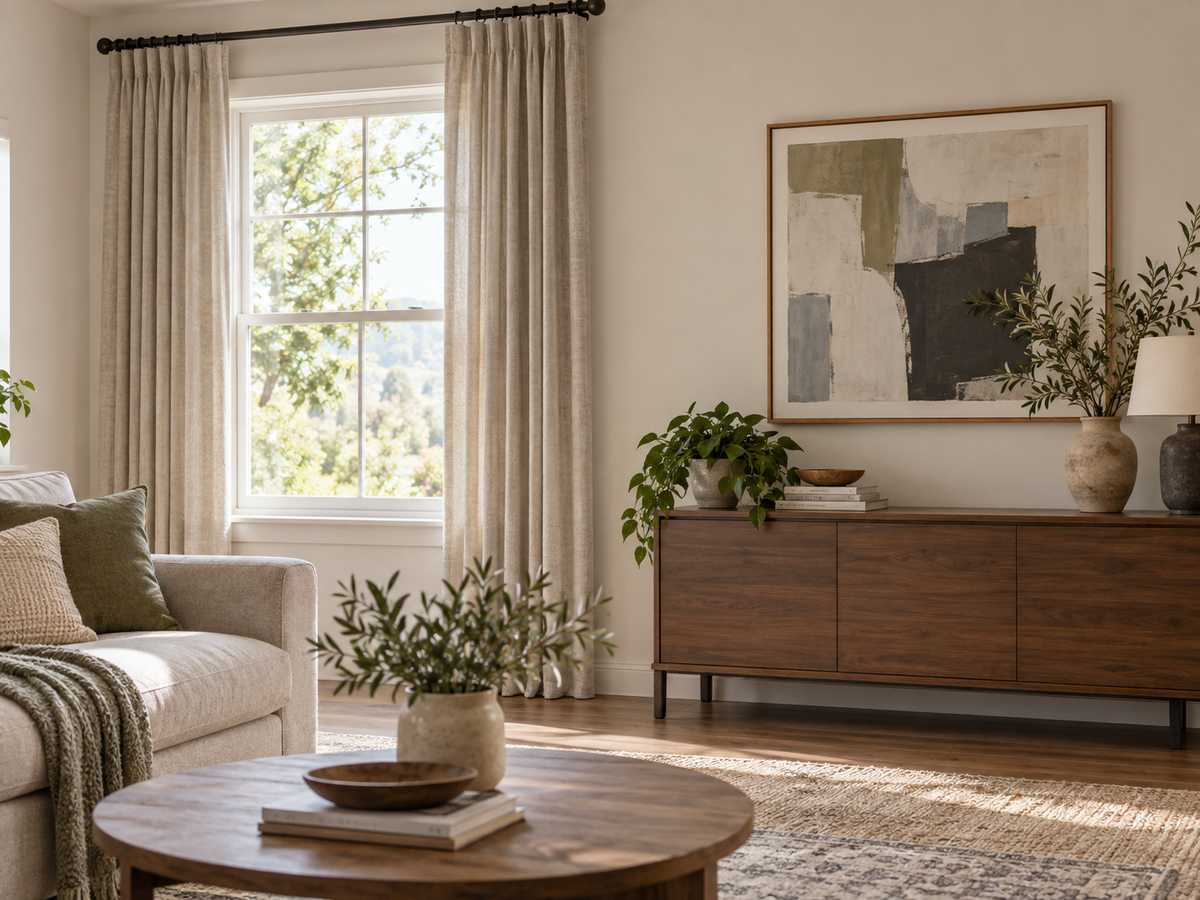

Balance an off-center window by choosing what should anchor the wall: the window itself, the furniture grouping, or the whole wall. Curtains can broaden the window's visual frame, but they cannot create missing wall space or fix blocked access. Compare a wider curtain span with a deliberately asymmetrical arrangement before deciding where the hardware belongs.
Choose the view that matters most
Stand where you usually enter or sit in the room. A window that looks awkward straight on may feel balanced beside a reading chair or sofa. Decide whether you are correcting a problem experienced in daily use or only an uneven measurement on a floor plan.
Identify one main anchor, such as the sofa or bed, before adding more elements. Trying to center the window, curtains, furniture, and art on different axes can make the wall feel less settled.
Option one: broaden the curtain frame
When sufficient clear wall exists, a wider curtain span can soften the impression of a narrow or displaced opening. Mark the proposed outer curtain edges with removable markers suitable for the surface, then view the arrangement from across the room.
Check both open and closed positions. If fabric has to remain over a large part of the glass to preserve the visual effect, decide whether that loss of daylight is acceptable. A balanced closed view should not hide an inconvenient open one.
Option two: let the window stay off-center
Acknowledge the architecture and balance the wider wall with a low console, chair, or artwork. Curtains can frame the actual window while another element gives the empty side a purpose. This often makes more sense when one edge of the window is close to a corner.
Keep enough room for the panel stack and daily movement. Do not squeeze fabric between a wall and furniture just to make both sides look identical.
Option three: reconsider the opening direction
A one-sided curtain arrangement may be worth discussing when useful stacking space exists on only one side. It is not interchangeable with a center-opening pair: hardware travel, panel width, weight, and the closed coverage all need review.
Show the full wall to Fredesigner support with the proposed product and hardware plan. Ask whether the configuration works rather than treating a styling sketch as installation approval.
Let fabric support the layout
A restrained fabric can keep an unusual wall from becoming visually busy. The Linen Curtains collection and Sedona Linen Blend Drapery Soft Top offer starting points for comparing neutral texture and the currently available options. Select the fabric in the room's actual light, not to conceal an unresolved layout.
Once you prefer a configuration, use the drapery measuring guide from the confirmed hardware position. Record the left and right resting areas separately. The goal is a wall that feels intentional and curtains that work, not symmetry at any cost.