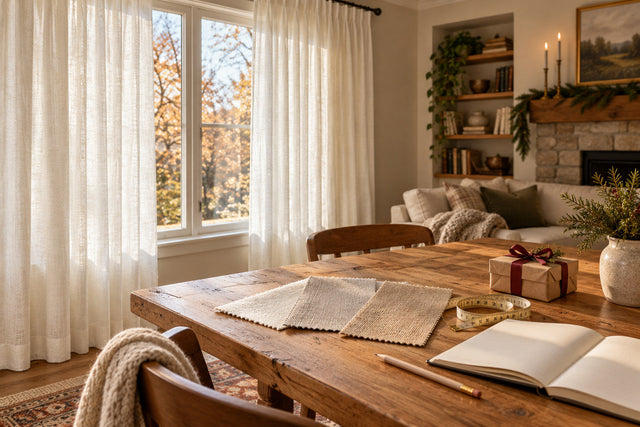
The table leaf is in, the extra chairs are out, and the dining room looks ready for Thanksgiving. But the seat beside the window is often tighter than it seemed. Pull the chair back and its top rail may catch the curtain. Close the panels and the folds may end up behind a guest's shoulder. Test that side of the table before setting the places.
Set up the table you will actually use
Do this with the table extended and every chair in position. Include the borrowed chair from the office or the folding chair that only comes out for company. Their backs and legs may take up different amounts of space.
If you expect to move the table toward the window to open a route on the other side, move it now. Put any sideboard, serving cart or extra stool in its planned location too. An empty dining room can hide conflicts that appear as soon as people sit down.
The question is practical: can a guest use that seat while the curtains still work? Often a small change—sliding the table a few inches or tying the panels back for the evening—solves it. If the test shows a year-round problem, such as a hem that drags or panels that crowd the chairs every day, that is the time to compare options in the dining room curtain collection.
Sit down, then get up again
Use the window-side chair as a guest would, with the table extended and the other seats in place:
- Pull the chair back far enough to sit down. Check that its back and legs clear the curtain.
- Sit and move into your usual eating position. Keep the lower folds outside the chair legs.
- Stand and step away, then open and close the panels. If the cloth catches, move the chair or table and repeat the test.
A panel can look clear when the chair is tucked in yet become trapped when someone leans back. Fabric at floor level may also slide under a chair leg. If that happens, change the furniture position and try again. Do not solve it by tucking the hem under the table.
A tape measure makes the test faster. Designers commonly allow about 36 inches between the table edge and the wall—or here, the curtain line—so a guest can pull a chair back and stand up, and closer to 42–48 inches where people need to walk behind seated guests. If the window side has less once the leaf is in, expect the chair to meet the curtain.
For a lasting hem decision, our guide to curtains touching the floor covers everyday tradeoffs. Beside a dining table, a hem that floats about 1/2 inch above the floor is less likely to slide under a chair leg or collect crumbs than one that pools.

Open and close the curtains with the chairs in place
With the chair pulled out, operate the window treatment through its normal range. Repeat with the chair tucked in. You should be able to reach the operating position without dragging fabric across the guest's seat.
Pay attention to where the open panels gather. If a side curtain stacks directly behind the end chair, the window may need more room than the tabletop suggests. Our curtain stackback guide helps you identify that occupied space.
Try the window handle or nearby door as well. The holiday arrangement should not make an ordinary task depend on moving several guests. If the extended table cannot fit comfortably, reassess the table position or seat arrangement before changing curtains that work for the rest of the year.
Look from the seat at the time of the meal
Sit at the window-side place during the lighting conditions you expect. Afternoon sun may land directly across someone's eyes, while after-dark lighting may make the room feel more exposed than it does in daylight.
Try the current curtain position first. A little adjustment may do enough without closing the whole window. If you are reviewing a new configuration, compare the fabric and lining together rather than relying on a color name. The fabric selection guide is useful for organizing those questions.
Sedona linen-blend drapery has a softly textured 350 gsm weave and can be ordered with privacy, room-darkening or blackout lining. For evening meals with the lights on, use the liner guide to compare how much each option hides from the street.
Keep a note of what needs changing
After the test, make a short note: which seat was tight, where the fabric caught and whether the issue existed with the ordinary table size. That separates a once-a-year furniture squeeze from a window setup that needs attention every day.
If the everyday curtains need replacement, confirm the permanent table layout and hardware before measuring. Use the drapery measuring guide for the chosen setup; do not calculate a new curtain size from the temporary holiday arrangement alone. If you want the new panels up before the holiday, plan around the current estimate: made-to-order window treatments for the United States and Canada are expected 7–10 business days after order confirmation, so ordering in early November leaves a margin. Estimates are not guaranteed delivery dates.
Once the extra table leaf and chairs go away, put the room back into its usual position. Open and close the panels once more. The holiday test is useful because it reveals small problems early, while there is still time to move a chair instead of discovering the pinch point halfway through dinner.