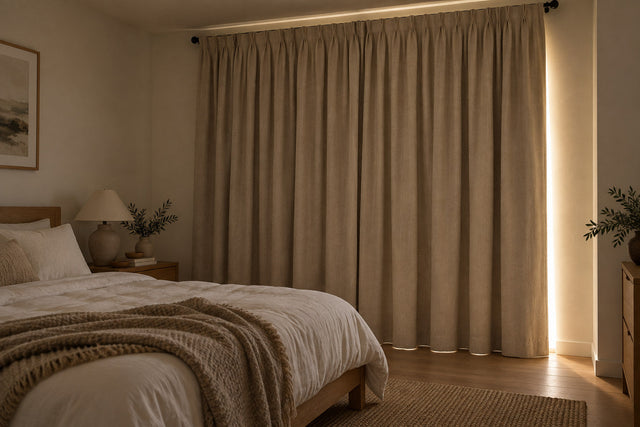

Use one curtain rod across two windows when you want a unified wall and the hardware can support the intended panel movement. Use separate rods when each window needs a distinct operating area or the wall between them should remain visible. Decide where every panel opens and closes before choosing either layout.
Look at the wall between the windows
A narrow pier can make two windows read as one group. A wider section containing artwork, a switch, or furniture may be worth keeping visually separate. Photograph the whole wall from the usual seating position rather than judging each window close up.
A shared rod does not require covering the center wall with fabric. Conversely, two rods do not have to look unrelated. Matching their finish, mounting height, and curtain header can create a consistent rhythm while preserving separate openings.
Map the panel movement
Draw one line for each rod and one block for each panel in its open position. Then draw the closed position. This simple exercise reveals whether fabric would collect at the center pier, at the outer ends, or across useful glass.
- One rod, outer stacks: review the full travel distance and whether hardware supports allow the planned movement.
- One rod, separate window groups: identify stops and resting positions so each pair serves its own opening.
- Two rods: check whether the neighboring finials, brackets, and inner panel stacks compete for the same center space.
Do not assume that a visually continuous pole offers uninterrupted travel. The exact rings, carriers, brackets, and support system determine what can move where.
Keep different daily routines in mind
Perhaps one window lights a reading chair while the other sits behind a television. Independent curtain groups can make partial closure easier to plan. If both windows are always treated together, a unified arrangement may suit the room better.
With either option, check whether a radiator, cabinet, or sofa prevents a panel from hanging or moving freely. Follow the relevant equipment and installation instructions for any required separation; aesthetics should not determine those clearances.
Choose the header before finalizing widths
The header-style guide helps connect the curtain top to the proposed hardware. A product such as Sedona Linen Blend Drapery Soft Top should be evaluated with its selected header, lining, and panel quantity, not just its fabric color.
Ask for an order review if a support divides the rod into operating sections. Each panel's coverage must correspond to the section it actually serves. Avoid dividing the total wall width into equal pieces without checking the real openings.
Measure each window, even when they look identical
Use the drapery measuring guide after the layout is settled. Label the left and right windows, record the hardware positions, and keep panel quantities explicit. Then compare the Curtains collection against one clear plan: shared visual line, separate visual lines, and the exact movement expected from each panel.