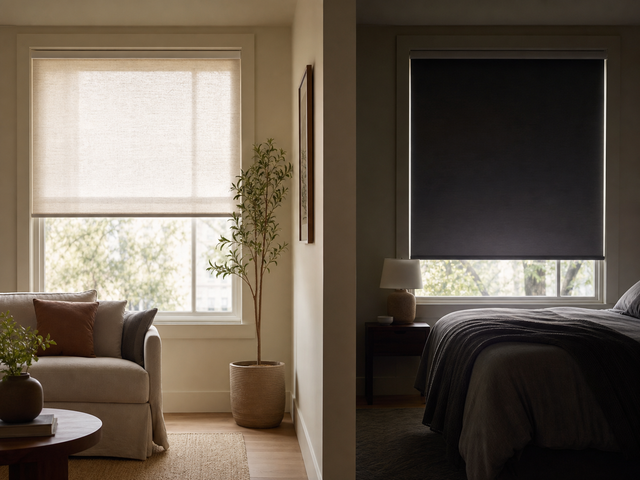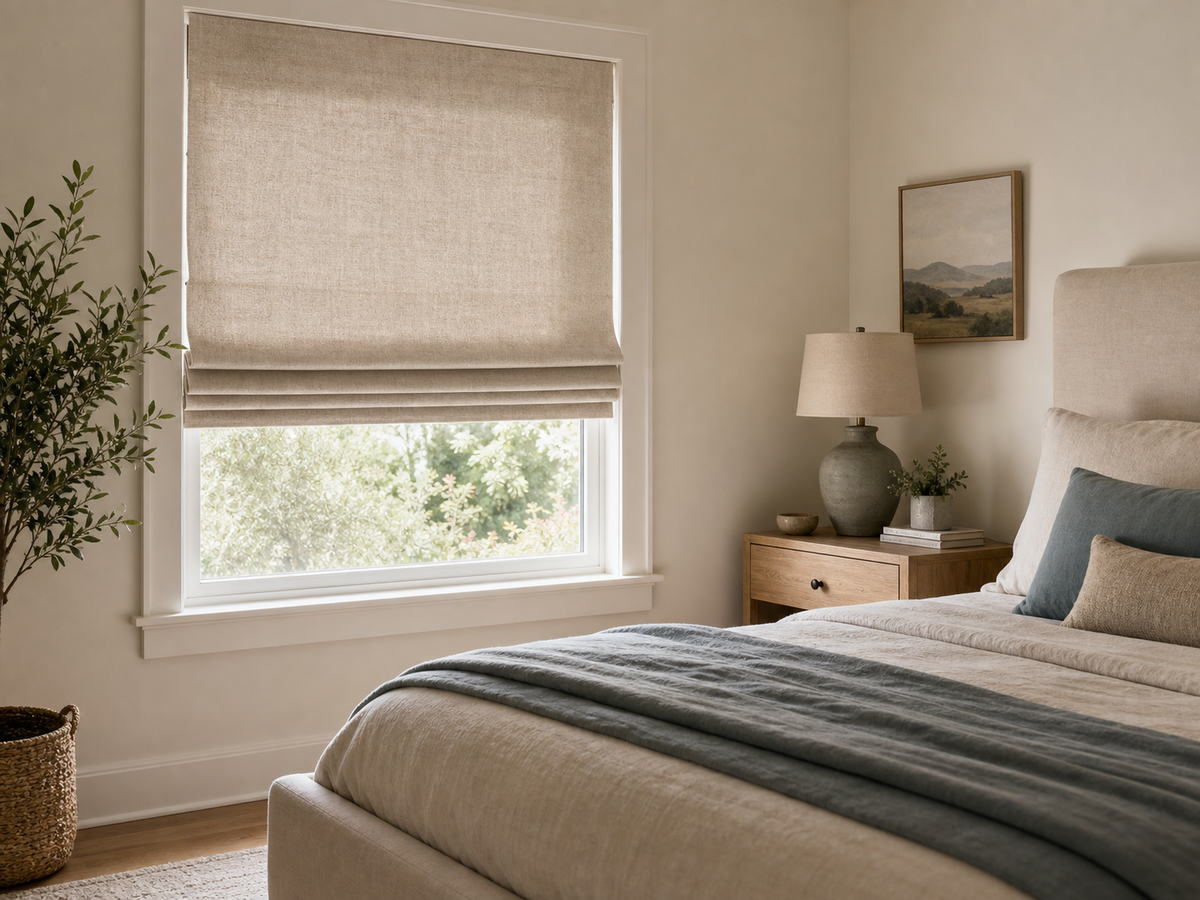

A bedroom Roman shade should match three things: nighttime privacy, the amount of morning light you prefer, and the coverage the window can support. A person who sleeps past sunrise needs a different setup from someone who wants soft light at 7 a.m., even when both rooms use the same color.
Define what the bedroom needs
Two bedrooms can need very different shades. An east-facing room may get strong morning light, while a street-facing room may need privacy after interior lights are on.
Start with the room before choosing a product label:
- Do you want a dimmer room for sleep, or softened daylight with an easier morning wake-up?
- Can people see into the room after dark?
- Does a bed, nightstand, or radiator limit space around the window?
- Will the shade be adjusted every day?
- Is the window easy to reach?
Your answers determine which fabric, liner, mount, and control deserve the closest look.
For the full decision sequence, use the Roman Shades Buying Guide after you define the bedroom's sleep and privacy needs.
Compare bedroom priorities
For nighttime privacy, compare the fabric weave and liner under interior lighting, then look for direct sightlines at the edges. For stronger darkness, assess the shade, mount, width, height, and perimeter as one setup. If soft morning light is the goal, window direction and outdoor brightness matter as much as the light-filtering label.
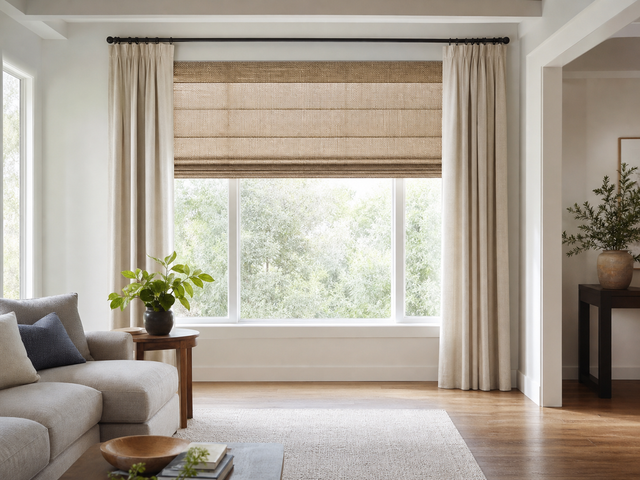
A Roman shade can also solve a layout problem when furniture leaves little side space for panels. Top-down/bottom-up designs are useful for flexible upper-window privacy when that operation is listed for the product. Color comes later: liner, construction, installation, and coverage can matter more than whether the face fabric is dark or light.
Light filtering, privacy, or blackout?
A Custom Light Filtering Roman Shade is a starting point when you want to soften daylight instead of making the room dark. For a bedroom, check how the selected material behaves after dark as well as during the day.
A Privacy Roman Shade puts more emphasis on coverage from view. Privacy still depends on the selected fabric, liner, room lighting, and possible gaps around the shade.
If stronger darkness is the goal, browse the Blackout Roman Shades collection. A blackout option can provide stronger light control, but gaps may still appear around the top, sides, or bottom.
Roman shades can make a bedroom darker when fabric, liner, mount, and perimeter coverage work together. The material alone cannot remove every edge gap.
Use mount choice to manage coverage
Inside mount gives a fitted appearance when the frame has enough usable depth. It keeps surrounding trim visible, but small gaps may remain along the sides.
Outside mount can cover more of the opening and may reduce visible edge light. It is also useful when the frame is shallow or crowded by handles and hardware. The shade will cover more trim or wall, so mark the proposed edges before measuring.
The examples in Inside Mount vs Outside Mount Roman Shades can help settle the coverage tradeoff. Then follow the Roman Shade Measuring Guide before entering width and height.
Consider how the bedroom is used
Primary bedroom
Prioritize the light conditions that affect your normal sleep schedule and the privacy needed after dark. If two people use the room differently, choose a setup that is easy to adjust instead of relying on one fixed light level.
Guest room
A balanced mix of privacy and light filtering may be more useful than the darkest available option. Make the control easy to understand and leave the window area clear enough for a guest to operate it.
Nursery or child's room
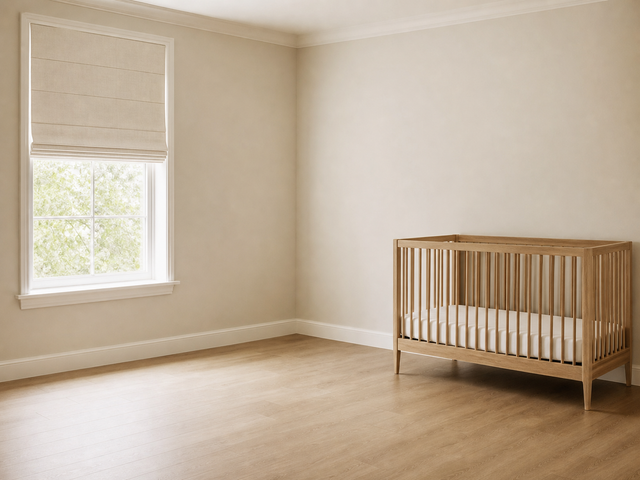
Focus on coverage, easy adult operation, and the child-safety information listed for the selected product. Control methods can differ across shades in the same collection.
Bedroom that doubles as an office
Think about both sleep and daytime screen glare. A Top-Down Bottom-Up Roman Shade is one option to consider when you want to adjust upper and lower coverage differently; check its operation before ordering.
Check the window in daytime and after dark
Look at the opening at the times when privacy and light matter most. Note direct sun, streetlights, nearby buildings, and whether indoor lighting makes the fabric easier to see through.
Review the listed sample choices and price before ordering. Place a relevant sample near the window and view it under both daylight and bedroom lighting; screen color alone cannot show the full effect.
Nighttime privacy also deserves its own test. With the shade closed and bedroom lights on, step outside or view the window from the usual approach. Weave, liner, edge gaps, and the brightness of the room all affect what can be seen.
Once the light goal is clear, settle the mount, measure with the Fredesigner guide, and review the configured shade as one combination instead of a series of isolated options. The custom-order policy is worth reading before checkout.