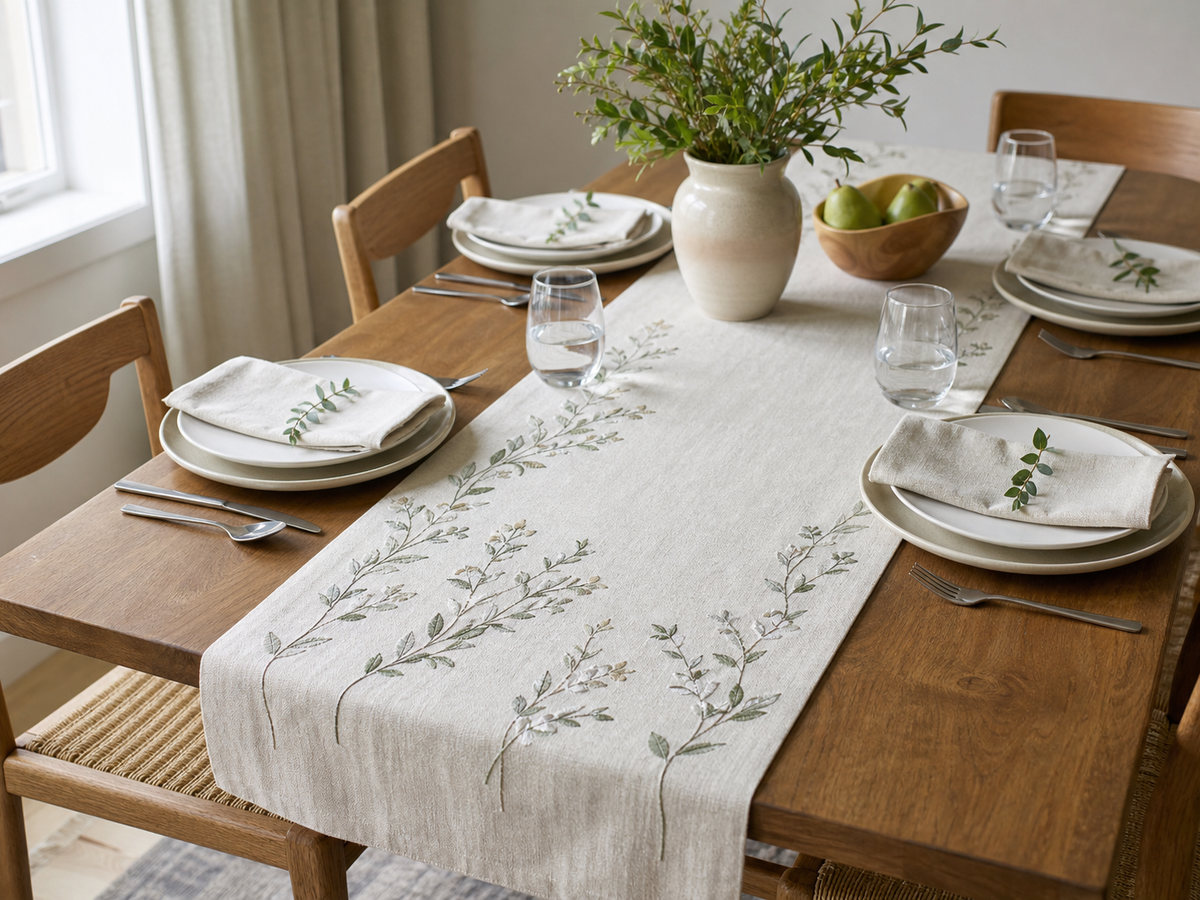

Start with the table linen that will carry the pattern, then check its scale, color, fabric, stitching, and care on the product page. A small motif can suit everyday place settings, while a wider border or centered design makes more sense when the cloth or runner will remain visible beneath serving pieces.
Decide where the embroidery should appear
The best placement depends on what will cover the textile during a meal. A tablecloth with decoration only in the center may disappear beneath platters, while a border can remain visible around the perimeter. On a runner, motifs near the ends stay visible when the middle holds bowls, candles, or flowers.
Think about the normal setup rather than an empty styled table. Set down the plates, serving pieces, and centerpiece you use most often, then mark the areas that remain visible. That simple test helps you choose decoration that will still read clearly once dinner is served.
Match pattern scale to the table
A small breakfast table usually needs compact motifs or a narrow border that leaves room for the plates. On a long table, repeated motifs or details near the runner ends can keep the full length balanced. A round table benefits from evenly spaced decoration that does not favor one seat.
If a large centerpiece stays on the table, look for edge or corner embroidery that remains visible around it. For a minimal everyday setting, low-contrast thread can add texture without becoming the room's main focal point.
Pattern size also changes how formal the table feels. Dense, high-contrast embroidery tends to become a focal point, while tonal thread reads more like surface texture. Neither is automatically better; the right choice depends on the dishes, table finish, and frequency of use.
Inspect construction, not just the motif
Product photos show the face of the design, but everyday use depends on the details around it. Review the product description and available close-ups before ordering. If an important construction detail is missing, ask before buying.
- Look for even stitching with no obvious loose ends in close-up images.
- Check whether the reverse side may contact a finished table surface.
- Review edge construction, especially at corners and along a runner's narrow ends.
- Check the disclosed fabric, dimensions, color, and care instructions.
- Note whether the item is sold individually or as part of a set.
Fredesigner's tablecloth collection is the starting point for full-table coverage. For a narrower decorative layer, compare the table runner collection and read each product's specifications separately.
Coordinate color with the whole place setting
Choose thread color beside the tabletop, dinnerware, and room lighting. Warm ivory can look yellow next to cool white dishes, while a gray-beige thread can shift cooler under daylight and warmer under evening lamps. Screen color is useful for narrowing choices, but it cannot show every lighting condition.
A practical palette uses one dominant neutral, one supporting tone, and one small accent. The embroidery can repeat a color already present in dishes, glassware, or a centerpiece without matching everything. Repetition makes the table feel connected while leaving room for seasonal changes.
Plan for real meals and real care
An everyday textile needs a care routine that fits the household. Before ordering, read the care instructions, then consider how often the piece will be used, how quickly spills are normally addressed, and whether ironing or careful reshaping fits your routine. Decorative detail is less useful if the required care means the item stays in a drawer.
Avoid assuming that all embroidery, thread, or base fabrics can be washed the same way. Follow the product-specific instructions, test any cleaning method in an inconspicuous area when appropriate, and store the textile clean and dry. Folding along different lines can also help prevent one crease from becoming permanent.
Check these details before ordering
- Photograph the table with the usual dishes and centerpiece in place.
- Measure the surface and decide between full coverage and a runner.
- Identify which areas will remain visible during a meal.
- Choose a pattern scale that fits those open areas.
- Compare thread color under daylight and evening lighting.
- Verify the material, dimensions, construction, set contents, and care.
- Recheck product availability before placing the order.
Embroidered table linens work when the decorative idea survives contact with normal use. Start with placement and scale, then let verified product details decide which piece belongs on the table.