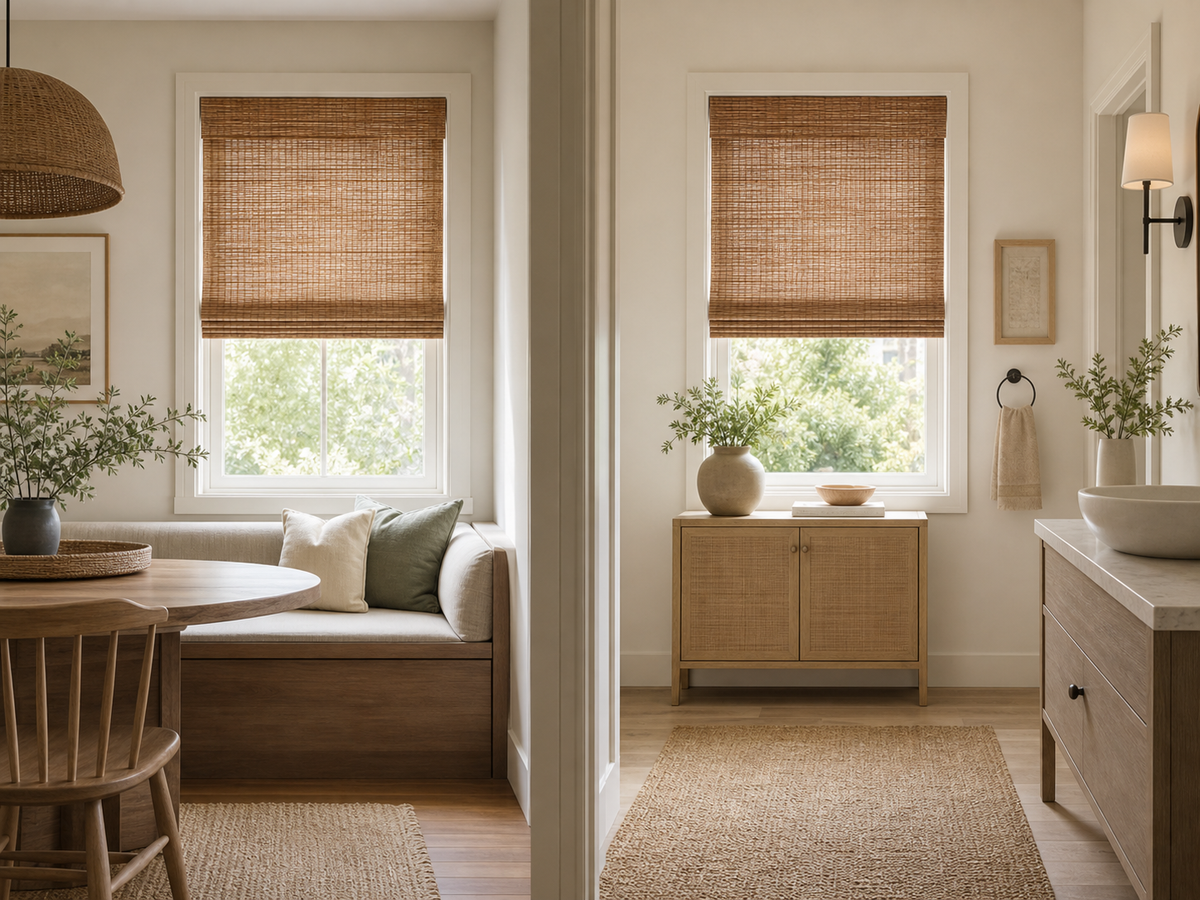

Bamboo shades can add woven texture and softer daylight to a kitchen or bathroom, but the room name alone does not prove a good fit. Check the window's distance from water and heat, normal ventilation, nighttime privacy, cleaning needs, mounting surface, and moving hardware before choosing a product and configuration.
Start with the window, not the room label
A kitchen window beside a dry breakfast area does not face the same conditions as one behind a sink. A powder-room window does not face the same moisture pattern as a window close to a shower. Record what actually reaches the shade during normal use.
Take one photo facing the window and another from the side. Note faucets, handles, tile, trim, vents, heat sources, and the path of any sash or door. These details are more useful than a broad request for "the best bamboo shade for a bathroom."
In a kitchen, note the distance from the sink, cooking heat, steam, residue, faucets, and an open sash. In a bathroom, focus on the tub or shower, direct splashes, condensation, ventilation, tile, and eye-level sightlines. Both rooms need an after-dark privacy check and care directions that apply to the selected material.
What should you check for a kitchen window?
Start with clearance. The shade should raise and lower without touching a faucet, handle, open sash, counter item, or nearby heat source. Then review the product's material and care directions.
Where residue or splashes are likely, check whether the product instructions address that placement. Ask how the selected shade and lining should be cleaned before ordering if the guidance is unclear.
What should you check for a bathroom window?
Describe the room's ventilation, distance from water, and normal moisture pattern. Direct splashes, frequent steam, and condensation create different questions from a dry powder room.
Privacy also changes after dark. An open weave that looks private during the day may reveal more when the bathroom is brighter than the space outside. Review the listed lining choices when evening privacy matters.
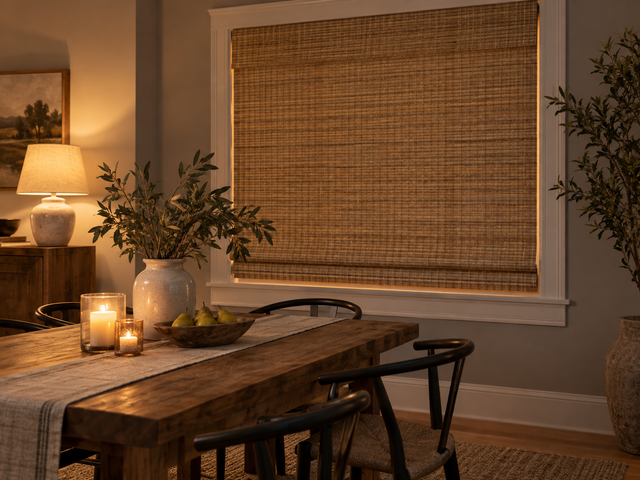
Compare weave and lining in the room's real light
Fredesigner's Bamboo Roman Shade collection provides indoor options to compare. Weave openness, lining, viewing direction, and the balance between indoor and outdoor light all affect the result. If you are also considering a softer surface, read Bamboo Shades vs Fabric Roman Shades.
Use the liner and interlining guide for qualitative light and privacy guidance, then check whether the chosen lining is available on the product page. View the material in daylight and after dark instead of judging it from one product photo.
Choose the mount before measuring
An inside mount needs suitable frame depth and a clear bracket location. An outside mount changes the finished coverage and visual scale. In either case, the shade must clear trim, tile, handles, faucets, and moving windows.
If the mount is still undecided, start with Inside Mount vs Outside Mount Roman Shades. Then use the Roman Shade Measuring Checklist and Fredesigner's Roman Shade Measuring Guide to record width, height, frame depth, and obstructions in inches. For tile, an unusual frame, or a difficult opening, send photos and measurements through the Fredesigner contact page before ordering.
Planning a patio instead?
Patio projects have a separate outdoor product and exposure decision. Use the Outdoor Bamboo Shades for Patios guide to compare patio setting, coverage, privacy, mount, lift, care, and measurements without mixing that intent into this indoor placement guide.
Final kitchen and bathroom checklist
- Record the distance from water, heat, and moving hardware.
- Note ventilation, steam, condensation, and normal cleaning needs.
- Check privacy in daylight and after dark.
- Check the weave, lining, mount, and lift shown on the product page.
- Choose the mount before entering custom dimensions.
- Follow product-specific care guidance.
- Ask support when the placement or mounting surface is unusual.
Compare the bamboo collection, then match one product to the real window conditions. A room label is a starting point; the selected material, options, measurements, and care guidance should control the order.